The rapid expansion of AI data centers is creating a new local political fight across the United States. These AI data centers power artificial intelligence systems, cloud software, streaming platforms, business tools, and many online services. They can bring construction spending, tax revenue, and technical jobs. They can also place an unusually large demand on electricity grids, water systems, roads, land, and local air quality.
That tension explains why some cities and states are considering permitting pauses, zoning changes, impact studies, or special utility rules. The debate about AI data centers is not simply about whether artificial intelligence is useful. It is about who pays for the infrastructure required to operate AI data centers, who bears environmental costs, and whether residents have enough information to judge a project before it is approved.
Supporters argue that delaying these facilities could push investment elsewhere, slow AI development, and reduce regional competitiveness. Critics answer that a city should not approve a campus capable of reshaping utility bills, water planning, and land use without understanding the consequences. Both arguments deserve a fair hearing.
“In its simplest form, a data center is a physical facility that houses and runs large computer systems.” — Congressional Research Service
Why a national technology boom becomes a local problem
For years, communities competed to attract factories and AI data centers, warehouses, distribution hubs, and office campuses. AI data centers were often presented as another economic-development opportunity, but their operating profile is different. A large warehouse may employ many people during daily operations. A hyperscale data center can occupy a very large site, consume power around the clock, and employ comparatively few permanent workers after construction ends.
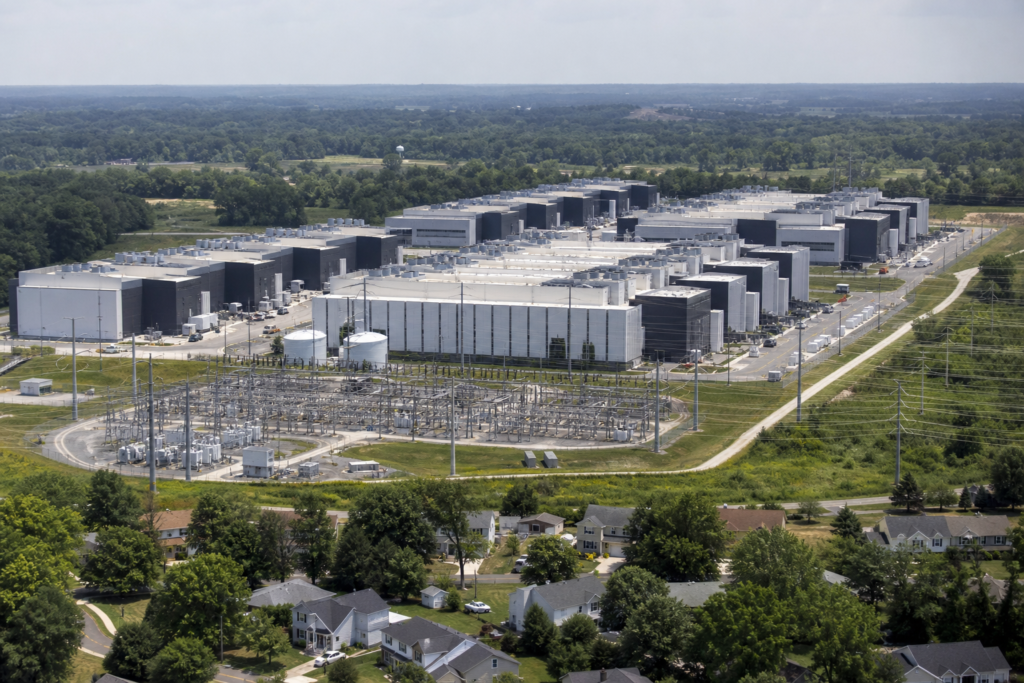
The scale is changing as companies build facilities for AI workloads. Training and running advanced models requires specialized chips that draw substantial electricity and generate heat. The building must be supported by cooling equipment, backup power, security systems, fiber connections, substations, and access roads. What looks like a private AI data center project can therefore become a major public-infrastructure decision.
The Congressional Research Service estimates that U.S. data centers used approximately 176 terawatt-hours of electricity in 2023, equal to about 4.4 percent of national electricity consumption. Its report says some projections show data-center energy use doubling or tripling by 2028. National percentages can sound manageable, but local impacts are concentrated. A single proposed AI data center campus may represent more electricity demand than an entire county’s existing industrial load.
This concentration around AI data centers is why residents who support AI in principle may still oppose a particular site. They may be asking whether the substation can be built safely, whether the water utility has enough capacity during a drought, whether backup generators will worsen air pollution, and whether tax incentives justify long-term public costs.
Electricity demand can turn a private project into a public bill
Electricity is the most immediate concern surrounding AI data centers. Servers operate continuously, and AI hardware can create an intense load. Cooling systems also consume power, as do pumps, power-management equipment, lighting, and security systems. A facility that needs hundreds of megawatts may require new transmission lines, substations, generation capacity, and grid upgrades.
The CRS gives a useful comparison: a 100-megawatt AI data center can require electricity comparable to the needs of about 80,000 U.S. households. This does not mean every household will experience a direct one-for-one impact. It does explain why utility regulators are asking who will finance new infrastructure and what happens if a project operates below expectations.
For AI data centers, the risk is known as cost shifting. A utility may recover the expense of new generation or transmission through rates paid by households and existing businesses. The AI data center company may receive tax incentives or favorable power arrangements while the wider community absorbs part of the infrastructure risk. Regulators are responding with special rate classes, minimum-payment commitments, and rules requiring large customers to pay for capacity reserved on their behalf.
The World Resources Institute’s analysis of data-center impacts on U.S. communities describes the issue as one of energy procurement and cost recovery, not merely energy consumption. A city considering an AI data center project should want clear answers about the substation, generation mix, stranded-cost protection, and the effect on household rates.
The transparency issue also connects with public anxiety about AI more generally. Readers who want to understand why chatbots can sound confident while producing false claims can follow the highlighted internal link below.
AI Hallucinations Explained: Why Chatbots Invent Information
Water use matters most where supply is already tight
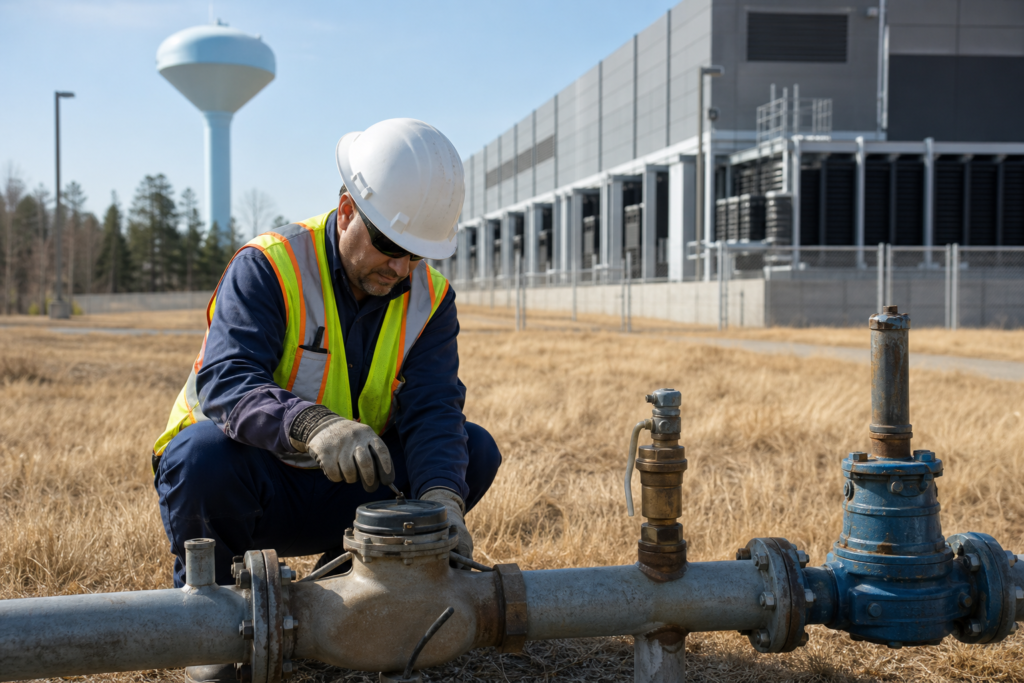
Electricity is not the only resource that must reach an AI data center. Servers produce heat, and many facilities use water-based cooling to move that heat away from sensitive equipment. The amount depends on the climate, cooling design, workload, and availability of reclaimed water.
The CRS cites an illustrative estimate that a 100-megawatt U.S. AI data center may consume roughly 530,000 gallons of water per day across cooling strategies, with about 190,000 gallons consumed onsite in that example. This is not a universal requirement for every facility, but it shows why a proposal can concern water managers.
The location of AI data centers is crucial. A project in a water-rich region with strong treatment capacity presents a different risk from an identical project in a drought-prone basin. WRI reports that two-thirds of data centers built or in development since 2022 are in water-stressed areas. If a city must choose between residential growth, existing industries, farming, and a new AI data center during a dry year, residents will reasonably ask whether the allocation is fair.
Water planning for AI data centers is more complicated than a daily-consumption number. Officials need to examine peak summer demand, drought restrictions, wastewater capacity, groundwater withdrawals, discharge quality, and possible future expansion. A promise to use reclaimed water is meaningful only if the local system can reliably supply it without displacing other needs.
Some AI data center operators are testing air cooling, closed-loop systems, liquid immersion, and reclaimed wastewater. These approaches can reduce pressure on drinking-water supplies, although they may involve higher costs or different energy requirements. The practical question is whether the approved design includes enforceable water limits and a credible plan for abnormal conditions.
Pollution, noise, and land use are part of the debate
An AI data center may be marketed as a quiet digital business, but its supporting infrastructure is physical. Facilities need backup generators in case the grid fails. Some projects also propose onsite natural-gas generation when grid connections are delayed or insufficient. Those systems can emit nitrogen oxides, particulate matter, and greenhouse gases.
Backup generators are not necessarily running continuously, and emergency equipment is subject to air-quality rules. The actual risk depends on the equipment, operating schedule, permits, fuel, pollution controls, and local background conditions. WRI has described disputes involving emissions from data-center power systems and notes that diesel backup generators can produce pollutants associated with respiratory and cardiovascular risks. Those details belong in the public record before construction begins rather than being treated as an afterthought.
Noise around AI data centers is another quality-of-life issue. Cooling fans, chillers, generators, transformers, and construction traffic can create a constant mechanical hum. A site that seems remote on a planning map may become disruptive if homes are built nearby. Local governments can consider setbacks, sound limits, operating restrictions, landscaping, and independent monitoring.
Large AI data centers also need substantial parcels with access to power and fiber. That can mean farmland, forests, former industrial land, or open space near highways and transmission corridors. The land-use decision includes more than the building: it may involve substations, transmission routes, cooling equipment, generators, water lines, stormwater controls, security fences, and new roads.
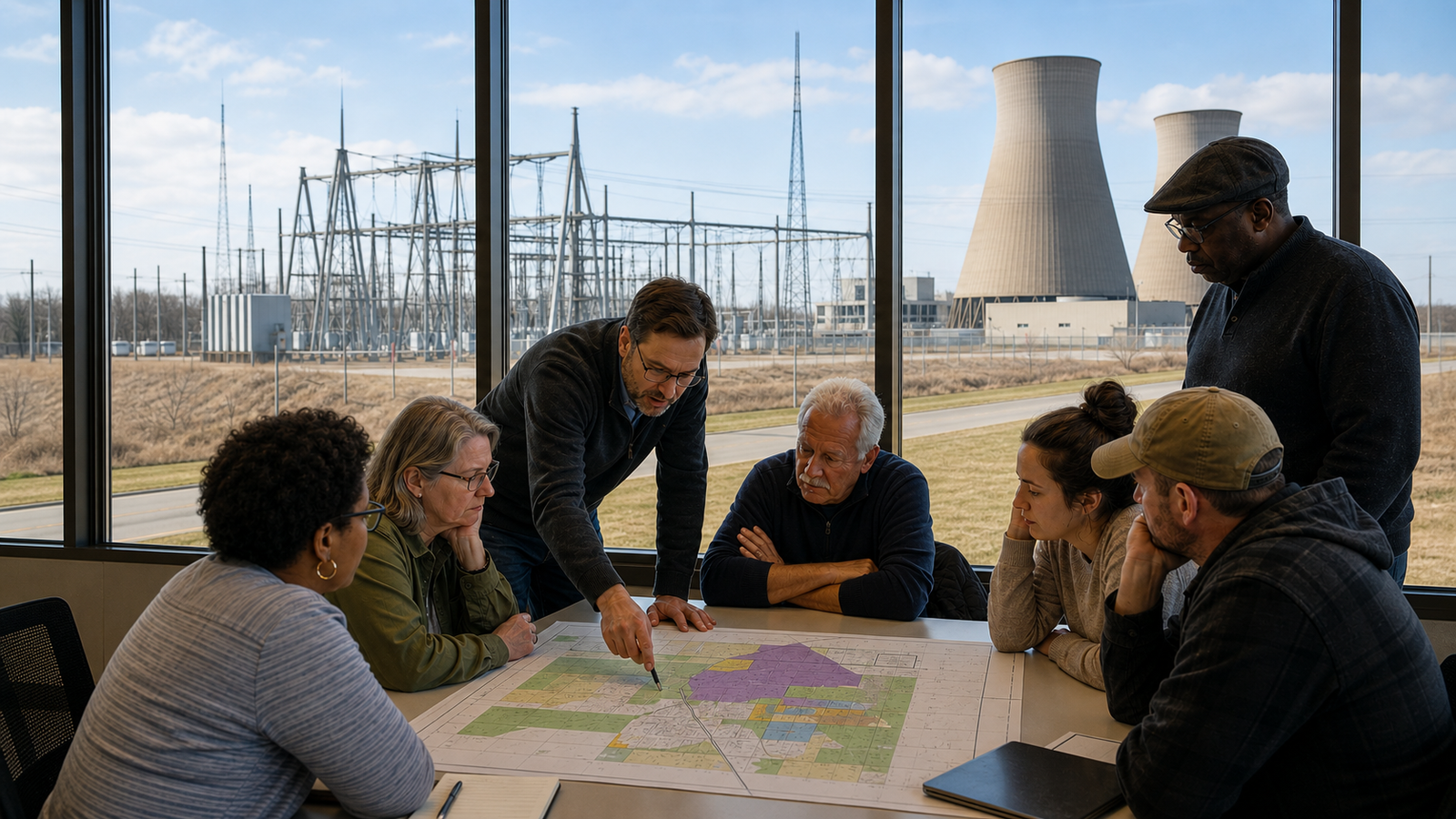
A city may have zoning rules for ordinary commercial buildings that do not account for an AI data center campus with enormous electrical capacity. A temporary moratorium can give planners time to update definitions, setbacks, environmental-review standards, and public-notice requirements. It can also allow officials to study cumulative effects when several campuses are proposed in the same corridor.
The economic benefits are real, but they need to be measured
Supporters of AI data centers point to substantial investment. Construction can create jobs for electricians, engineers, equipment suppliers, builders, and specialized contractors. A completed campus may generate property-tax revenue, lease payments, and demand for local services. It may also help attract other technology companies that value reliable digital infrastructure.
Those benefits deserve serious consideration, especially in communities seeking new economic activity. Yet the benefits are not always distributed in the same way as the costs. Construction employment may last only a few years, while the facility’s demand for power and water continues for decades. A project may receive tax abatements that reduce expected public revenue. Permanent staffing may also be smaller than headlines suggest because large facilities can be highly automated.
A credible AI data center proposal should disclose construction jobs, permanent jobs, wages, tax payments, public incentives, utility upgrades, water demand, emergency-service requirements, and conditions for future AI data center expansion. The Consumer Reports explainer on AI data centers, electric bills, water, and community effects helps explain why public concern extends beyond the project boundary.
The question residents are asking is not simply, “Does AI have value?” It is, “Does this particular AI data center create enough public value to justify the resources and risks it requires?” Readers thinking about automation and employment can continue with the highlighted internal link below.
Why states and cities are choosing a pause
A moratorium on AI data centers is usually a temporary pause, not automatically a permanent ban. It can stop new permits while officials study impacts, rewrite zoning rules, negotiate utility protections, or wait for a state framework. A permanent prohibition is broader and signals that the jurisdiction does not want the use at all.
The National Conference of State Legislatures’ AI data-center policy tracker says lawmakers in 15 states are considering bans or moratoriums. The proposals vary. Some focus on facilities above a particular megawatt threshold. Others pause approvals until a utility or state agency completes a study. Some restrict local permitting, while others give municipalities more power to regulate development.
The 2026 state policy overview from MultiState describes the conflict between efforts to accelerate AI infrastructure and lawmakers’ concerns about energy costs, environmental impacts, and local control. Federal and corporate timelines can move faster than local planning processes. A city council may be asked to approve an AI data center within months even though its transmission, water, and environmental effects may last for decades.
Critics of AI data center moratoriums have a legitimate point. A blanket pause can freeze responsible projects along with irresponsible ones. It may push investment to a neighboring jurisdiction without solving the regional infrastructure problem. Supporters also have a legitimate point: once land is cleared, a substation is built, and a long-term utility agreement is signed, reversing the decision can be expensive or impossible.
The quality of a pause depends on what officials do with the time. A useful moratorium produces clear standards and reliable information. An indefinite delay simply postpones a difficult decision.
What responsible approval could look like
The choice does not have to be between approving every project and blocking every project. Communities can create a middle path for AI data centers by linking permission to measurable protections. Before final approval, a city could require an independent assessment of electricity demand, water availability, traffic, noise, air emissions, emergency response, and cumulative regional effects.
Utility contracts can require a large AI data center customer to pay for reserved capacity, transmission upgrades, and a defined share of stranded costs if it cancels or downsizes. Regulators can also require financial security so that a developer—not ordinary ratepayers—covers obligations created specifically for the project.
Water rules can require reclaimed water where feasible, closed-loop cooling, drought contingency plans, transparent metering, and enforceable withdrawal limits. Air-quality permits can address onsite generation, backup-generator testing, fuel storage, and cumulative emissions. Noise standards can include nighttime limits and independent monitoring after the AI data center opens.
Community-benefit agreements can address workforce training, school funding, road improvements, broadband access, emergency-service support, or payments tied to measurable impacts. They should not replace legal standards, but they can make the distribution of benefits more visible.
Finally, approval should reflect the full life cycle of a facility. AI hardware changes quickly, and an AI data center approved for one workload may later be expanded or repurposed. Permits should define what counts as a material expansion and require a new review when power demand, water use, onsite generation, or building footprint changes substantially.
A useful comparison for AI data centers is AI privacy. People do not necessarily reject every AI tool; they ask what data is collected, how it is used, and what safeguards exist. The same principle applies to physical infrastructure. The highlighted internal link below can connect readers to that related concern.
| Community question | Why it matters | Possible safeguard |
| Who pays for new grid infrastructure? | New substations and generation can affect utility rates. | Special rates, minimum-payment commitments, and financial security. |
| Where will cooling water come from? | A large facility can compete with households during shortages. | Reclaimed water, metering, closed-loop systems, and drought limits. |
| What emissions and noise will neighbors experience? | Onsite generation and cooling equipment affect quality of life. | Air permits, cleaner backup power, setbacks, sound limits, and monitoring. |
| What will the city receive? | Tax breaks can reduce expected public revenue. | Published incentive agreements and measurable community benefits. |
| What happens if the campus expands? | AI workloads and equipment can change after approval. | Triggers for supplemental review and updated impact studies. |
Conclusion: this is a planning debate, not simply a technology debate
American cities are starting to block or slow AI data centers because national technology ambitions become visible at the local level. Electricity demand can require major grid investment. Cooling can draw heavily on water supplies. Backup power can raise air-quality questions. Large campuses can change land use, create noise, and place uncertain costs beside more certain public commitments.
The economic case for AI data centers should not be dismissed. AI data centers can bring investment, construction work, tax revenue, digital capacity, and a role in the technology economy. A responsible community conversation should weigh those benefits against independently measured costs rather than treating either side’s talking points as the complete story.
The most practical answer is neither an unconditional welcome nor a permanent ban. It is a transparent approval process with impact studies, fair utility rates, enforceable water and air safeguards, clear expansion rules, and community benefits that can be verified. If developers meet those conditions, cities may have a stronger reason to approve projects. If they cannot, a pause may be the responsible decision.
Frequently Asked Questions About AI Data Centers
Why are cities blocking AI data centers?
Cities are considering restrictions because large AI data centers can pressure electricity grids, water systems, roads, land, and local air quality. Officials are also asking whether tax incentives and promised jobs justify the infrastructure costs. In many cases, the proposed action is a temporary moratorium or additional review rather than a permanent ban.
How much electricity do AI data centers use?
Usage varies by facility, workload, design, and operating schedule. The Congressional Research Service says U.S. data centers used approximately 176 terawatt-hours in 2023 and notes that a 100-megawatt AI data center can use electricity comparable to about 80,000 U.S. households. AI-focused campuses can be especially energy-intensive because of the hardware required for training and inference.
Do AI data centers use a lot of water?
Some AI data centers use significant amounts of water for cooling, although the total depends on climate and system design. The CRS cites an illustrative estimate of roughly 530,000 gallons per day for a 100-megawatt U.S. facility across cooling strategies, with about 190,000 gallons consumed onsite. Air cooling, closed-loop systems, and reclaimed wastewater can reduce pressure on drinking-water supplies.
Will AI data centers raise household electricity bills?
AI data centers can create upward pressure if utilities build generation or transmission for a project and recover those costs from a broad customer base. For AI data centers, the outcome depends on contracts, rate design, regulation, and whether the facility pays for the capacity and upgrades it requires. Special rates and minimum-payment commitments are intended to limit cost shifting.
Do AI data centers create many permanent jobs?
AI data centers can create substantial construction employment and some long-term technical, security, facilities, and operations jobs. Permanent staffing may be smaller than construction staffing because large campuses can be highly automated. Cities should request separate estimates for temporary jobs, permanent jobs, wages, tax revenue, incentives, and public infrastructure commitments.
Is a moratorium the same as a permanent ban?
No. A moratorium is generally a temporary pause on permits or construction while officials study impacts or update rules. A permanent ban is a longer-term prohibition. The exact meaning depends on the legislation or local ordinance, so readers should check the current text and status.
What would make an AI data center project more acceptable to a community?
An AI data center project is more likely to earn public support when it provides transparent information, pays a fair share of utility upgrades, protects water supplies, controls emissions and noise, limits land impacts, and offers measurable community benefits. Independent impact studies and enforceable permit conditions are more reliable than broad promises about innovation.