
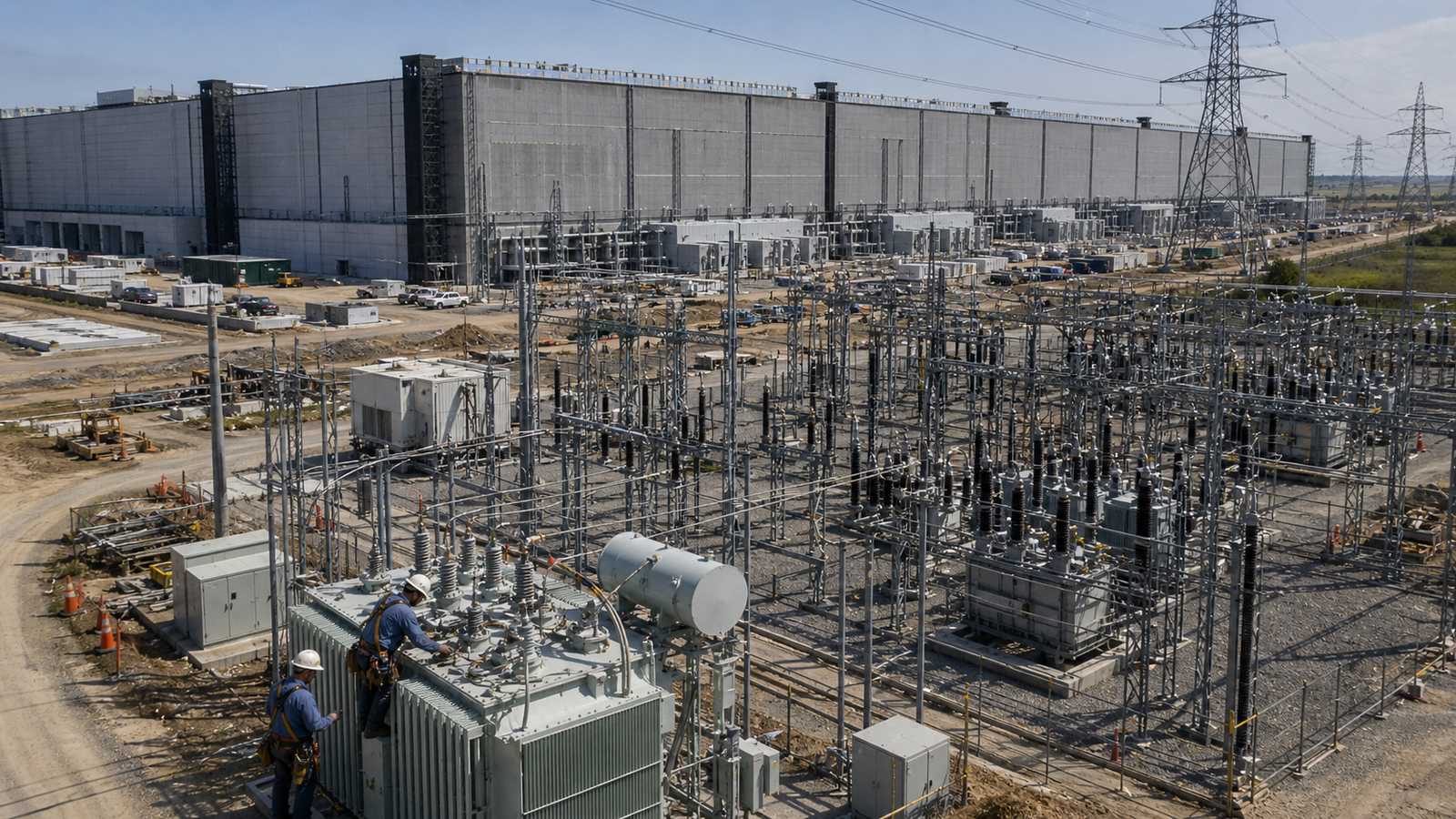
America’s artificial intelligence boom is colliding with an old physical limit: electricity must be generated, transmitted, and delivered before a computer can use it. That is the central AI power shortage. The country can build advanced chips and train enormous models quickly, but every new data center still needs substations, transmission capacity, cooling, backup power, and a reliable grid connection.
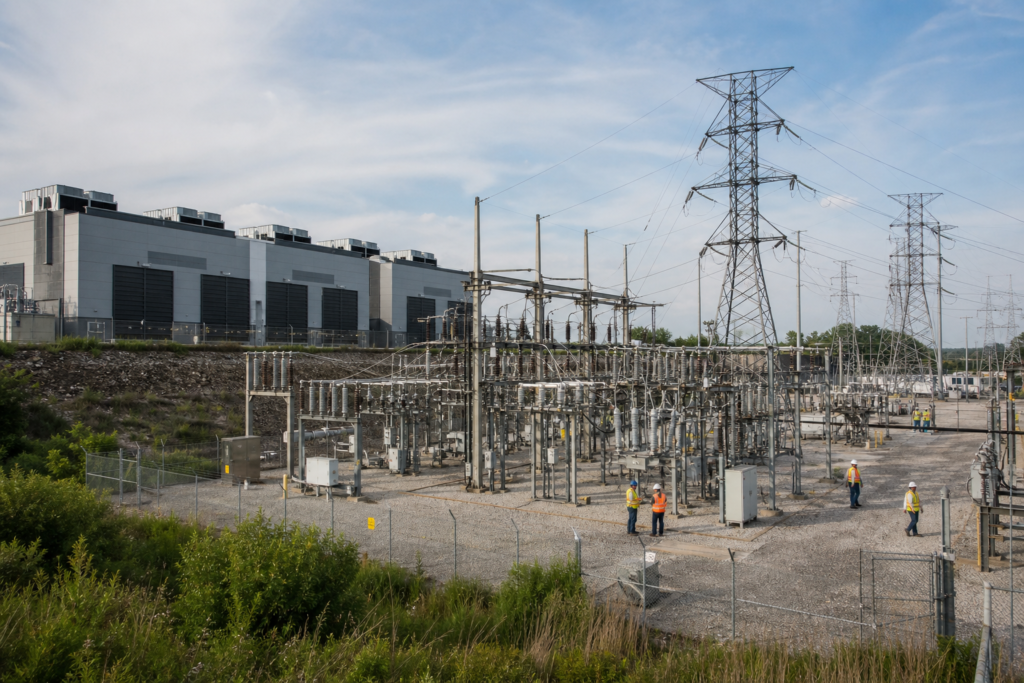
The phrase does not mean that the United States has run out of electricity everywhere. It means that many regions may not have enough new, firm, affordable, and deliverable power where AI facilities are being proposed. Building generation and transmission can take years, while developers often want capacity within two or three years.
The Congressional Research Service’s overview of data-center energy consumption estimates that U.S. data centers used approximately 176 terawatt-hours in 2023, or about 4.4% of national electricity consumption. Some projections show that use could double or triple by 2028. AI is not the only cause, but it is a major force behind the newest and most power-intensive facilities.
Why the AI power shortage is different from an ordinary electricity-demand increase
Electricity demand has always grown with population and industry, but the current wave is unusual because AI loads are large, concentrated, and continuous. The International Energy Agency estimates that a typical AI-focused data center can consume as much electricity as roughly 100,000 households, while the largest facilities under construction can require around 20 times as much.
Training and serving models use dense accelerator racks that generate heat. Servers, cooling, networking, storage, pumps, lighting, and backup equipment all add to the load. The IEA’s explanation of AI energy demand says servers account for around 60% of electricity use in modern facilities on average, while cooling can represent a much larger share in less-efficient centers.
The operating pattern matters too. EIA models server demand as effectively flat across the day, so utilities must plan for a persistent load during heat waves, cold snaps, maintenance periods, and outages. That makes the AI power shortage a reliability problem as well as an annual-energy problem.
America’s demand forecasts are rising, but the numbers are not settled
No forecast can predict exactly how many proposed centers will be built, how intensely they will run, or how quickly chips and software will improve. Some projects have financing and permits; others are still seeking a grid connection. Treating every announcement as guaranteed demand can exaggerate the gap, but ignoring the pipeline can create the opposite mistake.
The World Resources Institute’s analysis of U.S. data-center electricity demand cites estimates of roughly 325 to 580 terawatt-hours of annual data-center use by 2030, or about 6.7% to 12% of U.S. electricity consumption depending on assumptions. EIA’s Annual Energy Outlook 2026 projects data-center servers alone could use 446 billion to 818 billion kilowatt-hours by 2050, while server demand rises from an estimated 7% of commercial-sector electricity in 2025 to 22%–33% of commercial-building electricity in its cases.
These are scenarios, not settled facts. Efficiency could lower energy per task, while cheaper AI could increase total use. The range is uncertain, but the pressure behind the AI power shortage is real enough to require planning now.
The grid can have enough national energy but not enough local capacity
The United States does not need one giant new power plant. It needs power in the right region, connected to the right transmission system, delivered through the right substation, and available when a data center needs it. A utility can have enough annual generation while lacking the local equipment for a new 500-megawatt customer.
The IEA reports that nearly half of U.S. data-center capacity is concentrated in five regional clusters, and that around half of U.S. projects under development are in existing clusters. That concentration makes the AI power shortage appear suddenly in one utility territory even when national statistics look manageable.
Transmission lines in advanced economies can take four to eight years to build, while transformer and cable wait times have lengthened. A data-center building may be finished before its grid connection is ready. Conversely, building too early for a project that never materializes can leave customers with underused infrastructure.
Why timing makes the AI power shortage harder to solve
The calendar creates a difficult choice for utilities. If they wait until every AI project is certain, they may not finish new substations and transmission lines before companies need them. If they build immediately for every announced project, they may invest in capacity that is delayed, downsized, or canceled. The AI power shortage is therefore partly a planning problem caused by imperfect information.
This timing gap also affects competition. A technology company may choose a location based on available land and fiber, only to discover that the local grid cannot deliver the promised capacity. It may then seek private generation, purchase power from another producer, or move the project to a different state. Those workarounds can help an individual company, but they do not automatically solve regional reliability or household-cost concerns.
Better planning can reduce the risk. Utilities can publish queue data, require milestones before reserving capacity, and coordinate with regional transmission organizations. Developers can provide realistic construction schedules and energy forecasts rather than treating a preliminary request as a guaranteed load. Those steps make the AI power shortage easier to manage without blocking every project.
Why the AI power shortage can affect household electricity bills
The public concern is not simply whether AI uses electricity; it is who pays for generation, substations, transformers, transmission, and reserve capacity built for large customers. If costs are spread across all ratepayers, households may help finance private expansion.
The CRS discusses special rates, minimum-payment commitments, and cost-allocation rules for constrained areas. The Environmental and Energy Study Institute’s analysis of data-center power demand and energy bills reports hundreds of gigawatts of interconnection requests in 2025 and more than $29 billion in utility rate-increase requests during the first half of that year. These figures do not prove AI caused every price increase, but they explain why regulators are examining large-load rules.
Contracts can require large customers to pay for reserved capacity and dedicated upgrades, with financial security or minimum bills if projects are canceled. Such rules directly address the AI power shortage without making ordinary customers the automatic backstop.
Can new power generation solve the problem quickly?
America can add electricity through solar, wind, storage, natural gas, nuclear, hydropower, geothermal, efficiency, and demand response, but each option has a different cost and timeline. Renewables need transmission and storage; gas raises fuel and emissions questions; new nuclear and advanced geothermal require years of financing and construction.
The Department of Energy’s resource guide for meeting data-center electricity demand describes a portfolio of clean generation, storage, existing nuclear and hydropower, grid expansion, efficiency, flexible demand, innovative tariffs, and interconnection reform. That is practical because the AI power shortage combines supply, transmission, local capacity, affordability, reliability, and timing problems.
Rushing to revive older coal plants or build gas capacity could create emissions and expensive assets that become uneconomic if demand changes. Rejecting every project could delay innovation. The better test is whether a resource is reliable, affordable, responsibly sited, and useful beyond one company’s expansion plan.
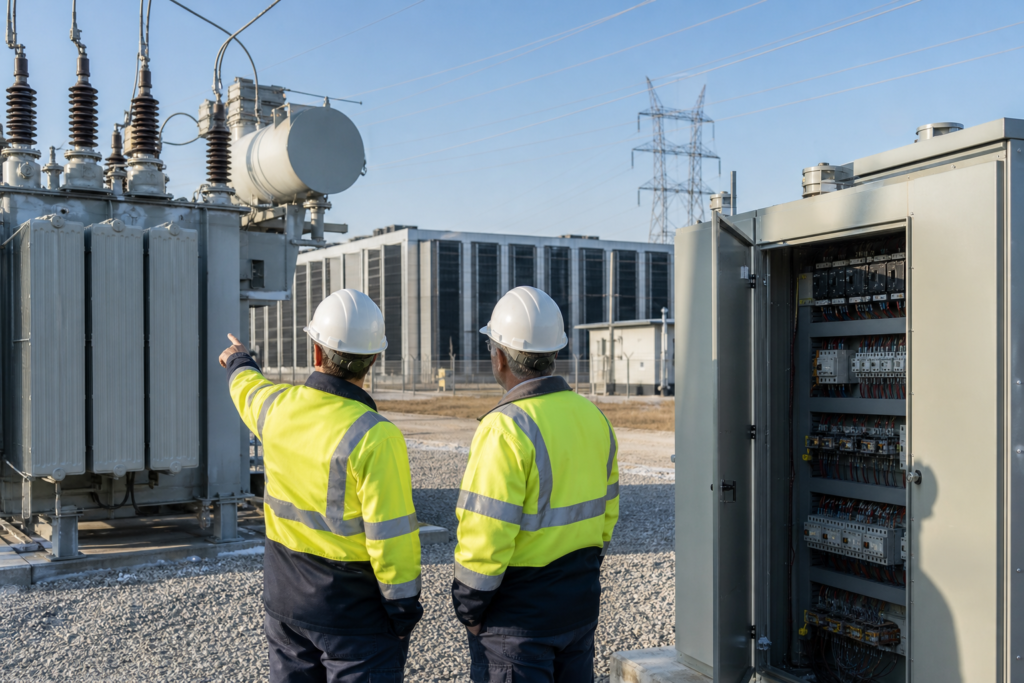
Efficiency may soften the AI power shortage, but it will not erase it alone
Better chips, models, cooling, and software can reduce the electricity required for each AI task. The IEA’s scenarios show that stronger efficiency can materially reduce future data-center demand. Yet cheaper computing may encourage more use, so total electricity can rise even as energy per task falls.
Regulators should measure both efficiency and total load. A center can have an excellent efficiency score while expanding its server fleet rapidly. Training and batch workloads may also be shifted away from stressed hours when companies design systems for flexibility. These steps can soften the AI power shortage, but they cannot replace transparent reporting of total demand, peak load, backup generation, water use, and expansion plans.
What should America do before approving more AI data centers?
Before approving more facilities, utilities and regulators need transparent forecasts that distinguish speculative requests from projects with financing, permits, equipment orders, and credible schedules. That reduces both overbuilding and underestimating a genuine regional surge.
Large customers should also pay a fair share of capacity and dedicated upgrades. Smarter siting can ease the AI power shortage by favoring areas with existing generation, transmission, industrial land, and water resources rather than already crowded technology corridors. Finally, America needs faster transmission planning, more transformers, improved interconnection rules, storage, flexible demand, and a diverse mix of clean and firm power. AI can help operate the grid, but it cannot replace physical infrastructure.
The public debate should also remain connected to the broader economic question. Data centers can create construction activity, tax revenue, cloud capacity, research opportunities, and technical employment. But benefits should be measured against incentives, infrastructure costs, permanent jobs, water use, emissions, and the possibility that a project may expand beyond its original plans.
AI Is Changing American Jobs Faster Than Most Workers Realize
Is America really running out of power?
America is not literally running out of electricity everywhere. The concern is that regional systems may not add enough capacity quickly and affordably where AI companies want to build. Power cannot move instantly across transmission constraints, and that is the real AI power shortage: a problem of deliverability and timing as much as total supply.
The outcome is not predetermined. Efficiency, flexible workloads, better siting, stronger transmission, storage, clean and firm generation, fair tariffs, and honest forecasts can reduce the risk.
Conclusion: America’s AI boom needs an electricity plan
The AI power shortage is a warning that digital ambitions still depend on physical systems. America can lead in artificial intelligence only if it can provide reliable power, new transmission, modern equipment, and prices households can afford. Building more servers without building the grid around them will create delays and cost disputes.
The answer is neither a blanket freeze nor unconditional approval. Forecasts should show uncertainty, developers should pay a fair share of dedicated infrastructure, and utilities should protect residential customers. With generation, transmission, storage, efficiency, flexible demand, and better siting, America’s AI boom can become durable progress rather than a race slowed by its own infrastructure limits.
Frequently Asked Questions About the AI Power Shortage
What is the AI power shortage?
The AI power shortage describes the risk that the United States will not have enough new, reliable, affordable, and deliverable electricity where fast-growing AI data centers need it. It does not mean every state has run out of power.
Why does AI require so much electricity?
AI training and deployment use specialized processors in dense racks that generate heat. Cooling, networking, storage, pumps, and backup systems add to the load, making an AI-focused data center far more power-intensive than an ordinary office.
How much electricity do U.S. data centers use?
The CRS estimates that U.S. data centers used approximately 176 terawatt-hours in 2023, about 4.4% of national electricity consumption. Forecasts vary because AI adoption, efficiency, cancellations, and construction are uncertain.
Will AI data centers make household electricity bills higher?
They can contribute to higher bills when utilities build infrastructure for large customers and recover those costs broadly. The impact depends on regulation, contracts, special rates, minimum payments, and whether companies pay for reserved capacity.
Can renewable energy solve the AI power shortage?
Renewables can supply significant new demand when combined with transmission, storage, efficiency, and flexible operation. Data centers also need reliable power, so grids may require firm resources and stronger interconnections. No single technology solves every regional constraint.
Could better AI efficiency reduce electricity demand?
Yes. Efficient chips, models, cooling, and software can reduce electricity per task, but lower computing costs may encourage more use. Total demand still needs to be measured directly.
What should policymakers do about the AI power shortage?
They should improve forecasting, separate credible projects from speculative requests, require fair cost allocation, accelerate transmission, support diverse generation, encourage efficiency and flexible workloads, and publish impacts on rates, reliability, land, water, and emissions.