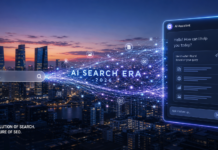
The traditional search landscape has officially shifted from a list of blue links to a synthesized conversation. When a user asks a modern AI assistant for a recommendation or an explanation, they no longer scroll through pages of search results to find the answer. Instead, the AI engine performs a series of rapid sub-queries, retrieves the most authoritative information from across the web, and presents a single, coherent narrative. For digital marketers and content creators, this transition means that ranking on page one of Google is no longer the final goal. The new objective is to be the source that the AI chooses to cite within that narrative. This practice is known as Generative Engine Optimization, and it represents the most significant change to digital visibility. By mastering Generative Engine Optimization, you ensure your content is ready for the future. to digital visibility since the invention of the search engine itself. In a world where AI summaries are the first and often only point of contact for information seekers, being invisible to these models is equivalent to not existing at all.
Generative Engine Optimization is not a replacement for traditional SEO, but rather an advanced layer that addresses how large language models process and prioritize information. While Google still uses backlinks and technical signals to index the web, AI engines like Perplexity, ChatGPT, and Gemini look for specific attributes that make content “citation-worthy.” According to recent industry research, the overlap between top-ranking Google links and the sources cited by AI has dropped significantly, meaning that a high search rank no longer guarantees AI visibility. To stay relevant in 2026, brands must master the new rules of engagement that allow their expertise to be extracted, summarized, and recommended by the machines that now guide human decision-making. The core of this strategy lies in understanding the Generative Engine Optimization (GEO) 2026 Guide and how it reshapes the path to discovery. Implementing Generative Engine Optimization correctly is now a competitive necessity for all digital marketers.
The rise of Generative Engine Optimization marks the end of the “keyword stuffing” era and the beginning of the “authority and proof” era. In the past, search engines were primarily pattern matchers; they looked for words on a page that matched words in a query. Today, generative engines are reasoning engines. They attempt to understand the underlying intent of a user and provide a solution that is both helpful and accurate. This requires content that is not just relevant, but deeply authoritative and easy for an AI to parse. As we move deeper into 2026, the brands that succeed will be those that view their website not just as a destination for humans, but as a structured database of knowledge for the AI agents that serve them.
1. Lead with the Answer Using the Inverted Pyramid
The first and most critical rule of Generative Engine Optimization is to adopt an answer-first content structure. Generative Engine Optimization favors clarity above all else. AI search engines are designed to satisfy user intent as quickly as possible, often by extracting specific passages to build their responses. If the core answer to a user’s question is buried under a long introductory preamble or hidden behind anecdotal storytelling, the AI crawler may fail to identify the page as a primary source. Research into AI citation behavior has shown that models are significantly more likely to cite content found in the first thirty percent of a page. This requires a shift toward the “inverted pyramid” style of journalism, where the most essential information is delivered immediately, followed by supporting details and context. This structural choice is foundational for anyone following GEO Best Practices for 2026 Strategy, as it directly influences how retrieval-augmented generation systems interact with your site.
By providing a clear, concise summary of the topic in the opening two hundred words, you provide the AI with a “clean answer unit” that is easy to summarize. This does not mean that long-form content is dead, but rather that the structure of that content must be optimized for machine extraction. A well-optimized page for the AI era should act as a series of standalone answers linked by a common theme. Each section should be able to provide value even if it were read in isolation, as this is exactly how retrieval-augmented generation systems process your website. Leading with the answer ensures that your most valuable insights are the first thing an AI sees when it evaluates your page for a potential citation. This approach also helps human readers who are scanning for quick information, creating a better user experience that search engines still value.
In practice, this means rethinking how you approach every blog post and product page. Instead of starting with “In today’s fast-paced world,” you should start with “The best way to solve X is by doing Y.” This directness is what AI models are looking for when they attempt to synthesize a helpful response. It reduces the computational effort required for the model to find the relevant information, which in turn increases the likelihood that your site will be the one chosen as the authoritative source. As more users turn to conversational interfaces for their daily needs, this “answer-first” mentality will become the baseline for all successful digital communication. Imagine a user asking, “How do I fix a leaky faucet?” An AI will look for a source that says, “To fix a leaky faucet, first turn off the water supply,” not one that spends five paragraphs discussing the history of indoor plumbing.
Furthermore, this rule applies to the micro-level of your writing. Each paragraph should ideally start with a topic sentence that conveys the main point. This “scannable” writing style is perfectly suited for the way large language models tokenize and analyze text. By making your main points impossible to miss, you maximize your chances of being the source that the AI picks up and presents to the world. Generative Engine Optimization is, at its heart, about reducing friction between your knowledge and the AI’s retrieval process.

2. Optimize for Automated Query Fan-Out
One of the least understood aspects of the new search era is how AI engines actually perform a search. When a user enters a complex, conversational prompt, the AI does not simply paste that entire sentence into a database. Instead, it performs what is known as “query fan-out,” breaking the user’s intent into multiple smaller, specific sub-queries. For example, a request for the best travel gear for a winter trip to Japan might trigger sub-queries for “Japan winter weather patterns,” “best insulated travel boots,” and “lightweight thermal layers for packing.” To win the citation, your content must be the best answer for these specific fragments, not just the broad topic. This is a central theme discussed by the Top Experts in Generative Engine Optimization, who emphasize the need for granular content coverage.
Generative Engine Optimization requires you to anticipate these sub-queries and address them directly. Through Generative Engine Optimization, you can capture more long-tail traffic from AI assistants. This involves moving beyond high-volume head terms and focusing on the long-tail, conversational questions that naturally arise during a complex task. By structuring your articles to answer these granular sub-questions, you increase the number of “entry points” an AI engine has into your content. This strategy ensures that your brand appears in the AI’s synthesis regardless of which specific sub-query the model prioritizes. Mapping out the potential fan-out of your primary keywords is now a foundational step in any modern content strategy.
To implement this effectively, you should look at the “People Also Ask” sections of traditional search results and use AI tools to generate a list of potential sub-queries for your target topics. Each of these sub-queries should be addressed as a distinct section within your article, complete with its own heading and direct answer. This multi-layered approach ensures that your content is comprehensive enough to satisfy the AI’s need for depth while being specific enough to satisfy its need for precision. As AI search engines become more sophisticated in how they decompose user intent, the ability to rank for these sub-queries will become a major competitive advantage.
For instance, if you are writing about “AI in Healthcare,” you should not just cover the broad benefits. You should include sections on “AI for diagnostic accuracy,” “AI in hospital administrative efficiency,” and “Ethical considerations of AI in patient care.” Each of these represents a potential fan-out query that an AI engine might use to build a comprehensive report for a user. By covering all the bases, you ensure that you are the most useful source for the AI, regardless of how it chooses to break down the user’s request. This level of detail is what defines the most successful Generative Engine Optimization efforts in 2026.
3. Prioritize Citation-Worthiness Through Data and Proof
In an era where AI can generate plausible-sounding text on any subject, the value of original data and verifiable proof has skyrocketed. AI search engines are increasingly programmed to favor sources that provide unique evidence, statistics, and expert perspectives. A study by Princeton University found that including specific data points and attributed quotes can improve a brand’s visibility in AI responses by as much as forty percent. This is because these elements act as “anchors” for the AI’s reasoning, providing the factual basis that the model needs to justify its recommendations to the user. This research is detailed in the official GEO Research Paper from Princeton University, which remains the most authoritative scientific work on the subject.
To excel at Generative Engine Optimization, every piece of content should include at least one unique insight. Generative Engine Optimization is built on a foundation of verifiable truth. This could be internal company data, a original case study, or a direct quote from a recognized industry authority. When you provide these “proof points,” you make it easier for the AI to cite you as a credible source. Furthermore, citing other authoritative external resources within your own writing signals to the AI that your content is well-researched and trustworthy. In the AI era, the most successful content is not just well-written; it is the most provable.
This requirement for proof is a direct response to the problem of AI hallucinations. Because large language models sometimes invent information, their developers are placing a higher premium on sources that can be cross-referenced with established facts and data. By becoming a primary source of information, you position your brand as a pillar of truth in a digital landscape that is increasingly filled with synthetic content. This not only improves your standing with AI models but also builds deep trust with your human audience, who are becoming more skeptical of unverified claims.
In practical terms, this means you should invest in original research, surveys, and deep-dive case studies. Don’t just say “many businesses are using AI”; say “our survey of five hundred small business owners found that sixty-eight percent have integrated AI into their customer service workflows.” The latter is a specific, citeable fact that an AI engine can use to support its claims. The more of these “knowledge nuggets” you provide, the more often you will see your brand’s name appear in the citations of ChatGPT, Perplexity, and Gemini. Generative Engine Optimization is as much about data science as it is about content creation.
ChatGPT vs Gemini in 2026: I Gave Both the Same 15 Real-World Tasks

4. Build Algorithmic Confidence Through Entity Clarity
AI engines do not just read individual pages; they build a comprehensive understanding of “entities”—the brands, people, and concepts that exist across the digital world. To be cited consistently, your brand must be recognized as a clear and authoritative entity. This requires a high degree of consistency across every digital touchpoint, from your website and social media profiles to third-party reviews and industry mentions. If your brand is described differently in different places, it creates ambiguity that lowers the AI’s “confidence” in recommending you. This is why a consistent presence is a key part of any GEO: The Complete Guide for 2026 strategy.
Building entity clarity is a core pillar of Generative Engine Optimization. Generative Engine Optimization helps search engines understand exactly who you are. You must ensure that your brand’s core mission, expertise, and offerings are communicated using consistent terminology across the entire web. This includes using structured data, such as Schema markup, to explicitly tell search engines who you are and what you do. When an AI engine sees the same clear signals repeated across multiple credible sources, it develops the algorithmic confidence required to include your brand in its synthesized answers. In 2026, your reputation among machines is just as important as your reputation among humans.
Consider how your brand appears on LinkedIn, Twitter, and professional directories. Are the descriptions aligned? Does your “About Us” page match the way you are described in press releases? For an AI, these are all data points that it uses to build a profile of your brand. If you are a “software company” in one place and a “consulting firm” in another, the AI may struggle to categorize you correctly, leading to missed citation opportunities. By ruthlessly auditing your digital footprint and ensuring total alignment, you make it easier for the AI to understand exactly what you are an expert in and why you should be cited.
Entity clarity also extends to the individuals within your organization. If your CEO is recognized as an expert in a specific field, the AI will associate that expertise with your brand. This is why “Expertise, Authoritativeness, and Trustworthiness” (E-A-T) are more important than ever. By highlighting the credentials of your writers and spokespeople, you provide the AI with the necessary signals to trust your content. Generative Engine Optimization is about building a coherent and undeniable digital identity that machines can verify with absolute certainty.
5. Structure Content for Machine Extraction
The way you format your content has a direct impact on how easily an AI can use it. Dense blocks of text are difficult for both humans and machines to parse, whereas structured data is highly extractable. Generative Engine Optimization rewards the use of clear heading hierarchies, bulleted lists, and comparison tables. Proper formatting is essential for successful Generative Engine Optimization. These elements act as “signposts” that guide the AI crawler to the most relevant information. For instance, a comparison table that lists the features and pricing of different products is a goldmine for an AI engine looking to answer a “best of” query.
Using structured formatting also helps prevent the AI from misinterpreting your content. By presenting information in clean, logical units, you reduce the risk of the model hallucinating or attributing your insights to a competitor. It is also essential to ensure that your technical infrastructure supports AI crawling. This means checking your robots.txt file to ensure you are not accidentally blocking AI bots and avoiding the use of heavy JavaScript that might hide your content from a non-human visitor. When you make your content easy for the machine to read, you make it easy for the machine to cite.
Furthermore, you should avoid using ambiguous language or context-dependent phrases like “as mentioned above.” Each section of your content should be self-contained and clear, as the AI may only retrieve a single paragraph to use as a citation. If that paragraph relies on information found elsewhere on the page to make sense, it is less likely to be used. By writing in “standalone chunks,” you increase the utility of your content for the RAG systems that power modern AI search. This technical precision is what separates the winners from the losers in the GEO landscape.
Think about how a developer uses an API. They expect the data to be in a predictable format so they can use it in their own applications. In the world of Generative Engine Optimization, your content is the API, and the AI search engine is the application. If your “data” is messy, unstructured, and full of unnecessary filler, the application won’t be able to use it effectively. By adopting a “machine-first” approach to formatting, you ensure that your knowledge is always ready to be integrated into the AI’s synthesized responses.

6. Combat the Citation Cliff with Constant Freshness
In the fast-moving world of AI search, information has a shorter shelf life than ever before. AI engines often prioritize the most recent data to ensure their answers are accurate and timely. This has led to what some experts call the “citation cliff,” where even highly authoritative content loses visibility simply because it has not been updated recently. To maintain your position in the AI search era, you must commit to a strategy of constant freshness. This involves regularly reviewing and updating your most important pages to reflect the latest trends, data, and industry developments.
Generative Engine Optimization is not a “set it and forget it” activity. Ongoing Generative Engine Optimization ensures your content remains in the AI’s active memory. It requires ongoing monitoring of how AI engines are citing your brand and your competitors. If you notice a drop in your mention rate, it may be a sign that your content is becoming stale in the eyes of the models. By frequently adding new insights, updating statistics, and refreshing your expert quotes, you signal to the AI that your page remains the most relevant source for a given topic. Staying at the top of the AI’s “active memory” requires a proactive approach to content maintenance.
This freshness also applies to your internal linking strategy. As you publish new articles, you should revisit your older content to ensure it links to your latest research. This creates a web of interconnected, up-to-date information that AI engines love to crawl. A site that is constantly evolving and expanding its knowledge base is far more attractive to an AI than a static archive of old blog posts. By treating your website as a living document, you ensure that you are always ready to be cited as the current authority in your field.
In the AI search era, the “first-mover advantage” is often replaced by the “last-updater advantage.” The source that provides the most recent and relevant data is the one that will be cited, even if an older source was more authoritative in the past. This makes content maintenance a core part of your Generative Engine Optimization workflow. You should have a recurring schedule for auditing your top-performing pages and ensuring they reflect the absolute latest information available. This commitment to freshness is what keeps your brand relevant in a world that never stops moving.
7. Focus on Share of Voice and Mention Rate
In traditional SEO, the primary metric of success is your rank for a specific keyword. In the world of Generative Engine Optimization, success is measured by your “share of voice” and “mention rate.” Because AI responses are non-deterministic—meaning they can change every time a prompt is entered—being number one is less important than being mentioned frequently across a large volume of different queries. Your goal is to increase the percentage of time that your brand appears when a user asks a question related to your industry.
This shift in measurement requires a new approach to reporting. Instead of just tracking keyword positions, you should monitor how often your brand is cited by tools like Perplexity and ChatGPT. Analyzing the sentiment of these mentions is also crucial, as being cited in a negative context can damage your entity authority. By focusing on increasing your overall mention rate, you build a broader and more resilient digital presence that is less susceptible to the fluctuations of any single algorithm. In the AI search era, visibility is a game of frequency and authority, not just rankings.
Ultimately, Generative Engine Optimization is about dominating the conversation. Generative Engine Optimization allows you to own entire topics rather than just keywords. If every time someone asks an AI about your category, your brand is mentioned as one of the top three options, you have achieved a level of visibility that traditional search results could never provide. This requires a shift from targeting individual keywords to owning entire topics. By becoming the most-cited source for a specific subject area, you ensure that your brand is the one that the AI—and by extension, the user—trusts the most.
To achieve this, you need to understand the “conversational ecosystem” of your industry. What are the common questions people are asking AI assistants? What are the recurring themes in the AI’s responses? By identifying these patterns, you can create content that fills the gaps and positions your brand as the missing piece of the puzzle. Generative Engine Optimization is about being omnipresent in the AI’s knowledge base, ensuring that no matter how a user phrased their question, your brand is part of the answer.
The Future of SEO in the AI Era
As we look toward the future, the boundaries between SEO and Generative Engine Optimization will continue to blur. Google itself is transforming into a generative engine with its AI Overviews, and new players like Perplexity are redefining what a search engine can be. The fundamental principles of high-quality content—relevance, authority, and trust—will remain the same, but the way they are communicated and measured will evolve. Brands that embrace this change now will be the ones that define the next decade of digital marketing.
The future of search is not about fighting for clicks; it’s about providing the most valuable knowledge to the systems that serve humanity. By following the rules of Generative Engine Optimization, you are not just optimizing for a machine. Generative Engine Optimization is the future of digital discovery. The era of the blue link is ending, but the era of the authoritative answer is just beginning. Make sure your brand is the one providing it.
| GEO Metric | Definition | Importance for 2026 |
| Mention Rate | The frequency with which a brand appears in AI-generated responses. | High: Indicates overall visibility in the AI search landscape. |
| Share of Voice | The percentage of brand mentions compared to direct competitors. | Critical: Measures competitive dominance in synthesized answers. |
| Citation Rate | How often an AI engine provides a direct link to your website. | High: Drives referral traffic and validates source authority. |
| Sentiment Mix | The ratio of positive, neutral, and negative brand mentions. | Critical: Influences entity authority and consumer trust. |
| Topic Coverage | The range of sub-topics within a category where a brand is cited. | High: Ensures visibility across the entire customer journey. |
Conclusion
The rise of Generative Engine Optimization represents a fundamental change in how information is discovered and consumed. As AI search engines become the primary interface for the internet, the strategies that worked for the blue-link era are no longer sufficient on their own. By embracing the rules of answer-first structure, query fan-out, and entity clarity, you can ensure that your expertise remains visible in a world governed by algorithms. The transition to GEO is an opportunity for brands to double down on what truly matters: providing high-quality, provable, and authoritative value to their audience. Those who adapt to these seven critical rules will not only survive the AI search era but will define the future of digital influence. The journey toward total AI visibility begins with a commitment to clarity, proof, and constant evolution.
Frequently Asked Questions
What is the difference between SEO and Generative Engine Optimization?
Generative Engine Optimization is a specialized field focused on AI-driven search. While traditional SEO targets human-read lists, Generative Engine Optimization targets synthesized machine answers.
Traditional SEO focuses on ranking a specific web page in a list of search results based on keywords and backlinks. Generative Engine Optimization focuses on making your content the primary source that an AI engine cites when it synthesizes a conversational answer. While SEO is about winning the click, GEO is about being part of the answer itself. This requires a different approach to content structure and authority building that emphasizes extractability and proof.
How can I track my brand’s visibility in AI search?
Tracking visibility in the Generative Engine Optimization era involves monitoring mention rates and share of voice. Generative Engine Optimization metrics are more conversational than traditional rankings.
Tracking visibility in the AI era requires monitoring your “mention rate” and “share of voice” across platforms like ChatGPT, Perplexity, and Google AI Overviews. You can use specialized AI tracking tools to see how often your brand is cited for specific prompts and to analyze the sentiment of those mentions compared to your competitors. Regular prompt testing is also essential to understand how different models perceive your brand.
Does traditional SEO still matter in 2026?
Yes, traditional SEO remains the foundation of digital visibility. AI search engines often use top-ranking Google results as their primary sources for retrieval-augmented generation. By maintaining strong technical SEO and a healthy backlink profile, you provide the signals that allow AI crawlers to find and trust your content in the first place. GEO is a layer that sits on top of these traditional foundations.
Why is structured data important for Generative Engine Optimization?
Structured data is the language of Generative Engine Optimization. It allows AI models to parse your content with high confidence, which is a key requirement for Generative Engine Optimization success.
Structured data, such as Schema markup, provides a clear and unambiguous map of your content for AI crawlers. By explicitly defining your brand, authors, and topics, you help the AI understand your “entity” with higher confidence. This reduces the risk of errors and increases the likelihood that your content will be correctly cited in a response. It is the most effective way to communicate directly with the machine.
How often should I update my content for the AI era?
Regular updates are vital for Generative Engine Optimization. To avoid the citation cliff, your Generative Engine Optimization strategy must include a frequent refresh cycle for all key pages.
Content should be updated whenever there is a significant change in the industry or when new data becomes available. Because AI engines prioritize freshness to avoid the “citation cliff,” regularly refreshing your most important pages with new expert quotes and updated statistics is essential for maintaining high visibility in synthesized answers. A monthly review of your top-performing pages is a good starting point.
Can AI search engines read content behind a paywall?
Generally, no. AI crawlers can only index and cite content that is publicly accessible in the HTML of a page. If your most valuable insights are hidden behind a login or a paywall, they will not be available for the AI to use as a source. To optimize for GEO, you must ensure that your core answers are available to be crawled, even if you keep more detailed information for your subscribers.
What are “fan-out” queries in AI search?
Fan-out queries are a core component of Generative Engine Optimization. By addressing these sub-queries, you improve your Generative Engine Optimization performance across complex user intents.
Fan-out queries occur when an AI engine takes a complex user prompt and breaks it into several smaller, more specific search queries to gather comprehensive information. Generative Engine Optimization involves identifying these potential sub-queries and ensuring your content provides the best possible answer for each granular fragment of the topic. This ensures your brand is present at every step of the AI’s research process.