
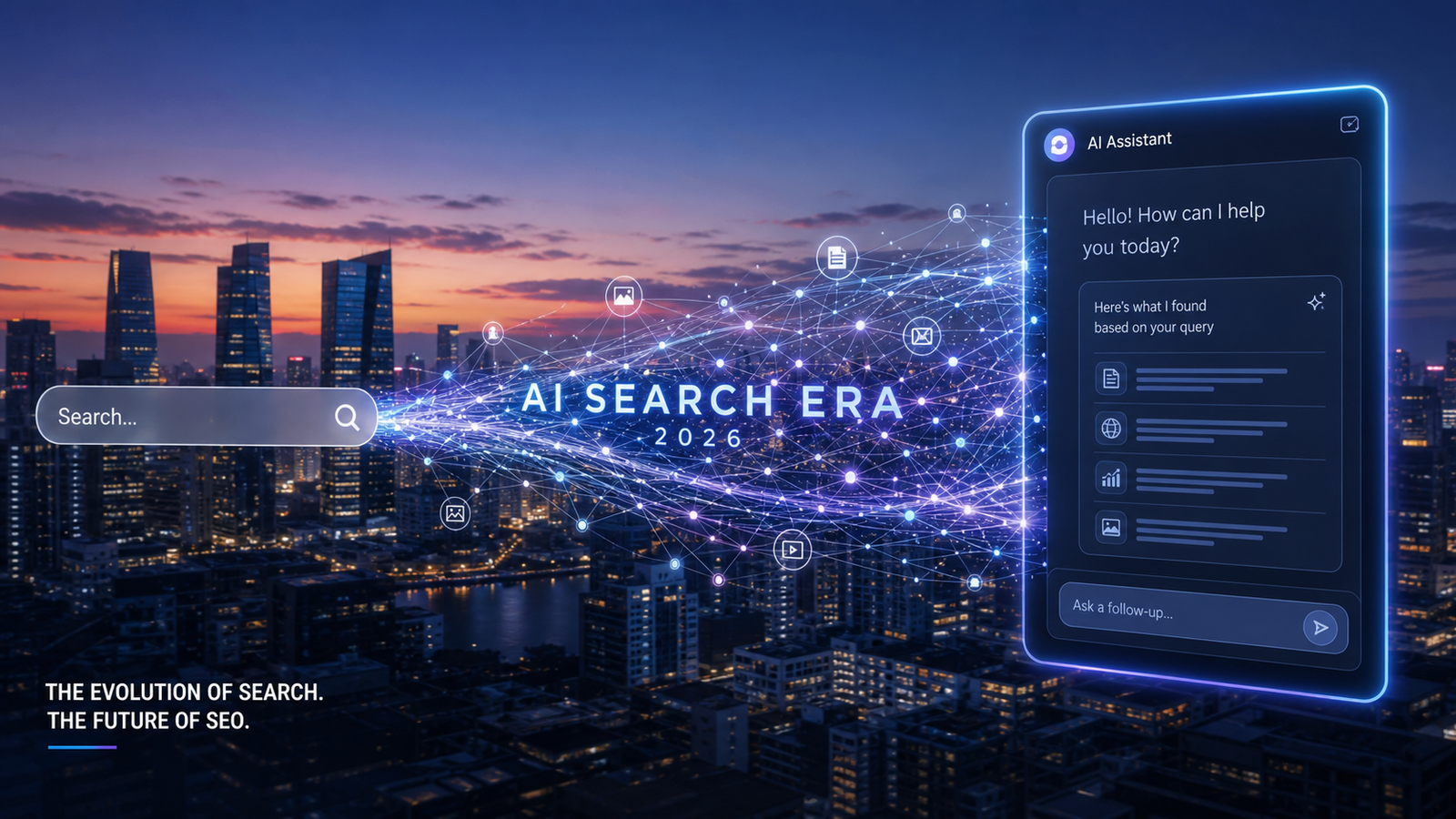
The digital marketing landscape has reached a definitive tipping point. For over two decades, search engine optimization was a game of keywords, backlinks, and blue links. However, as we move through the AI search era, the fundamental rules of visibility have been rewritten. The rise of generative search engines and “answer engines” has transformed Google, Bing, and newcomers like Perplexity into proactive assistants that don’t just point to information—they synthesize it. This shift means that appearing on the first page of search results is no longer the ultimate goal; the new priority is being the source that the AI cites when it answers a user’s question.
The AI search era is characterized by a move away from traditional indexing toward a more conversational and agentic model. In 2026, nearly half of all Google queries are answered through AI Overviews, while platforms like ChatGPT Search and Perplexity handle billions of monthly queries combined. For businesses and content creators, this change is both a challenge and an opportunity. While traditional traffic from informational queries may decline due to “zero-click” searches, the traffic that does arrive is often more qualified, as users have already been primed by an AI assistant. Navigating this new environment requires a shift from keyword-focused optimization to a strategy centered on topical authority and “cite-ability.”
1. The Rise of Generative Engine Optimization (GEO)
As traditional SEO tactics lose their absolute dominance, a new discipline has emerged: Generative Engine Optimization, or GEO. In the AI search era, GEO focuses on making your content “consumable” for large language models. This isn’t just about technical SEO; it’s about structuring your information so that an AI can easily extract facts, opinions, and data points to include in its generated responses. According to Semrush, GEO involves optimizing your presence and content to appear specifically in AI-powered responses rather than just traditional search rankings.

The core of GEO is providing structured, authoritative answers to the specific questions your audience is asking. AI models prioritize content that is direct, well-organized, and backed by evidence. This means that long-form content must be more than just “fluff”; it must be a dense collection of valuable insights that an AI can cite as a reliable source. By focusing on GEO, you are essentially training the AI search engines to view your brand as a primary authority in your niche, ensuring that your name appears whenever a relevant topic is discussed in the AI search era.
2. Visibility Shift: From Clicks to Citations
In the traditional search model, success was measured by Click-Through Rate (CTR). In the AI search era, the metric of success is shifting toward “Citation Rate.” Because AI assistants often provide a complete answer on the search results page, many users never click through to the source website. However, these assistants still provide citations and links to the sources they used to generate the answer. Adobe highlights that visibility in 2026 depends less on page position and more on whether your brand is cited within these AI-generated responses.
This shift requires a new approach to content creation. You must write content that is not only informative but also “quotable.” Short, punchy definitions, clear statistics, and unique expert insights are more likely to be picked up by an AI agent. When your brand is cited as the source for a critical piece of information, it builds a level of trust and authority that a simple ranking cannot achieve. Even if the immediate click doesn’t happen, the brand recognition and perceived authority gained in the AI search era are invaluable for long-term customer acquisition.
AI Hallucinations Explained: Why Chatbots Invent Information
3. The Dominance of Zero-Click Searches
One of the most disruptive aspects of the AI search era is the massive increase in zero-click searches. When an AI Overview or a Perplexity response provides the exact answer a user needs, there is no incentive for that user to visit a website. This is particularly true for informational queries like “how to,” “what is,” or “weather in.” According to PingPrime, industry data suggests that a significant portion of queries are now resolved without a single click to an external site. This environment forces SEOs to rethink their content strategy, moving away from simple informational posts that can be easily summarized by an AI.
To survive the zero-click trend in the AI search era, content must offer something that an AI cannot easily reproduce: unique experience, original research, or deeply personal perspective. While an AI can summarize the steps of a process, it cannot replicate the nuanced “lessons learned” from a human who has actually performed the task. By focusing on “Experience” and “Expertise”—two core pillars of Google’s E-E-A-T guidelines—you can create content that remains valuable even in a world of instant AI answers. The goal is to provide the “why” and the “how it felt” alongside the “what.”
4. Building Deep Topical Authority
In the past, many SEOs used a “hub and spoke” model to cover a topic with multiple thin blog posts. In the AI search era, this strategy is being replaced by the need for deep topical authority. AI models are trained to identify the most comprehensive and authoritative sources on a given subject. A single, exhaustive guide that covers a topic from every angle is now more valuable than ten shorter posts. This is because a comprehensive guide provides the AI with more “contextual surface area” to draw from when generating an answer.
Building topical authority requires a commitment to quality over quantity. You must demonstrate that you understand the entire ecosystem of a topic, including the related sub-topics and common user pain points. When an AI search engine sees that your site consistently provides the most detailed and accurate information on a subject, it will naturally favor your content as a primary source. This “authority-first” approach is a cornerstone of success in the AI search era, as it aligns with the goal of AI models to provide the most helpful and complete information possible to their users.
5. The Importance of “Search Everywhere” Optimization
The AI search era has expanded the search landscape beyond the traditional search bar. Users are now “searching” through social media, AI assistants, and even within specific apps like TikTok or YouTube. This phenomenon, often called “Search Everywhere Optimization,” means that your brand’s visibility across the entire web influences your search performance. AI models are trained on data from across the internet, including social media discussions, forum posts, and news articles. If your brand is being discussed positively on Reddit or cited in a major news outlet, the AI is more likely to recommend you.
To optimize for this expanded search environment, you must maintain a consistent and authoritative presence across multiple platforms. This includes active participation in community discussions, a strong social media strategy, and a robust PR effort. In the AI search era, every mention of your brand acts as a signal to the AI engines about your relevance and authority, a strategy often supported by Firebrand to ensure cross-platform consistency. By building a reputation that extends beyond your own website, you ensure that you are visible wherever your audience happens to be searching, whether it’s a traditional search engine or a conversational AI assistant.
6. Technical SEO in the Age of AI Crawlers
While content is king, technical SEO remains the foundation of visibility in the AI search era. However, the focus of technical SEO has shifted toward making content easily accessible and understandable for AI crawlers. This includes the use of advanced schema markup, clean site architecture, and fast load times. Google’s official best practices emphasize the importance of structured data in helping their generative AI features understand the relationship between different entities on your site.
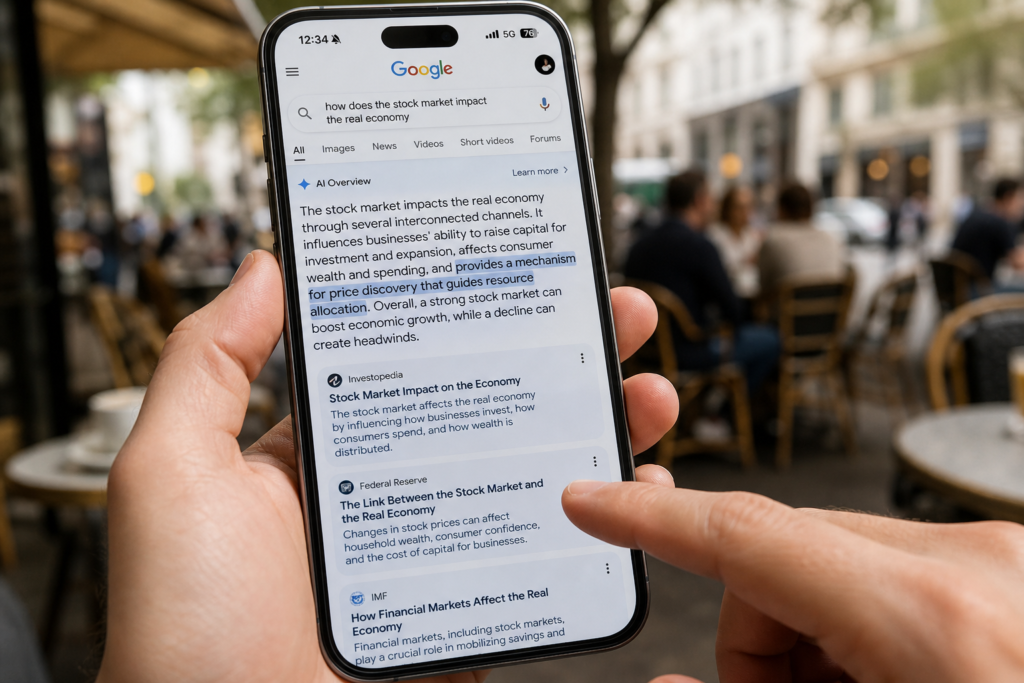
Beyond schema, you must also consider how AI agents “consume” your content. Using clear headings, bulleted lists (within appropriate sections), and concise summaries helps these agents parse your information more effectively. Additionally, ensuring that your site is technically sound and free of crawl errors is more important than ever, as AI engines are becoming increasingly selective about the sources they trust. In the AI search era, a technically optimized site is not just a benefit for users; it is a requirement for being indexed and cited by the world’s most powerful AI models.
7. E-E-A-T as a Core Ranking Signal for AI
The concepts of Experience, Expertise, Authoritativeness, and Trustworthiness (E-E-A-T) have never been more critical than they are in the AI search era. As AI models strive to provide accurate and safe information, they place a high premium on content that comes from a trusted source. This is especially true for “Your Money or Your Life” (YMYL) topics like finance, health, and law. Demonstrating clear authorship, providing verified credentials, and citing reputable sources are essential tactics for building the trust required to be cited by an AI.
In 2026, E-E-A-T is not just a set of guidelines; it is a core ranking signal that AI models use to filter out low-quality or hallucinated information. By transparently showing who wrote your content and why they are qualified to speak on the subject, you provide the AI with the “trust signals” it needs to recommend your content. In the AI search era, your reputation as a creator is just as important as the content itself. Building a brand that is synonymous with quality and accuracy is the ultimate defense against the rising tide of AI-generated noise.
The Future of SEO: Adapting to the AI Search Era
As we look toward the future, it is clear that the AI search era is only just beginning. The technologies that drive generative search are evolving at a rapid pace, and the ways in which users interact with information are changing along with them. To stay ahead, marketers and SEOs must be willing to abandon the “old ways” and embrace a more holistic, authority-driven approach to visibility. This means moving beyond the obsession with individual keywords and focusing on the bigger picture of brand reputation and topical depth.

The most successful brands in the AI search era will be those that view AI not as a threat, but as a powerful new channel for reaching their audience. By creating content that is deeply helpful, highly cite-able, and technically optimized for AI crawlers, you can ensure that your brand remains at the center of the conversation. The goal is no longer just to be found; it is to be the answer. By adapting your strategy to meet the demands of this new era, you can build a sustainable and resilient search presence that will thrive for years to come.
Frequently Asked Questions
What is the AI search era exactly?
The AI search era refers to the current period in digital marketing where search engines like Google and Bing, along with newcomers like Perplexity and ChatGPT Search, use generative AI to provide direct answers to user queries, fundamentally changing how content is discovered and consumed.
Does traditional SEO still matter in the AI search era?
Yes, traditional SEO fundamentals like keyword research, technical optimization, and backlinking still matter, but they are no longer sufficient on their own. In the AI search era, they must be combined with GEO strategies that focus on cite-ability and topical authority.
What is GEO (Generative Engine Optimization)?
GEO is the practice of optimizing content specifically to be picked up and cited by AI-powered search engines. It involves structuring information clearly, providing authoritative data points, and building a strong brand reputation that AI models recognize as trustworthy in the AI search era.
How do zero-click searches affect my website traffic?
Zero-click searches can lead to a decline in traffic for simple informational queries because users get their answers directly from the AI. To counter this in the AI search era, you should focus on creating content that offers unique value, personal experience, or deep analysis that an AI cannot easily summarize.
Why is E-E-A-T more important now?
E-E-A-T is critical because AI models need to filter out inaccurate or low-quality information. By demonstrating Experience, Expertise, Authoritativeness, and Trustworthiness, you provide the signals that AI engines use to decide which sources are reliable enough to cite in the AI search era.
How can I track my visibility in AI search results?
In the AI search era, traditional rank tracking is being supplemented by new tools that track how often your brand is mentioned or cited in AI-generated responses from platforms like Perplexity, SearchGPT, and Google AI Overviews.
Should I stop targeting specific keywords?
No, keywords still help search engines understand what your content is about. However, in the AI search era, you should focus more on the “intent” behind the keywords and build comprehensive content that covers entire topics rather than just optimizing for single phrases.