

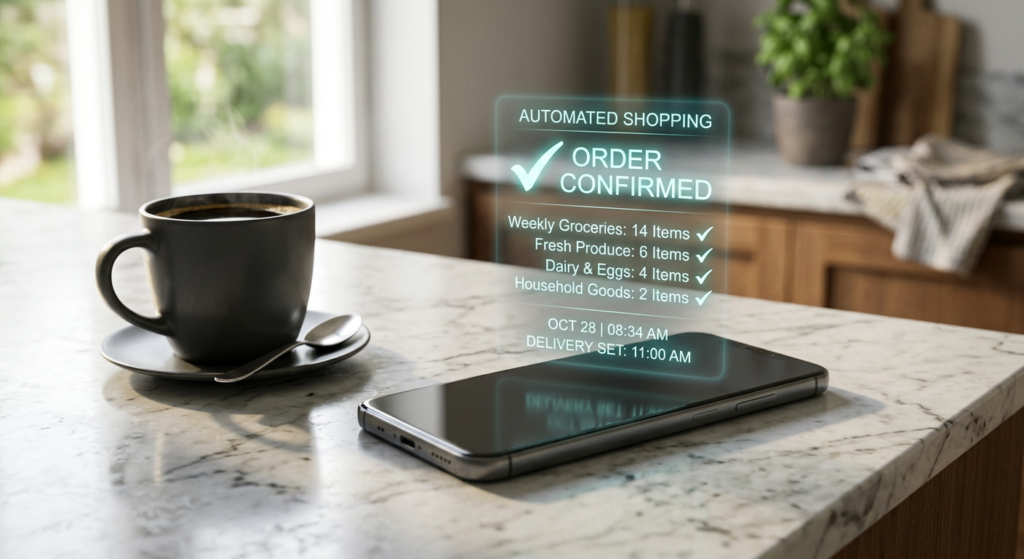
Picture a typical Saturday morning in 2026. A busy father realizes his family has run out of hypoallergenic laundry detergent, their water filter needs replacement, and his teenage daughter needs a specific type of running shoes for track practice. Instead of opening three different browser tabs, scrolling through dozens of sponsored product listings, comparing five-star reviews, and typing in his credit card details, he taps a button on his smart watch and gives a simple voice command to order the best options within his budget.
Within fractions of a second, an autonomous software agent evaluates thousands of product specifications, checks real-time inventory levels, cross-references verified third-party consumer sentiment, negotiates digital coupons, and executes the entire checkout process. In this transaction, no human ever saw a banner ad. No human clicked on a colorful promotional button, and no human read an emotional product description. The entire buying journey was managed directly by AI shopping assistants.
This massive behavioral evolution is reshaping the foundation of e-commerce and digital marketing. For decades, our entire industry has been built around human psychology. We designed visually stunning packaging, crafted persuasive sales copy, tested vibrant call-to-action buttons, and optimized website layouts to trigger human emotional impulses.
However, when the customer standing at the digital checkout counter is a piece of code rather than a human being, the old marketing playbook collapses. As more consumers delegate their routine purchases to AI shopping assistants, brands that fail to adapt their digital presence for machine evaluation will quietly vanish from the purchasing pipeline.
Understanding how to position your catalog for these automated buyers is no longer an experimental luxury for futuristic brands. It is rapidly becoming the primary requirement for commercial survival.
What Are AI Shopping Assistants and How Do Machine Buyers Make Decisions?
To understand how to market in this new era, you must first recognize what automated purchase agents actually are and how they evaluate options on the digital shelf. In the early days of automated commerce, digital assistants were simple scripted bots that could only reorder previously purchased items or perform basic keyword lookups within a single closed retail ecosystem.
Modern AI shopping assistants are sophisticated autonomous agents powered by multimodal reasoning models. They possess the ability to interpret complex, subjective consumer preferences, evaluate multi-variable trade-offs, navigate diverse web environments, and complete financial transactions on behalf of users. When a consumer asks an agent to purchase a product, the software does not simply click the first sponsored search result. It conducts a comprehensive analytical audit across the open web to identify the objective best match for the user’s specific criteria.
Machine buyers evaluate products using cold, structured logic. When autonomous AI shopping assistants assess your product catalog, they do not care about poetic brand slogans, lifestyle photography, or clever copywriting. Instead, they scan for clean structured data, verified material specifications, pricing transparency, shipping velocity, customer return policies, and authenticated third-party review consensus.
The software analyzes whether your product dimensions match the user’s exact requirements, whether your ingredient list contains any allergens the customer specified, and whether your real-time inventory system can guarantee delivery before the requested deadline. If your website presents this information in an ambiguous or unstructured format, the agent will simply bypass your listing in favor of a competitor whose product data is transparent and easily parsed.

Why Optimizing for AI Shopping Assistants Is Critical for Your Business
The rise of automated purchasing represents a fundamental shift in how digital revenue is generated. For business owners, consumer brands, and e-commerce managers, mastering this new discipline directly impacts your market share and customer acquisition costs.
In traditional digital marketing, brands spend immense sums of capital fighting for human visual attention on social media feeds and search engine result pages. You pay for impressions, clicks, and retargeting ads, hoping that a consumer is in the right emotional state to complete a purchase. When transactions flow through AI shopping assistants, that entire top-of-funnel advertising expenditure becomes largely irrelevant. You cannot manipulate a machine buyer with flashy video transitions, artificial countdown timers, or scarcity tactics.
The machine evaluates options purely on merit, technical compliance, and verified trust signals. Brands that optimize their digital infrastructure for machine readability can capture substantial market share without spending exorbitant sums on traditional paid media.
Furthermore, becoming the preferred default recommendation for autonomous AI shopping assistants creates an unprecedented level of customer retention. When an automated agent finds a product that consistently satisfies its user’s parameters, delivers on time, and maintains reliable quality, it establishes a programmatic preference for that brand. The consumer rarely intervenes to switch brands unless a significant price discrepancy, quality failure, or supply chain disruption occurs.
To see how autonomous tools are transitioning from basic conversational interfaces to fully functional operational systems capable of executing these multi-step purchasing tasks, you should read our breakdown of modern agent capabilities.
AI Agents Are Finally Becoming Useful — Here Are the Tasks They Can Handle Now
Securing placement within automated shopping workflows creates a predictable, compounding revenue stream that insulates your business from the rising costs of traditional advertising.
Authoritative global market analyses from research organizations like Gartner predict that machine customers will directly influence trillions of dollars in commercial transactions over the coming years, making agent optimization one of the most critical digital business priorities of the decade.
Practical Strategies to Position Your Brand for AI Shopping Assistants
Shifting your digital marketing strategy to capture machine buyers requires concrete technical and operational adjustments. By focusing on structured data, verified consensus, and API accessibility, you can ensure that automated agents consistently select your products.
Structuring Technical Product Data for Machine Readability
The foundational step in preparing your catalog for automated buyers is transforming your website from a human-only visual brochure into a machine-readable data repository. When AI shopping assistants crawl your product pages, they rely heavily on standardized schema markup to extract precise specifications without ambiguity.
You must implement comprehensive structured data schemas across every single product page in your catalog. Ensure that your schema clearly defines detailed technical attributes such as exact physical dimensions, materials, country of origin, warranty duration, energy efficiency ratings, compatibility requirements, and precise ingredient lists.
Do not hide critical product specifications inside downloadable PDF user manuals or flattened promotional images where machine parsers struggle to extract them. Every relevant specification should exist as clean, plain text and validated structured data. When an agent queries the web for a product with highly specific physical parameters, your detailed schema ensures your listing is immediately recognized as a viable candidate.
Building Authenticated Third-Party Review Consensus
Because autonomous software cannot physically touch or test your product, it relies heavily on external consensus to evaluate quality and reliability. However, modern AI shopping assistants do not simply look at your average star rating, especially since automated bots have made on-site reviews increasingly suspect.
Machine buyers crawl independent review platforms, verified buyer databases, industry discussion forums, YouTube teardown transcripts, and regulatory safety filings to construct a holistic sentiment score for your brand. They specifically analyze recurring patterns in negative feedback, checking whether customers frequently complain about specific failure points, poor customer service, or misleading sizing.
To win over automated buyers, you must actively cultivate genuine third-party validation across diverse external channels. Encourage your customers to leave detailed, verified reviews on independent review aggregators and participate in authentic community discussions. Focus relentlessly on resolving legitimate product defects and customer service bottlenecks, because a recurring quality issue documented on public forums will cause AI shopping assistants to systematically deprioritize your products to protect their human users from disappointment.

Providing Real-Time Inventory and Transparent Pricing APIs
Speed and reliability are paramount for autonomous purchasing systems. When an agent receives an order to purchase a product for immediate delivery, it cannot afford to risk placing an order on a website that might experience an unexpected inventory shortfall or shipping delay.
Brands that want to capture consistent volume from AI shopping assistants must expose accurate, real-time inventory and pricing data through standardized application programming interfaces. When shopping agents can programmatically query your inventory levels, verify immediate warehouse availability, and confirm the exact landed cost including taxes and shipping fees, they will prioritize your store over retailers with opaque fulfillment data.
Additionally, you should ensure that your checkout pipeline is fully accessible to headless browsing agents and automated digital wallets. If your checkout process requires completing complex visual captchas, navigating confusing pop-up discount wheels, or enduring aggressive upsell funnels, an autonomous agent will encounter an execution failure and immediately divert the purchase to a competitor with a frictionless, API-accessible checkout experience.
To explore how consumer brands are adapting their business models to meet these automated buying behaviors, review the comprehensive consumer research published by McKinsey & Company, which details the economic impact of automated agent-driven commerce across global retail sectors.
Common Mistakes Brands Make When Selling to Automated Buyers
Many marketing teams make the mistake of applying old consumer marketing playbooks to automated buying environments, resulting in wasted effort and lost market share. Recognizing these strategic errors will keep your business focused on what truly drives machine recommendations.
text┌────────────────────────────────────────────────────────┐
│            MACHINE COMMERCE PITFALLS                   │
├──────────────────────────┬─────────────────────────────┤
│ ❌ Emotional Fluff       │ Prioritizing slogans over   │
│                          │ technical specifications    │
│ ❌ Opaque Pricing        │ Hiding shipping fees until  │
│                          │ the final checkout screen   │
│ ❌ Bot Blockers          │ Installing captchas that    │
│                          │ prevent agent checkout      │
│ ❌ Fragmented Data       │ Storing key product details │
│                          │ inside unreadable images    │
└──────────────────────────┴─────────────────────────────┘
The most frequent mistake is prioritizing emotional copywriting and aesthetic design over factual product clarity. While emotional resonance is essential for human shoppers who browse your storefront directly, an autonomous agent cannot feel emotional desire. When an agent parses a page filled with vague marketing prose like revolutionary comfort or unmatched excellence without finding specific foam densities, fabric thread counts, or ergonomic certifications, it simply marks the listing as incomplete and moves on.
Another critical error is concealing total pricing information until the final step of the checkout process. Many direct-to-consumer websites hide shipping charges, handling fees, or regional taxes behind several multi-step forms to keep initial displayed prices artificially low. While this tactic might deceive some human shoppers, AI shopping assistants quickly calculate total landed cost before confirming orders. When an agent discovers unexpected fees at the final payment gateway, it will reject the transaction and penalize that retailer’s trust score for future automated purchasing requests.
Finally, many e-commerce operators inadvertently block automated buyers by implementing overly aggressive bot prevention systems. While protecting your website from malicious scrapers and credential stuffing attacks is necessary, your technical security configurations must distinguish between harmful traffic and authorized commercial AI shopping assistants attempting to complete legitimate purchases for real paying customers.
Developing clear protocols for authenticated commercial agents ensures your store remains open for business in an automated economy.

Frequently Asked Questions About AI Shopping Assistants
How will AI shopping assistants affect traditional brand loyalty?
Automated agents will shift brand loyalty from emotional affinity toward operational excellence and verified product performance. If your product consistently delivers high quality, fair pricing, and reliable shipping, AI shopping assistants will continue reordering it programmatically, creating a highly stable and loyal customer relationship based on proven performance.
Can small direct-to-consumer brands compete with giant retailers for automated sales?
Yes, small brands can compete exceptionally well because automated agents evaluate products on objective technical merits rather than advertising spend alone. If a specialized small brand offers superior materials, better third-party sentiment, and clear structured product data, an autonomous agent will readily select it over a generic mass-market alternative.
How do AI shopping assistants handle discounts and promotional codes?
Automated agents automatically search the web for verified digital coupon codes, evaluate loyalty point balances, and calculate dynamic bundle pricing before finalizing a transaction. To capture these sales, brands should ensure their promotional offers are cleanly published in machine-readable formats across their digital touchpoints.
Do AI shopping assistants completely eliminate human browsing for luxury goods?
No, human browsing will remain popular for emotionally driven purchases such as high-end luxury fashion, art, and prestige lifestyle goods where personal taste, status signaling, and the joy of shopping play central roles. However, for functional, everyday, and consumable products, automated purchasing agents will handle the vast majority of routine transactions.
What is the first step my e-commerce store should take to prepare for machine buyers?
The most immediate and high-impact step you can take is conducting a thorough audit of your website’s structured data schema. Ensure that every product listing contains complete, accurate, and standardized technical specifications, pricing details, and inventory availability that machine crawlers can parse without friction.
Conclusion: Adapting to the Era of the Non-Human Customer
The emergence of autonomous purchasing agents does not mean the end of commerce; it marks the beginning of a more efficient, data-driven marketplace. As consumers increasingly hand off their daily shopping tasks to intelligent software, the brands that thrive will be those that understand how to communicate with both humans and machines.
By transforming your product catalog into a pristine repository of structured data, cultivating genuine third-party authority, providing transparent pricing, and building seamless API checkout pathways, you position your business to become the natural choice for modern AI shopping assistants.
The transition from visual marketing to algorithmic optimization is already underway, and the brands that take action today will own the digital checkout counters of tomorrow.