
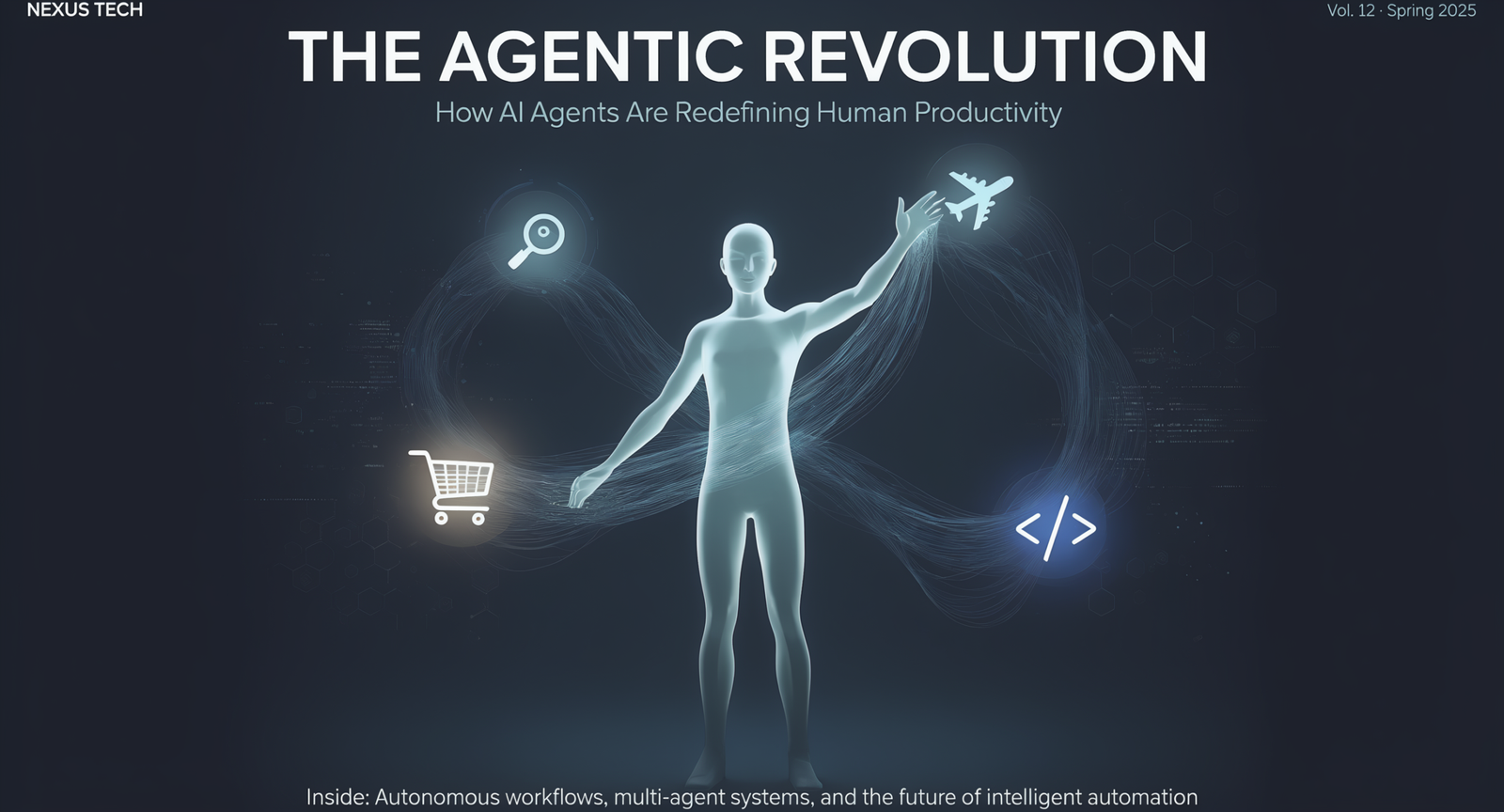
The digital landscape of 2026 has officially moved beyond the era of simple chatbots. For years, we interacted with Large Language Models that could generate text, summarize documents, or write poetry, but these systems remained largely passive. They waited for a prompt, provided a response, and then stopped. Today, the focus has shifted entirely toward useful AI agents—autonomous software entities that don’t just talk about work but actually execute it. These agents are defined by their ability to maintain memory, reason through complex multi-step plans, and interact with the digital world by clicking buttons, filling forms, and navigating across different applications just as a human would.
This transition from passive assistance to active agency represents a fundamental shift in human-computer interaction. We are no longer just “using” software; we are delegating entire workflows to digital entities that can navigate the messy reality of the internet and desktop environments. Whether it is managing a chaotic professional inbox, planning a complex international trip, or maintaining a large-scale software repository, useful AI agents have become the essential partners in modern productivity. In this comprehensive guide, we explore seven critical tasks that these agents can now handle autonomously, fundamentally changing the way we approach our daily lives and careers in 2026.
1. Autonomous Deep Research and Synthesis
One of the most transformative applications of useful AI agents in 2026 is their ability to perform exhaustive, multi-source research without constant human supervision. In the past, a research task meant a human spending hours toggling between browser tabs, taking notes, and trying to synthesize conflicting information from various sources. Modern agents, such as Google’s “Jarvis,” are now integrated directly into the browser to handle this entire process from start to finish. An agent can be tasked with “finding the best sustainable investment opportunities in the renewable energy sector for the next five years,” and it will spend the next twenty minutes scouring white papers, financial reports, and news articles to produce a comprehensive briefing.
This capability goes far beyond simple keyword search. The agent evaluates the credibility of each source, identifies key themes, and organizes the findings into a structured document or presentation. According to Google Cloud, these agents utilize advanced reasoning to cross-reference data points, ensuring that the final synthesis is not just a summary but a deep analysis that accounts for different perspectives. This allows professionals to skip the “grunt work” of information gathering and move straight to high-level decision-making based on a solid foundation of agent-gathered evidence. The researcher becomes an editor, refining the agent’s output rather than starting from a blank page.
2. Useful AI Agents for Complex Travel and Logistics Planning
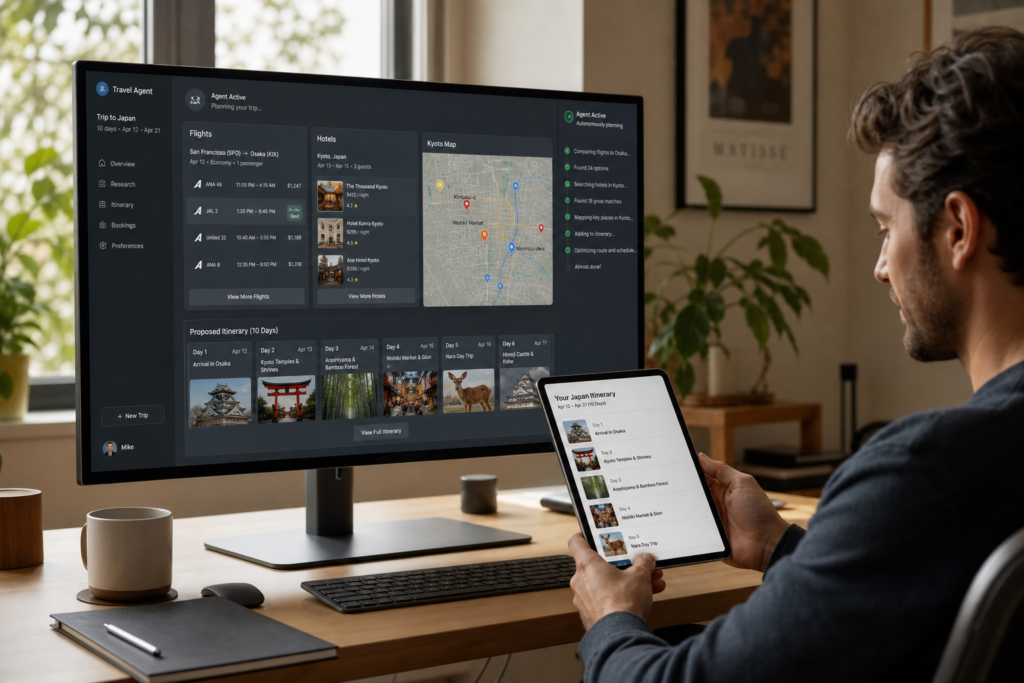
Planning a trip has historically been one of the most time-consuming digital chores, involving dozens of websites for flights, hotels, car rentals, and local activities. In 2026, useful AI agents like OpenAI’s “Operator” have turned this multi-hour process into a single natural language request. You can now tell an agent, “Plan a ten-day trip to Japan for two people in October, keeping the budget under $8,000 and including at least three days in Kyoto,” and the agent will take over your browser to execute the plan. It doesn’t just suggest flights; it finds the best ones, checks for seat availability, and prepares the checkout page for your final approval.
The true utility of these agents lies in their ability to handle the “edge cases” of logistics that typically cause human stress. If a flight is canceled or a hotel is overbooked, the agent can autonomously search for alternatives and present you with the best options, often before you even realize there is a problem. OpenAI has highlighted that these agents are now capable of managing the entire transactional lifecycle, from initial research to the final booking, while respecting the user’s saved preferences and loyalty programs. This level of autonomous execution is what makes these agents truly indispensable, as they handle the tedious form-filling and comparison-shopping that humans find draining.
3. End-to-End Document and Media Asset Generation
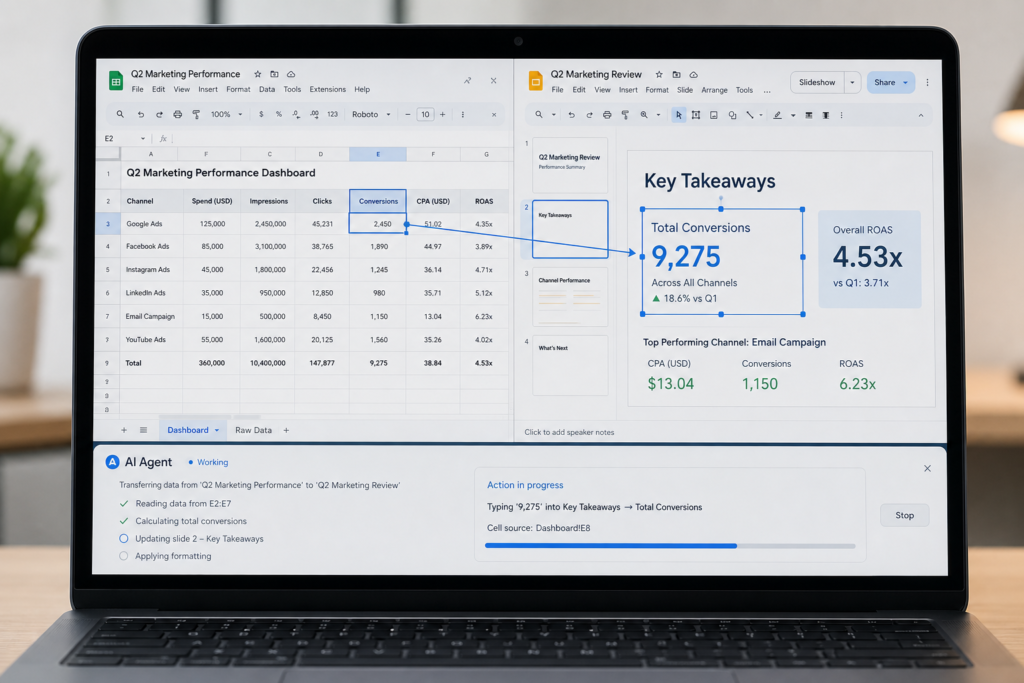
While early AI could generate a simple draft of a document, useful AI agents in 2026 can manage the entire production pipeline across multiple platforms. For a marketing professional, an agent can be tasked with “creating a full campaign proposal for a new product launch.” The agent will then create the initial strategy document in a word processor, design the supporting presentation in a slide tool, and even generate a basic budget spreadsheet. It coordinates the data across all three applications, ensuring that the numbers in the spreadsheet match the claims in the proposal and the visuals in the slides.
This multi-app coordination is a hallmark of the new agentic workflow. Agents are no longer confined to a single chat window; they have “eyes” on the entire digital workspace. They can pull data from an email, verify it against a PDF report, and then use that information to update a client presentation. This seamless movement between tools allows useful AI agents to handle the kind of complex, cross-functional tasks that previously required a human to act as the “glue” between different pieces of software. The result is a massive increase in throughput for creative and administrative teams, who can now produce high-quality work in a fraction of the time.
4. Desktop Environment and Legacy App Management
Perhaps the most impressive breakthrough of 2026 is the ability of useful AI agents to interact with a computer’s desktop environment just like a human. Anthropic’s “Computer Use” capability allows agents to move the cursor, click buttons, and type text into any application, including legacy software that lacks a modern API. This means an agent can be told to “export the last quarter’s sales data from our fifteen-year-old accounting software and upload it to the new cloud CRM,” and it will navigate the old menus and handle the data transfer autonomously.
This “vision-based” interaction is a game-changer for digital transformation. Organizations no longer need to build expensive custom integrations for every piece of software they use. Instead, they can deploy useful AI agents that can “see” the screen and interact with the UI. Anthropic has demonstrated that these agents can handle tasks as varied as filling out complex insurance forms, managing local file systems, and even performing basic photo editing in desktop software. This capability brings the power of AI to every corner of the computer, ensuring that even the most “analog” digital processes can benefit from agentic automation.
5. Useful AI Agents for Autonomous Coding and Repository Maintenance
For software developers, useful AI agents have evolved from simple code-completion tools into full-fledged team members capable of autonomous execution. Agents can now be assigned specific tickets in a repository, such as “fix the bug in the authentication flow” or “upgrade the project to the latest version of the framework.” The agent will then analyze the codebase, identify the necessary changes, write the code, and run the tests to ensure everything works as expected. If the tests fail, the agent will debug the code and try again until the solution is robust.
This level of autonomy is significantly reducing the burden of maintenance on engineering teams. Agents can handle the “drudge work” of dependency updates, documentation, and unit testing, allowing human developers to focus on high-level architecture and creative problem-solving. TechCrunch reports that these agents are now being used by major tech companies to maintain large-scale legacy codebases, performing refactors that would have previously taken months in just a few days. The developer’s role is shifting from being a “writer” of code to being a “reviewer” and “orchestrator” of agentic output, leading to faster and more reliable software releases.
6. Real-Time Data Triage and Communication Management
In an era of information overload, useful AI agents are providing a vital filter for our digital communications. An agent can be set to “triage my inbox,” where it doesn’t just sort emails into folders but actually prepares draft responses, flags urgent items that require human attention, and even handles routine scheduling requests. If a client asks for a meeting, the agent can check your calendar, find a suitable time, and send the invitation without you ever needing to open your email client.
This “proactive communication” extends to collaborative platforms like Slack and Teams. Agents can monitor channels for relevant updates, summarize long threads for you, and even provide you with a “daily briefing” of the most important things you missed while you were focused on deep work. By acting as a sophisticated digital chief of staff, useful AI agents are helping professionals reclaim their time and focus on the tasks that truly matter. This ability to manage the “noise” of the modern workplace is one of the most immediate and tangible benefits of the agentic revolution, allowing for a more focused and productive work environment.
ChatGPT vs Gemini in 2026: I Gave Both the Same 15 Real-World Tasks
7. Useful AI Agents for Personal E-commerce and Shopping Automation
The final critical task that useful AI agents have mastered in 2026 is the automation of personal commerce. Shopping for products, comparing prices, and managing returns are all tasks that agents can now handle with ease. You can tell an agent, “I need a new pair of waterproof running shoes under $150 with good arch support; find the best-reviewed pair and buy them if they are on sale,” and the agent will do the research and even handle the transaction using your saved payment information.
This capability is transforming the retail landscape. Agents can monitor prices across multiple websites and automatically trigger a purchase when a product hits your target price. They can also handle the logistics of returns, communicating with customer service bots to generate return labels and schedule pickups. CNBC has noted that this “agent-to-agent” commerce is becoming increasingly common, where your personal agent negotiates with a store’s sales agent to find the best possible deal. Shopping is no longer a time-consuming activity; it is a delegated task, allowing consumers to save both time and money through autonomous agentic negotiation.
The Future of Agentic Productivity

As we look toward the end of 2026, it is clear that useful AI agents are no longer a futuristic concept—they are a present reality that is reshaping our digital lives. The ability to delegate complex, multi-step tasks to autonomous systems has unlocked a new level of human potential. We are moving toward a world where the “digital work” of navigating interfaces and managing data is handled by agents, leaving humans free to focus on creativity, empathy, and strategic thinking. This partnership between human intuition and agentic execution is the defining characteristic of the modern economy.
However, the rise of these agents also brings new challenges in terms of security, privacy, and governance. As we give useful AI agents more autonomy and access to our digital lives, we must also build robust frameworks to ensure they act in our best interests. The organizations and individuals who succeed in this new era will be those who learn how to effectively orchestrate these agents while maintaining the necessary oversight. The agentic revolution is here, and it is finally making useful AI agents a standard part of our digital lives, providing a glimpse into a future where technology works for us, rather than the other way around. With the help of useful AI agents, we are entering a new era of human-computer collaboration.
Frequently Asked Questions
What makes an AI agent “useful” compared to a standard chatbot?
A standard chatbot is primarily reactive and provides text-based responses to prompts. In contrast, useful AI agents are proactive and autonomous; they can plan multi-step workflows, interact with software interfaces by clicking and typing, and execute tasks until a specific goal is achieved without constant human guidance.
Which are the top AI agents available in 2026?
The leading useful AI agents in 2026 include OpenAI’s “Operator” (often integrated into ChatGPT), Google’s “Jarvis” (integrated into Chrome and Workspace), and Anthropic’s “Computer Use” capability for Claude. Each has different strengths, ranging from web-based transactions to desktop environment management.
Can AI agents really book travel and buy products?
Yes, in 2026, useful AI agents can navigate travel websites, compare prices, fill out passenger information, and even prepare the final payment page. While they often require a final human click for security, they handle the entire research and preparation process autonomously.
How do AI agents interact with my computer?
Agents like Claude use “Computer Use” technology to “see” your screen via screenshots and then interact with it by moving the cursor, clicking buttons, and typing text. This allows them to use any application on your computer, even those without a modern API.
Are useful AI agents safe to use with my personal data?
Security is a major focus in 2026. Most useful AI agents run in secure environments and use encrypted connections. However, it is essential to use agents from reputable providers and to be mindful of the permissions you grant them, especially regarding financial and personal data. Every useful AI agent should have clear data boundaries.
Do I need to know how to code to use these useful AI agents?
No, the primary interface for useful AI agents is natural language. You can give them instructions just as you would to a human assistant. The agent handles the technical complexity of navigating software and executing the task behind the scenes. This accessibility is why useful AI agents are being adopted so quickly.
How will AI agents change the job market?
Useful AI agents are not necessarily replacing jobs but are fundamentally changing them. Workers are shifting from performing repetitive digital tasks to acting as “orchestrators” and “validators” of AI work, focusing more on strategy, creativity, and high-level oversight.