
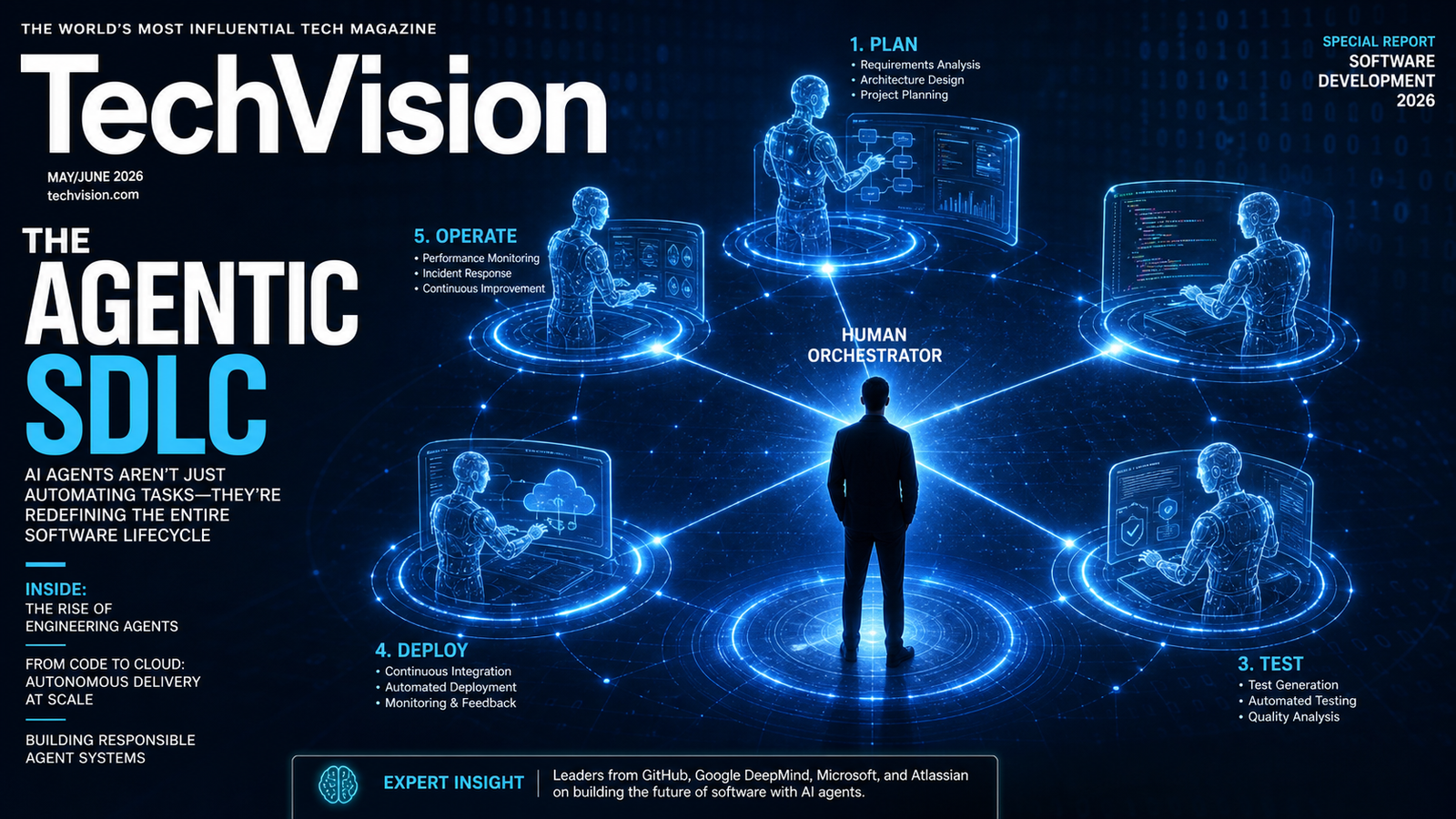
The landscape of software engineering has reached a historic inflection point in 2026. For years, developers utilized “Copilots” as sophisticated autocomplete tools that helped finish a line of code or suggest a function. However, the era of passive assistance has been replaced by the rise of AI agents in software. These autonomous systems are no longer just sitting in the passenger seat; they are increasingly taking the wheel, managing entire repositories, and orchestrating complex workflows across the Software Development Life Cycle (SDLC). This shift from “pair programming” to “autonomous agency” is fundamentally redefining what it means to be a software engineer.
As we navigate this new reality, it is clear that the impact of AI agents in software extends far beyond simple code generation. These agents are now capable of reasoning through architectural decisions, identifying deep-seated security vulnerabilities, and even communicating with other agents to resolve cross-service dependencies. For organizations and individual developers alike, understanding these changes is essential for staying relevant in a world where the speed of development is limited only by the speed of thought. In this article, we explore seven critical ways that AI agents in software are reshaping the industry in 2026.

1. The Shift from Copilots to Autonomous Agents
The most significant change in 2026 is the transition from reactive coding assistants to proactive autonomous agents. In the early 2020s, a developer had to prompt an AI for every small snippet of code. Today, AI agents in software can take a high-level feature request, analyze the existing codebase, and execute a multi-step plan to implement it. These agents don’t wait for the next prompt; they work for minutes or even hours, iterating on solutions until the task is complete. This level of autonomy allows developers to focus on the “what” and “why” while the agents handle the “how.”
This shift is not just about automation; it is about orchestration. According to Forrester, we have reached an inflection point where agents now operate across analysis, planning, and delivery. This means an agent can identify a performance bottleneck, design a fix, write the code, and even open the pull request with a detailed explanation of the changes. The role of the developer has moved from being the primary “doer” to being the “architect” and “reviewer” of agentic output.
2. Orchestrated SDLC: Beyond Just Coding
While early AI tools focused almost exclusively on the “Build” phase of the SDLC, AI agents in software in 2026 are active across the entire lifecycle. From the initial requirements gathering and analysis to the final deployment and monitoring, agents are providing a continuous layer of intelligence. They can automatically generate documentation from code, create comprehensive test suites based on user stories, and even predict potential deployment failures by analyzing historical CI/CD data. This holistic approach ensures that no phase of development is left behind in the race for efficiency.
The integration of AI agents in software into the planning and design phases is particularly transformative. Agents can now assist in threat modeling, architectural reviews, and even accessibility audits long before the first line of code is written. By catching potential issues early in the lifecycle, these agents are significantly reducing the “technical debt” that has historically plagued large-scale software projects. The SDLC is becoming a seamless, agent-led process where human intervention is reserved for high-stakes decision-making and creative problem-solving.
3. The Rise of CLI-Based Agentic Workflows
In 2026, the primary interface for many developers has shifted from the IDE to the command line, thanks to the rise of CLI-based AI agents in software. Tools like Claude Code and other terminal-integrated agents have made it possible to perform repository-wide operations with simple natural language commands. A developer can now ask their terminal to “refactor the authentication service to use the new OAuth provider,” and the agent will navigate the file system, apply the changes, and run the necessary tests—all without the developer ever opening a text editor.
This move toward CLI agents is driven by the need for speed and deep system integration. Because these agents have direct access to the shell, they can interact with compilers, build tools, and local development environments in real-time. Firecrawl has noted that CLI agents are fundamentally changing how developers write code by making the entire development environment “agent-aware.” This integration allows for a much more fluid and powerful development experience, where the boundary between the developer and their tools is effectively erased.
4. Autonomous Testing and Self-Healing Code
One of the most practical applications of AI agents in software is in the realm of quality assurance. In 2026, manual test writing is becoming a relic of the past. Agents can now automatically generate unit, integration, and end-to-end tests by analyzing the intent of the code. More impressively, these agents are capable of “self-healing.” If a test fails due to a minor UI change or a non-breaking API update, the agent can automatically identify the cause and update the test code to reflect the new reality.
This capability extends to production environments as well. AI agents in software are now being used to monitor live applications for errors and performance regressions. When an issue is detected, the agent can immediately roll back the deployment, analyze the logs to find the root cause, and even propose a fix to the development team. This “autonomous resilience” is significantly increasing the uptime and reliability of modern software systems, allowing teams to deploy with a level of confidence that was previously impossible.

Will AI Take Your Job? A Practical Guide to Preparing for Change
5. Security as a Continuous Agentic Process
In the high-stakes world of cybersecurity, AI agents in software are providing a much-needed layer of continuous defense. Traditional security scanning tools often suffer from high false-positive rates and only catch known vulnerabilities. Agents, however, can perform deep semantic analysis of code to find novel security flaws and logic errors that traditional tools miss. They can also simulate complex attack vectors to see how an application behaves under pressure, providing a form of “continuous red-teaming.”
The impact of AI agents in software on application security (AppSec) is profound. Agents can now automatically apply security patches across thousands of repositories simultaneously, a task that would take human teams weeks or months to complete. According to Backslash Security, developers are moving up to focus on security architecture and validation while agents handle the heavy lifting of vulnerability remediation. This shift is making software inherently more secure from the ground up.
6. The Developer as an Orchestrator and Validator
The widespread adoption of AI agents in software is fundamentally changing the job description of the software engineer. In 2026, “coding” is no longer the primary task; “orchestration” and “validation” are. Developers spend more of their time defining the goals for their agents, reviewing the generated architecture, and ensuring that the final output meets the necessary quality and security standards. The human developer is the “human-in-the-loop” who provides the essential creative direction and ethical oversight. This shift requires a deep understanding of how AI agents in software interpret intent, as the risk of “automated technical debt” is real if agents are left to optimize for speed without sufficient architectural guidance. Engineering leaders are now prioritizing “explainable agency,” where every decision made by an agent must be traceable and justifiable to a human reviewer. This ensures that while the heavy lifting is automated, the underlying logic remains robust and maintainable over the long term.
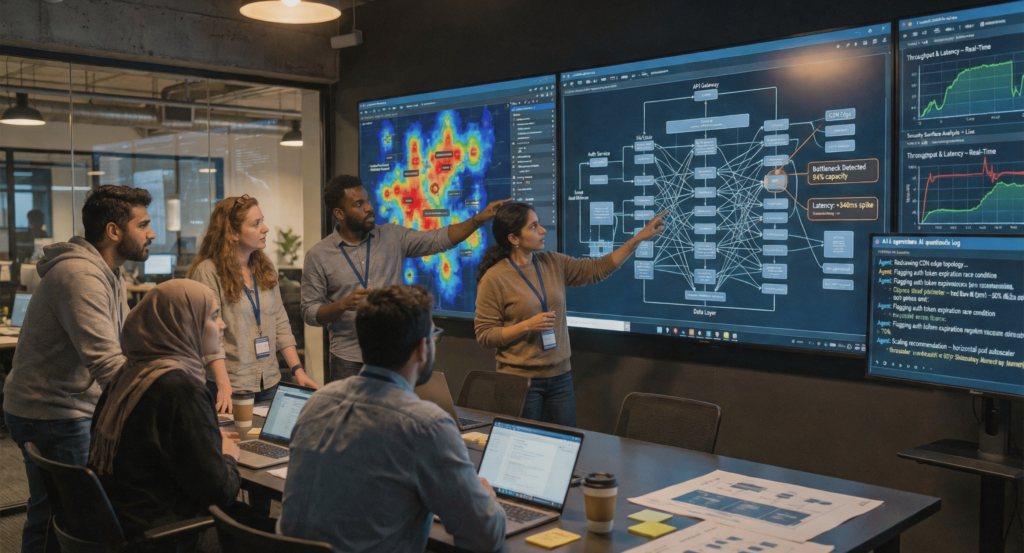
Furthermore, the social and collaborative aspects of software development are being reimagined. In a world of AI agents in software, code reviews are no longer just between two humans; they often involve a human reviewing a conversation between two agents. This new form of “asynchronous collaboration” allows for much higher throughput, but it also demands a higher level of communication skill from the human orchestrator. Developers must be able to articulate complex requirements in a way that is unambiguous to an agent, while also being able to spot subtle logical inconsistencies in the agent’s multi-step reasoning.
This transition is not without its challenges. As Gartner has pointed out, developer trust in AI-generated code has seen fluctuations as teams grapple with the balance between speed and quality. To succeed in this new environment, developers must develop a new set of skills: prompt engineering for agents, agentic workflow design, and advanced code review techniques. The most successful engineers in 2026 are those who can effectively manage a team of AI agents in software to achieve complex business objectives.
7. Closing the Deployment Autonomy Gap
As AI agents in software become more capable, a new challenge has emerged: the “deployment autonomy gap.” This refers to the discrepancy between how fast an AI agent can build software and how fast an organization’s existing processes can safely deploy it. While an agent can implement a feature in minutes, traditional human-led review and approval processes can still take days. In 2026, forward-thinking organizations are working to close this gap by automating their governance and compliance checks.
The goal is to create a “deployment-ready” state where AI agents in software can provide all the necessary evidence—tests, security scans, and documentation—to satisfy automated gates. This allows for a much more rapid release cycle while maintaining a high bar for quality. According to reports on SDLC AI Radar, closing this gap is the primary focus for most engineering organizations in 2026. Those who succeed will be able to out-innovate their competitors by delivering value to users at a truly unprecedented pace.
The Future: A Symbiotic Relationship
Looking ahead, the relationship between humans and AI agents in software will only become more symbiotic. We are moving toward a world of “agentic software engineering” where the boundary between the human and the machine is nearly invisible. The agents will handle the repetitive, complex, and data-intensive tasks, while humans will provide the vision, the empathy, and the high-level reasoning that AI still lacks. This partnership is not just making software development faster; it is making it more accessible and more creative.
For anyone in the software industry, the message of 2026 is clear: embrace the agents or be left behind. The era of manual, line-by-line coding is fading, replaced by a much more powerful and efficient way of building the digital world. By mastering the use of AI agents in software, you can unlock a new level of productivity and innovation that was once the stuff of science fiction. The transition will not be instantaneous, and there will undoubtedly be growing pains as organizations adapt their culture and processes to this new reality. However, the potential rewards—in terms of software quality, security, and time-to-market—are too significant to ignore. The future of software is agentic, and it is happening now. We are entering an era where the primary constraint on software creation is no longer the availability of manual labor, but the clarity of our own vision and the effectiveness of our orchestration. This is the new frontier of engineering, and the agents are ready to help us build it.
Frequently Asked Questions
What are AI agents in software development?
AI agents in software are autonomous systems powered by large language models that can plan, write, test, and deploy code with minimal human intervention. Unlike simple coding assistants, agents can handle multi-step tasks and repository-wide refactoring.
How do AI agents differ from GitHub Copilot?
While early versions of GitHub Copilot were “pair programmers” that suggested code line-by-line, AI agents in software are more autonomous. They can take a high-level task, create a plan, and execute it across multiple files and services independently.
Will AI agents replace software developers?
In 2026, AI agents in software are not replacing developers but changing their roles. Developers are moving from manual coding to higher-level tasks like architecture, validation, security, and orchestrating agentic workflows.
What are the main benefits of using AI agents in software?
The main benefits include significantly faster development cycles, reduced technical debt, continuous security monitoring, and the ability to handle complex, repetitive tasks like testing and documentation automatically.
What is a CLI-based AI agent?
A CLI-based agent is an AI agent in software that operates directly within the command line. This allows it to interact with the local file system, compilers, and build tools, making it a powerful tool for repository automation.
How can I optimize my code for AI agents?
To help AI agents in software understand your codebase, focus on clean architecture, consistent naming conventions, and comprehensive documentation. Using structured data and clear comments makes it easier for agents to reason about your code.
What is the “deployment autonomy gap”?
The deployment autonomy gap is the difference between how fast AI agents in software can implement features and how fast an organization’s manual processes can safely review and deploy them. Closing this gap is a major trend in 2026.