
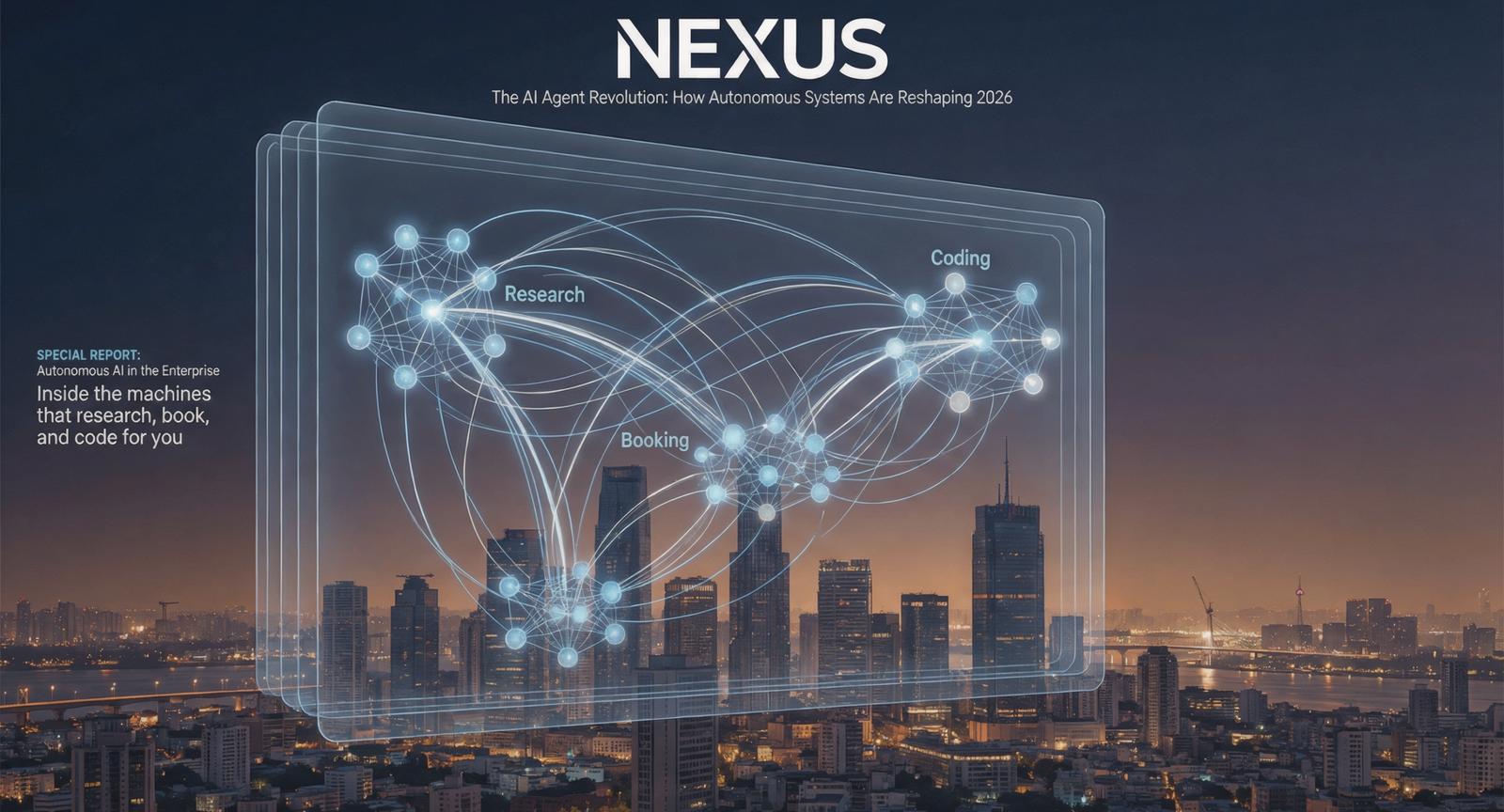
The conversation around artificial intelligence has shifted from what models can say to what they can actually do. In 2026, the era of passive chatbots has given way to the rise of useful AI agents that operate with a level of autonomy previously confined to science fiction. According to a comprehensive 2026 guide, these agents do not just provide information; they execute multi-step workflows, maintain state across different applications, and verify their own results against your specific goals. This transition marks a fundamental change in how we interact with technology, moving from a command-and-control model to a collaborative partnership where the AI handles the execution while you provide the strategic direction.
Understanding why useful AI agents are finally becoming a staple of the modern digital landscape requires looking at the convergence of three critical technologies. First, large language models have achieved the reasoning depth necessary to plan complex sequences of actions. Second, “computer use” capabilities now allow these models to interact with standard user interfaces just as a human would, clicking buttons and typing in fields. Third, a robust ecosystem of tool-use APIs has matured, allowing agents to talk directly to software services without needing a human intermediary. Together, these advancements have turned AI from a conversational novelty into a practical engine for productivity.

1. Booking and Managing Complex Travel Itineraries
One of the most visible ways useful AI agents prove their worth is in the logistics of travel. In the past, planning a trip meant spending hours across dozens of browser tabs, comparing flight prices, reading hotel reviews, and checking local transportation schedules. Today, an agent like OpenAI’s Operator can take a high-level goal, such as “plan a three-day business trip to Chicago with a focus on proximity to the West Loop and a budget under twelve hundred dollars,” and handle the entire process. It doesn’t just suggest flights; it navigates the booking sites, selects the most efficient route, reserves the room, and adds the confirmation details to your digital calendar.
The real power of useful AI agents in travel lies in their ability to handle the “edge cases” that usually cause human stress. If a flight is delayed or a hotel reservation is lost, the agent can proactively search for alternatives and re-book the necessary segments before you even realize there is a problem. This level of proactive management is a hallmark of the 2026 agentic landscape. By maintaining a constant connection to real-time data and having the authority to act on your behalf within pre-set financial boundaries, these agents transform travel from a logistical hurdle into a seamless experience.
2. Automating Multi-App Professional Workflows
For professionals, the most significant impact of useful AI agents is found in the elimination of “digital busywork.” Most office tasks involve moving data between different platforms, such as taking information from an email, updating a CRM entry, and then generating a report in a spreadsheet. Agents are now capable of observing these patterns and taking over the execution. Gartner notes that by 2026, a staggering forty percent of enterprise applications will embed these task-specific agents to handle the friction of cross-platform data management, as detailed in recent industry analysis. This allows employees to focus on high-level decision-making rather than the mechanics of data entry.
In a typical marketing or sales environment, useful AI agents can monitor incoming leads, research the background of the potential client using public data, and draft a personalized outreach message that references specific recent news about the client’s company. Once the human approves the draft, the agent sends the message and sets a follow-up reminder. This isn’t just a simple automation script; it is a dynamic process that adjusts based on the context of the information the agent finds. Because these agents can “reason” about the data they are processing, they can identify when a lead is particularly valuable or when a piece of information seems contradictory.
3. Handling Proactive Email and Communication Triaging
Email remains the primary communication tool for most of the world, but it has also become a major source of cognitive load. useful AI agents have evolved to become sophisticated gatekeepers that do more than just filter spam. They can understand the urgency and context of every incoming message, summarizing long threads and highlighting the specific actions required of you. An agent integrated into your workspace can identify that a client is asking for a project update and automatically gather the relevant status reports from your team’s project management tool to draft a response for your review.
This proactive triaging extends to managing your availability and commitments. If an email arrives requesting a meeting, the agent doesn’t just check your calendar; it considers your preferred working hours, your current project deadlines, and even your historical energy levels for that time of day before suggesting a slot. By the time you open your inbox, the useful AI agents have already handled the routine scheduling and organized the remaining messages by their strategic importance. This shift allows for a “deep work” environment where interruptions are minimized and only the most critical decisions reach the human user.
4. Executing Deep Research and Market Analysis
The research capabilities of useful AI agents in 2026 go far beyond simple search queries. When tasked with analyzing a market trend or investigating a technical topic, these agents can navigate the web, download relevant white papers, summarize their findings, and cross-reference data points to identify inconsistencies. Google’s Jarvis, for example, is designed to perform these deep-dive research tasks by browsing the web just as a human would, as reported by CIO, but at a much higher speed and with a perfect memory for every page visited. This turns hours of manual investigation into a concise, well-cited report delivered in minutes.
What makes these agents truly useful AI agents is their ability to synthesize information from multiple formats. They can watch a recorded webinar, read a financial statement, and analyze a social media trend to provide a holistic view of a topic. This is particularly valuable in fields like finance, law, and medicine, where the volume of new information is overwhelming. By acting as a first-line researcher, the agent can present the human expert with a curated set of high-quality data and initial insights, allowing the expert to apply their specialized judgment to a pre-digested body of work.
5. Software Development and Iterative Debugging
The role of useful AI agents in software engineering has moved from simple code completion to full-scale task execution. Agents can now take a bug report, reproduce the issue in a local environment, identify the root cause, and propose a fix along with the necessary unit tests. This iterative loop of “plan, execute, and verify” is exactly how human developers work, but agents can perform the routine parts of this cycle with much greater consistency. This doesn’t replace the need for senior architects, but it dramatically accelerates the pace of development by handling the tedious aspects of maintenance and debugging.
Beyond fixing bugs, useful AI agents are also becoming essential for maintaining large codebases. They can perform automated refactoring to improve performance, update dependencies to ensure security, and even generate documentation that stays in sync with the actual code. Because the agent understands the entire context of the project, it can ensure that a change in one module doesn’t inadvertently break a feature in another. This “agentic” approach to development ensures that the software remains robust and maintainable over time, even as the complexity of the system grows.
Will AI Take Your Job? A Practical Guide to Preparing for Change
6. Managing Personal Finances and Bill Payments
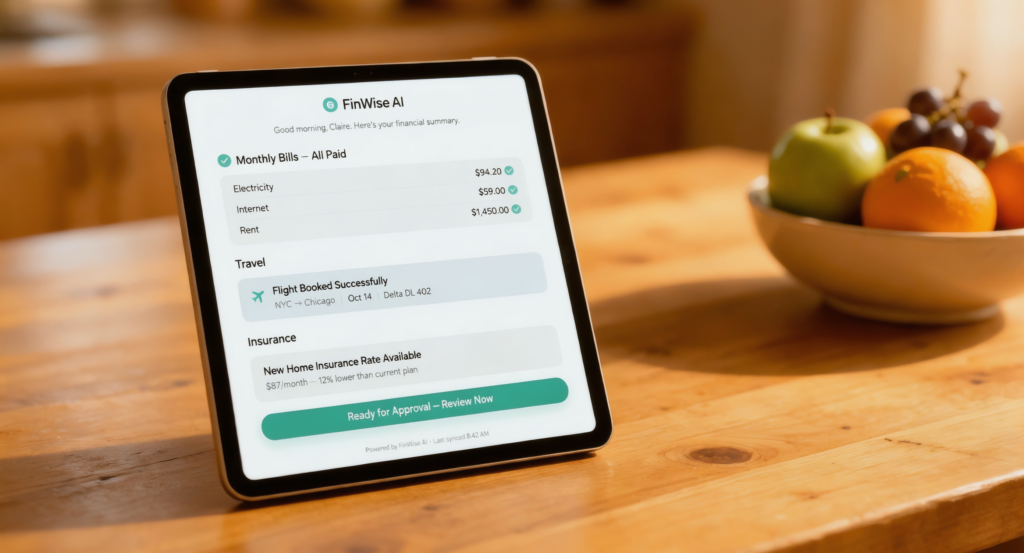
Managing a household budget and ensuring that every bill is paid on time is a task that many people find stressful. useful AI agents are now being granted limited authority to manage these financial workflows. By connecting to your bank accounts and utility providers, an agent can monitor your spending patterns, identify unusual charges, and ensure that payments are made before their due dates. This isn’t just a recurring payment system; the agent can actively look for ways to save money, such as identifying a better insurance rate or noticing that a subscription service has increased its price without notice.
The security of these useful AI agents is a primary concern in 2026, leading to the adoption of strict governance frameworks. Most users employ a “human-in-the-loop” model for significant financial decisions, where the agent prepares the payment or the transfer but requires a biometric approval from the user before the transaction is finalized. This combination of agentic efficiency and human oversight provides a balance of convenience and safety. By handling the routine mechanics of financial management, the agent frees the user to focus on long-term wealth building and strategic planning.
7. Direct Computer Use for Native Application Tasks
Perhaps the most revolutionary task handled by useful AI agents is the ability to interact directly with the desktop and native applications. Anthropic’s “Computer Use” capability allows Claude to view a computer screen, move the cursor, and type text into any software, whether it has an API or not, representing a major shift in AI interaction. This means an agent can help you with tasks in legacy software, specialized creative tools, or internal company applications that were never designed for AI integration. If you need to take data from an old accounting program and move it into a modern visualization tool, the agent can simply “see” the screen and perform the clicks required.
This level of direct interaction makes useful AI agents universally applicable across all digital tasks. Whether you are organizing a photo library, setting up a complex piece of hardware, or managing a local file system, the agent can provide direct assistance. This capability effectively turns the AI into a “digital twin” that can handle any task you can perform with a mouse and keyboard. As these agents become more reliable at navigating complex user interfaces, the barrier between “human tasks” and “AI tasks” continues to dissolve, leading to a future where the computer is a truly collaborative environment.
The Governance of Useful AI Agents
As we grant useful AI agents more autonomy to act on our behalf, the importance of safety and governance cannot be overstated, as outlined in this business guide. The shift from “chatting” to “acting” introduces new risks, such as an agent making an incorrect booking or accidentally sharing sensitive data. To mitigate these risks, the industry is moving toward standardized frameworks where agent tasks are categorized by their potential impact. Low-risk tasks, such as summarizing a public document, can run with full autonomy, while high-risk tasks involving financial transactions or private data require explicit human approval at critical steps.
This “human-in-the-loop” philosophy ensures that useful AI agents remain a tool for empowerment rather than a source of liability. Users are encouraged to set clear boundaries, such as maximum spending limits or restricted access to certain applications. By maintaining a transparent log of every action the agent takes, developers allow users to audit the AI’s performance and understand the reasoning behind its decisions. This transparency is essential for building the trust required for agents to become a permanent part of our digital lives.
Conclusion: The Future of Agentic Collaboration
The rise of useful AI agents in 2026 represents the next major milestone in the evolution of computing. We are moving away from a world where we have to learn how to use software, and toward a world where software learns how to help us. By handling the routine, the repetitive, and the logistically complex, these agents allow us to reclaim our time and focus on the tasks that require uniquely human creativity and judgment. Whether it is managing a professional workflow or organizing a personal trip, the value of an agent lies not just in its intelligence, but in its ability to act.
As these technologies continue to mature, the definition of a “useful” agent will only expand. We can expect to see even tighter integration between our physical and digital worlds, with agents managing our smart homes, coordinating our healthcare, and even assisting in complex creative endeavors. The key to success in this new era is not just having the best agent, but knowing how to collaborate with it effectively. By providing clear goals and maintaining a strategic oversight, we can ensure that useful AI agents remain a powerful force for good in our daily lives.

Frequently Asked Questions
What is the difference between a chatbot and a useful AI agent?
A chatbot is primarily designed for conversation and providing information based on a prompt. In contrast, useful AI agents are designed for action; they can plan multi-step tasks, use external tools and APIs, and interact with software to achieve a specific goal autonomously.
Are useful AI agents safe to use with my bank account?
While useful AI agents can manage financial tasks, most security experts recommend a “human-in-the-loop” approach. This means the agent can prepare the transaction or identify a bill, but a human must provide final biometric or password approval before any money is moved.
Can useful AI agents work with software that doesn’t have an API?
Yes, some modern useful AI agents feature “computer use” capabilities. This allows them to “see” the computer screen and interact with the user interface by moving the cursor and typing, just like a human user would, making them compatible with almost any software.
Do I need to learn how to code to use these agents?
No, one of the primary benefits of useful AI agents is that they respond to natural language instructions. You can simply tell the agent what you want to achieve in plain English, and it will handle the technical execution and planning on its own.
How do useful AI agents handle errors or mistakes?
Most useful AI agents operate in a loop that includes a verification step. After taking an action, the agent checks the result against the original goal. If it detects an error, it can attempt to correct the mistake or alert the user for further instructions.
Which companies are leading the development of these agents?
In 2026, the market for useful AI agents is led by companies like OpenAI with their Operator agent, Google with the Jarvis web agent, and Anthropic with the “Computer Use” capabilities integrated into the Claude model family.
Will useful AI agents replace my job?
While useful AI agents can handle many repetitive and logistical tasks, they are currently designed to assist humans rather than replace them. They excel at execution, but they still require human direction, strategic oversight, and ethical judgment to be truly effective.