

A credit score can feel like a mysterious number that appears whenever you apply for a credit card, loan, rental home, or other financial product. In reality, it is a summary of information in your credit history. Lenders use scores, reports, income, and other details to estimate how reliably you may repay borrowed money. If you want to improve credit score, the most dependable path is usually not a secret trick. It is a series of consistent habits repeated over time. A realistic plan to improve credit score begins with accurate information and repeatable decisions, not short-lived hacks.
Before discussing practical steps, it is important to understand that there is no single universal credit score. Different lenders may use different scoring models, reporting agencies, and versions of a score. A credit-card application and a mortgage application may not use the exact same score. The Consumer Financial Protection Bureau explains that many scores use a range from 300 to 850, but scoring formulas and ranges can vary.

That difference matters because a change in one score does not always appear in another score at exactly the same time. It also means that a generic promise such as “raise your score by 100 points instantly” should be treated with caution. A responsible plan to improve credit score focuses on accurate reports, on-time payments, manageable balances, careful applications, and patience.
What a Credit Score Actually Measures
A credit score is not a complete judgment of your character, income, intelligence, or financial worth. It is a risk estimate based mainly on credit-report information. Depending on the model, that information may include whether payments were made on time, how much revolving credit is being used, how long accounts have existed, recent applications, and the mix of account types.
The explains that lenders may use different formulas and reporting sources. The also notes that scores can affect whether someone qualifies for credit and the terms a lender offers. These sources are useful because they show why credit education should focus on general principles rather than one magic number.
| Credit factor | Why it can matter | Helpful habit |
| Payment history | Late or missed payments can signal repayment risk. | Build a reliable payment system and stay current. |
| Credit utilization | High balances compared with available revolving credit can increase perceived risk. | Keep balances manageable and avoid regularly reaching the limit. |
| Credit history length | More time managing accounts can provide more evidence of repayment behavior. | Avoid closing accounts casually, especially when doing so would sharply reduce available credit. |
| New applications | Many applications in a short period may suggest increased demand for credit. | Apply only when credit is genuinely needed. |
| Credit mix | Some models consider different types of credit accounts. | Do not open accounts merely to create a mix. |
These factors do not carry identical importance in every scoring model. FICO describes payment history and amounts owed as especially important categories in its widely used U.S. scoring models, while also emphasizing that the effect of any factor depends on the complete credit profile. The most useful takeaway is simple: improve credit score by managing the accounts you already have responsibly instead of opening products just to chase a formula. This approach can improve credit score while also protecting your broader financial health.
1. Pay Every Bill on Time
Payment history is one of the strongest foundations for healthy credit. A late payment can remain visible in a credit report for a substantial period, and its effect may depend on how recent, frequent, or severe the missed payment was. The safest general habit is to pay at least the required amount by the due date, while paying the full balance when possible to avoid unnecessary interest.
A practical system can be more valuable than motivation. Set calendar reminders several days before due dates, turn on account alerts, or use automatic payments for at least the minimum amount when your bank balance can support them. Automatic payments do not remove the need to review statements, because an incorrect charge or insufficient balance can still create a problem.
If a payment has already been missed, do not assume the situation is hopeless. Contact the lender, bring the account current as soon as reasonably possible, and review the account for additional fees or reporting problems. The goal is not to erase history through a quick fix. The goal is to prevent one difficult month from becoming a repeated pattern. Consistent on-time payments are among the most reliable ways to improve credit score over time. If you are building a plan to improve credit score, make payment reliability the first habit you automate.
2. Keep Credit Card Balances Manageable
Credit utilization describes how much revolving credit you are using compared with the total limit available to you. For example, a person with a total limit of $2,000 and a balance of $600 is using 30 percent of that available limit. Utilization can be considered for individual cards and across accounts, depending on the scoring model.
Many consumer guides mention 30 percent as a useful ceiling, but it is not a universal guarantee or a magic threshold. FICO states that lower utilization generally indicates lower risk, yet there is no single percentage that guarantees the highest possible score. A person should not borrow money or pay interest simply to reach an arbitrary number.
Instead, pay attention to whether balances are becoming difficult to manage and whether reported balances remain high month after month. Lowering unaffordable revolving debt can help improve credit score and reduce interest pressure at the same time. Paying a statement balance in full can reduce interest costs and may also keep reported utilization lower, depending on the issuer’s reporting schedule. If a balance is already large, reducing it gradually and avoiding new charges you cannot repay may be more sustainable than making a dramatic payment that leaves you unable to cover essential expenses.
3. Check Your Credit Reports for Errors
A credit score is calculated from data in a credit report, so inaccurate information can create an unfair result. Common problems may include an account that does not belong to you, an incorrect late-payment record, a duplicated debt, an account listed as open after it was closed, or outdated personal information that causes confusion between two consumers.
Reviewing a report does not hurt your score when you request it for your own information. In the United States, the is the federally authorized source for free annual reports from the three nationwide reporting companies. Rules and free-report access can differ in other countries, so readers outside the United States should use their local government or reporting-agency guidance.
If you find a suspected error, collect supporting documents and follow the dispute instructions provided by the reporting company and the organization that supplied the information. Do not pay a company that promises it can remove accurate negative information. Legitimate disputes concern information that is inaccurate, incomplete, outdated, or not yours. Correcting a genuine reporting error may help improve credit score, but no dispute company can lawfully remove accurate information simply because it is negative.
INTERNAL LINK → [How to Manage Salary, Bills, and Savings Without Feeling Broke]
4. Be Careful With New Credit Applications
Applying for credit can create a hard inquiry, depending on the product and the lender’s process. One inquiry is not automatically disastrous, but submitting many applications in a short period can affect a score and may make lenders question whether your financial situation has changed.
Before applying, compare the basic terms, eligibility requirements, fees, and likely purpose of the account. Avoid applying for several products simply because they advertise rewards or a temporary offer. A new account may also reduce the average age of your accounts or tempt you to spend beyond your repayment capacity.
Some loan-shopping periods may be treated differently by scoring models, particularly when several inquiries represent comparison shopping for one type of loan. The exact treatment depends on the scoring model and product. If you are making a major borrowing decision, read the lender’s disclosures and check current guidance rather than relying on a general rule found in a social-media post. Applying selectively can support an effort to improve credit score without creating unnecessary inquiries.
5. Avoid Closing Accounts Without Understanding the Effect
Closing an unused credit card does not automatically damage every person’s score, but it can affect the calculation in several ways. If the account has a credit limit, closing it may reduce total available revolving credit. If other balances remain unchanged, utilization could rise. The account may also contribute to the age and history of the credit file under some scoring approaches.
That does not mean every old account should remain open forever. An account with high fees, security concerns, poor terms, or a risk of misuse may not be worth keeping. The important point is to understand the consequences before closing it. Consider whether the account has an annual fee, whether you can keep it secure, and whether closing it would leave your other cards heavily utilized.
Do not keep a product you cannot manage merely to chase a score. Healthy credit is only one part of financial well-being. A decision that prevents expensive fees, fraud, or unmanageable debt may be sensible even if the score effect is uncertain. The right approach to improve credit score is to balance credit mechanics with the larger financial picture. A person trying to improve credit score should consider fees, fraud risk, interest costs, and financial stability together.
6. Build a Longer Record of Responsible Credit Use
Credit history takes time. A person who has managed accounts responsibly for several years may provide a lender with more evidence than someone who opened several accounts last month. This is one reason patience matters. You cannot manufacture a long history overnight, and closing accounts without considering the effect may reduce the information available to a scoring model.
People who are new to credit should be especially cautious about opening multiple accounts at once. A secured card or credit-builder product may be designed for people establishing or rebuilding credit, but product fees, reporting practices, eligibility rules, and risks vary. Read the agreement carefully and confirm that payments are reported to the relevant credit-reporting agencies.
You also do not need to carry an unpaid balance to build credit. The states that paying a card balance in full can help keep interest costs low. Using a small amount of credit and repaying it as agreed is generally more sensible than paying interest just to show activity.
7. Create a Credit-Monitoring Routine
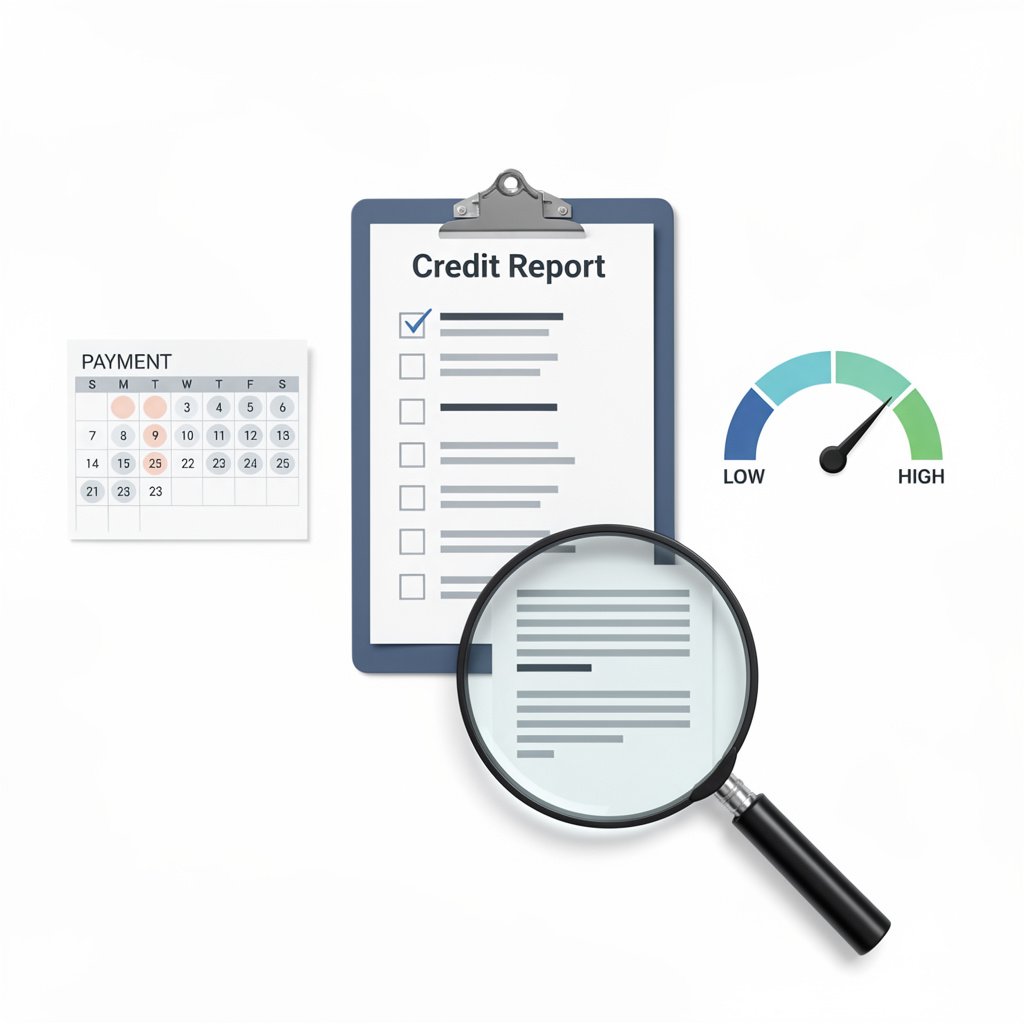
A monitoring routine turns credit improvement from a once-a-year worry into a manageable habit. Once a month, review statements for unfamiliar charges, check whether payments were credited correctly, and look at your current balances. At regular intervals, review your credit reports for errors and signs of identity theft.
Be careful when choosing a credit-monitoring service. Some services show an educational score that is not the same score a lender will use. That does not make the service useless, but it means you should understand what it provides, how frequently it updates, and whether it charges a recurring fee. You can improve credit score more effectively when you know which information you are actually monitoring. A clear record also makes it easier to improve credit score through steady, evidence-based changes rather than guesswork.
Create a simple record with the account name, due date, payment status, balance, and contact information for disputes. Protect the document with a strong password and avoid storing sensitive financial details in an insecure shared file. If you notice suspected identity theft, contact the relevant reporting agencies, creditors, and official consumer-protection resources promptly.
Credit Score Myths That Can Slow Your Progress
One common myth says that carrying a balance on a credit card improves your score. In reality, carrying a balance can create interest charges, and the CFPB says you do not need outstanding debt to receive a good score. Paying in full can be financially healthier when it is affordable and does not interfere with essential obligations.
Another myth says that checking your own score always lowers it. Reviewing your own credit information is generally treated differently from a lender’s hard inquiry. A person should still understand which service is being used and what kind of inquiry, if any, is involved.
A third myth says that a score is permanent. Credit reports change as lenders update information, payments are made, balances move, and errors are corrected. Improvement is rarely instant, but responsible changes can become visible over time. The most useful question is not whether a score will jump tomorrow. If your aim is to improve credit score, ask whether your system makes future payments, balances, and applications more manageable.
A Simple 90-Day Credit Improvement Plan
During the first month, organize your accounts and review your reports. Write down due dates, check for errors, identify high balances, and set up reminders. Do not apply for new credit simply because you are reviewing your file. The first goal is clarity.
During the second month, focus on consistency. Make every payment on time, avoid adding balances you cannot repay, and contact creditors promptly if a payment problem is developing. If you discover an error, begin the official dispute process and keep copies of your records.

During the third month, review what changed. Check whether balances are more manageable, whether payment systems worked, and whether any disputes received a response. Improvement may not appear immediately in every score because reporting cycles vary. Continue the habits rather than reacting to one daily score update. A 90-day routine to improve credit score is more useful than checking for a dramatic overnight change. A 90-day routine to improve credit score is more useful than checking for a dramatic overnight change.
How to Manage Salary, Bills, and Savings Without Feeling Broke