
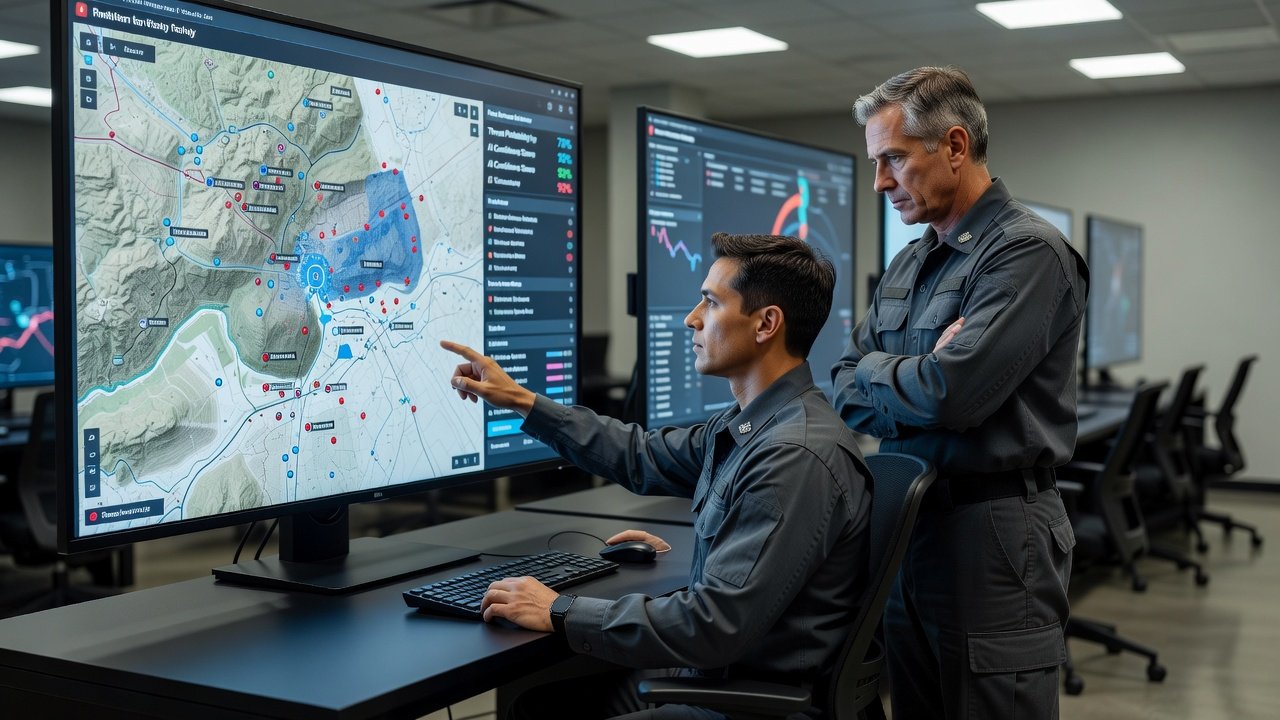
Military AI is moving from a future-looking research topic into a practical national-security priority. In 2026, the U.S. military is not only discussing artificial intelligence in laboratories or policy papers. It is trying to place AI into intelligence analysis, planning, logistics, cybersecurity, training, enterprise software, and decision support. The goal is to make useful systems available faster while competing with other major powers for technical talent, computing capacity, data, and industrial advantage.
That acceleration does not mean every AI project is ready for battlefield use, and it does not mean human judgment has disappeared from military decision-making. It means the military is treating the ability to test, adapt, and deploy AI as a strategic capability in its own right. The central question is no longer whether AI will influence defense. It is how quickly institutions can adopt it safely, measure whether it works, and prevent speed from overwhelming accountability.
What Is Driving the Military AI Race?
The phrase “military AI race” describes competition over more than weapons. It includes the race to process information, protect networks, automate routine work, improve simulations, support commanders, and build reliable systems that work under pressure. The Department of War’s January 2026 AI acceleration strategy places military AI across three broad areas: warfighting, intelligence, and enterprise operations.
The official strategy says AI-enabled warfare and AI-enabled capability development could redefine military affairs over the next decade. It emphasizes experimentation, computing infrastructure, operational data, models, policy, and technical talent. Those priorities show why the race is moving quickly: advantage may come not from a single dramatic machine, but from an institution that can connect data, people, software, and decisions more effectively than its competitors.
The Department of War’s AI acceleration announcement describes three priorities—warfighting, intelligence, and enterprise operations—and introduces pace-setting projects intended to move AI from experimentation toward department-wide use. These are official goals and planned initiatives, not independent proof that every announced system is already effective.
1. Information Moves Faster Than Traditional Institutions
Military organizations operate in environments where large amounts of information arrive from many sources. Analysts may need to compare reports, satellite imagery, sensor data, communications, logistics records, and historical patterns. AI can help sort, classify, summarize, translate, or identify relationships in that information faster than a person working alone.
This does not make AI automatically correct. A model can miss context, misread an image, repeat a flawed assumption, or produce a confident but unsupported conclusion. However, even an imperfect tool may be useful when it helps a trained analyst locate relevant material, compare possibilities, or focus attention on the most important questions. That potential explains why intelligence support is one of the main reasons military AI is accelerating.
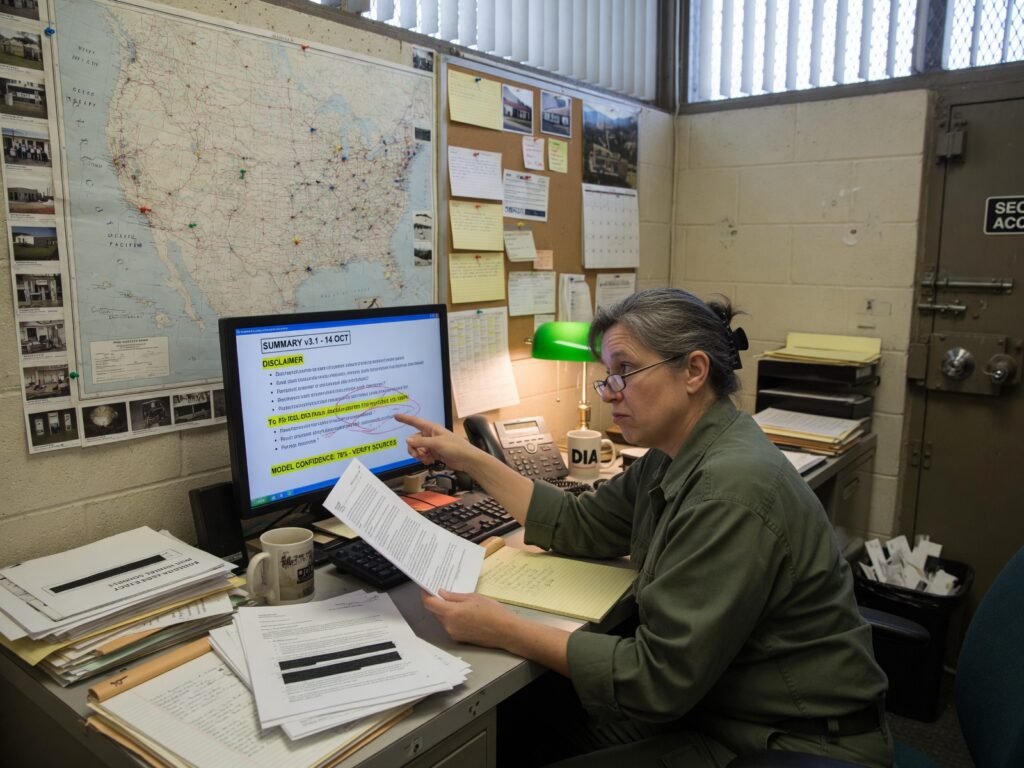
The advantage is especially attractive when information arrives faster than human teams can review it. A system that reduces the time between collection and analysis may influence planning and response. At the same time, the military must evaluate whether the speed comes at the cost of accuracy, explainability, privacy, or lawful use. Faster information is valuable only when decision-makers understand its limits.
2. The U.S. Is Competing for Computing, Data, and Technical Talent
Military AI depends on infrastructure that is easy to overlook. Models require computing power, secure networks, data pipelines, testing environments, skilled engineers, and people who understand both technology and military work. Without those foundations, an impressive demonstration may never become a dependable tool used across an organization.
The 2026 strategy places unusual emphasis on AI compute, operational data, models, policies, and talent. The White House’s 2026 national-security memorandum also calls for partnerships with industry and the adaptation of commercial or open-source AI technologies for national-security needs. This is important because many of the fastest advances in AI are taking place in the private sector, while military systems often have stricter security, reliability, and procurement requirements.
The White House memorandum on AI and national security says national-security agencies should make advanced models available, work with industry, and ensure that adopted systems are reliable, robust, steerable, and controllable. In practice, that creates a competition on two fronts. The military must gain access to leading technology, but it must also make that technology dependable inside secure and highly regulated environments.
Technical talent is part of the same competition. Engineers, data scientists, cybersecurity specialists, acquisition professionals, and military users all influence whether military AI becomes useful. Recruiting a few experts is not enough if the wider organization cannot evaluate models, protect data, report failures, and integrate AI into ordinary workflows.
3. AI Is Being Applied to Routine Military Work, Not Only Combat
Public discussion often jumps directly to autonomous weapons, but many military AI applications are less dramatic. Systems may help with scheduling, maintenance, supply forecasting, document search, language translation, training simulations, cybersecurity alerts, personnel support, and administrative tasks. These uses can still matter because large organizations lose time through fragmented information and repetitive processes.
The 2026 Department of War announcement describes enterprise AI projects intended to provide generative AI access and develop secure agents for department-wide workflows. If these tools work as intended, they could reduce routine administrative burdens and help personnel find information faster. They could also introduce new risks, including inaccurate summaries, data leakage, hidden bias, insecure integrations, and overreliance on automated recommendations.
This is why military AI should not be measured only by whether it can perform a spectacular task. A system that quietly improves maintenance planning or helps staff review thousands of documents may create more practical value than a flashy demonstration. The difficult part is proving that the improvement is real, repeatable, secure, and worth the cost of adoption.
4. Decision Support Creates Pressure for Speed and Control
Another reason military AI is accelerating is the belief that software can help leaders make decisions in complex situations. AI may organize options, model scenarios, highlight changes, or show how different assumptions affect an outcome. In theory, this can help humans manage information overload.
But decision support is not the same as decision authority. A recommendation can influence a human even when the person technically retains the final decision. If the system is difficult to understand, if its confidence is exaggerated, or if operators are under severe time pressure, human oversight may become formal rather than meaningful.
The Congressional Research Service primer on U.S. policy for lethal autonomous weapon systems explains that policy focuses on appropriate levels of human judgment, training, understandable interfaces, realistic testing, and senior-level review. Those safeguards matter even when an article is discussing military AI broadly, because they show the difference between a useful decision-support tool and an autonomous system that acts without adequate human involvement.
The race therefore has a built-in tension. Military organizations want systems that are fast enough to matter, but they also need enough testing and human understanding to prevent avoidable errors. A slower system that is dependable may be more valuable than a faster system that users cannot interpret or control.
5. Competition With Other Powers Is Shaping the Timeline
U.S. officials describe AI as part of strategic competition. The concern is not only that another country might develop a more advanced model. It is that a competitor could use AI to improve cyber operations, intelligence processing, logistics, autonomous platforms, misinformation, or command systems in ways that create pressure across many parts of national defense.
That concern encourages the military to shorten procurement timelines, experiment with commercial technology, and create projects with clear leaders and deadlines. It also encourages investment in domestic suppliers and secure infrastructure. The risk is that competition can turn into a reason to treat evaluation, transparency, and public accountability as obstacles rather than requirements.
The FY 2026 defense-budget briefing presents AI alongside broader investments in cyber, space, science and technology, industrial capacity, and modernization. That context matters. Military AI is not developing in isolation; it is part of a larger effort to preserve technological advantage across connected systems.
Competition can accelerate useful innovation, but it can also encourage exaggerated claims. A responsible analysis should distinguish between an announced project, a prototype, a tested capability, and a system that performs reliably in real conditions. Those categories are not interchangeable.
6. Reliability and Cybersecurity Are Becoming Strategic Requirements
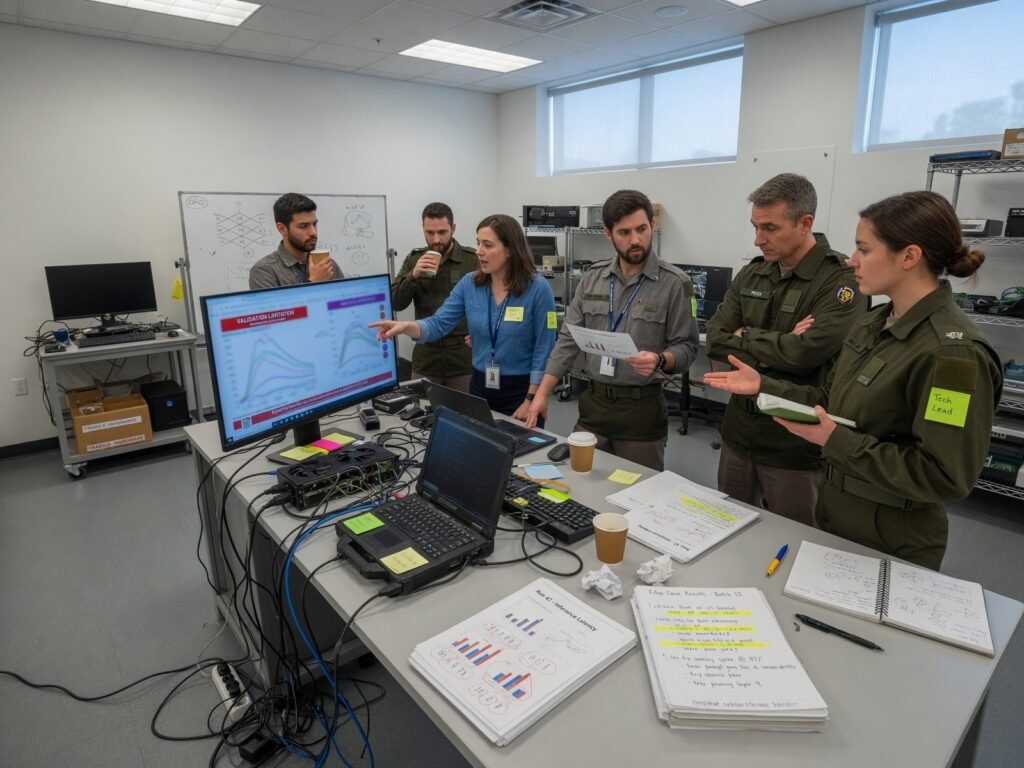
Military AI systems will operate in environments where data may be incomplete, networks may be attacked, and adversaries may deliberately try to deceive a model. A system trained on historical data can fail when conditions change. A model can also be manipulated through corrupted inputs, compromised software, or hidden weaknesses in the data pipeline.
The White House memorandum calls for AI systems that are reliable, robust, steerable, and controllable. These words describe practical requirements. Reliability asks whether a system performs consistently. Robustness asks whether it continues to function when conditions change. Steerability concerns whether authorized users can direct it. Controllability asks whether people can stop, limit, or correct its behavior.
The Government Accountability Office has previously found that defense AI strategies needed stronger descriptions of resources, clearer component responsibilities, better inventory processes, and more complete collaboration guidance. The GAO assessment of defense AI strategy and implementation gaps is older than the 2026 acceleration announcements, but it remains useful because it highlights the organizational problems that technology alone cannot solve.
Military AI therefore creates a security challenge beyond model accuracy. Leaders must know what data a system uses, who can change it, how it is tested, what happens when it fails, and whether users can recognize an unreliable output. Cybersecurity, procurement, training, and accountability are part of the same problem.
AI and Privacy: What Happens to Your Data When You Use AI Tools?
7. Oversight Will Determine Whether Acceleration Is Sustainable
The final reason the race matters is that long-term military AI adoption depends on public trust, legal compliance, and institutional oversight. Speed can help an organization respond to competition, but speed without review can create expensive failures or weaken confidence in military decisions.
Oversight includes testing, procurement rules, privacy protections, civil-liberties safeguards, congressional reporting, independent evaluation, and clear responsibility when an AI-assisted decision causes harm. It also includes honest communication about what a system can and cannot do. A military that hides uncertainty may appear faster for a short period, but it becomes harder to correct mistakes.

The CRS discussion of autonomous weapons notes that human judgment, realistic testing, training, senior-level review, and congressional notification are part of the policy environment surrounding autonomy. These mechanisms do not remove every risk, and policies may change as technology develops. They do show that military AI is not only an engineering issue. It is also a question of law, command responsibility, democratic oversight, and public accountability.
What the Military AI Race Means for the Public
For the public, the military AI race raises questions that go beyond whether the United States is ahead of a competitor. Citizens may want to know how much money is being spent, which systems are being tested, how civilian harm is minimized, who reviews high-risk applications, and what happens when automated recommendations are wrong.
The public should also be careful with dramatic headlines. “AI-enabled” can describe many different things, from a document-search assistant to a system connected to a weapon platform. The label alone does not tell readers how autonomous a system is, how much human judgment is required, how reliable it has been, or whether it is operationally deployed.
A useful way to evaluate military AI claims is to ask four questions. Is the claim describing a policy goal, a prototype, a pilot program, or a tested capability? What evidence supports the claim? What human controls and review processes exist? What limitations or failure conditions have been disclosed?
These questions make it easier to separate strategic ambition from demonstrated performance. They also help readers understand why the military is accelerating AI without assuming that every promise will become a success.
The Dark Side of AI: Deepfakes, Misinformation, and What You Can Do here.
Final Thoughts
The U.S. military is accelerating its AI race in 2026 because leaders see artificial intelligence as a way to process information faster, modernize large organizations, compete for technical advantage, and improve decision support. The push is reinforced by official strategy, private-sector innovation, defense investment, and concern about other countries’ capabilities.
Military AI is still constrained by data quality, computing access, procurement rules, cybersecurity, testing, workforce skills, legal requirements, and human judgment. Those constraints are not side issues. They will determine whether acceleration produces reliable tools or simply creates more impressive demonstrations.
The most important story is therefore not that machines are replacing commanders or that every job in defense is becoming autonomous. It is that the military is reorganizing around the ability to experiment with AI, integrate it into existing systems, and decide where human judgment must remain decisive. The countries and institutions that manage that balance may gain more durable advantages than those that simply move fastest.
Frequently Asked Questions
Why is the U.S. military accelerating military AI in 2026?
The main reasons include faster information processing, strategic competition, modernization, cybersecurity, enterprise automation, improved decision support, and the desire to build domestic technical and industrial capacity.
Does military AI mean that weapons operate without humans?
No. Military AI includes many non-weapon uses such as logistics, intelligence analysis, translation, training, maintenance, and administrative support. Autonomous weapons are a narrower and more sensitive category governed by specific policy and review requirements.
Is the U.S. military already using AI?
The military has used AI-related tools in research, analysis, logistics, cybersecurity, simulations, and other areas for years. The 2026 acceleration concerns expanding experimentation, infrastructure, access, and integration across more missions and organizations.
What are the biggest risks of military AI?
Major risks include inaccurate outputs, biased or incomplete data, cyberattacks, model manipulation, unclear responsibility, overreliance on automation, privacy concerns, and failures in situations that differ from training conditions.
Will military AI replace human decision-makers?
The stated policy direction emphasizes human judgment and accountable command. AI may support analysis and recommendations, but the degree of human involvement varies by system and use. High-risk applications require careful testing, training, controls, and review.
Why does computing infrastructure matter so much?
AI systems require computing power, secure networks, data, model access, testing environments, and skilled personnel. Without those foundations, a promising model may be too slow, insecure, unreliable, or difficult to deploy at scale.
How can readers evaluate claims about military AI?
Readers should distinguish between a policy announcement, a prototype, a pilot, and a tested operational capability. They should look for evidence, identify the source, check whether limitations are disclosed, and ask what human oversight and independent review are in place.