
If you have ever stared at your to‑do list, scrolled your phone for an hour, and then hated yourself later, you know how painful procrastination feels. You promise that tomorrow will be different, but when tomorrow comes, the same pattern repeats. Learning how to stop procrastinating is not just about being “more disciplined”; it is about understanding what is really going on in your mind and building better systems around it.
In this guide, you will go deeper than simple motivational quotes. You will understand why your brain delays work even when you know it matters, what science says about procrastination, and how to stop procrastinating in a practical, kind, and sustainable way. You will learn small changes you can make today that will help you get started faster, stay focused longer, and feel more in control of your time.
You do not need to become a completely different person to stop procrastinating. You just need to change how you think about tasks, how you structure your environment, and how you respond to discomfort. Let’s break it down step by step.
What It Really Means to Stop Procrastinating
When people talk about wanting to stop procrastinating, they often imagine a future version of themselves who never gets distracted, never feels lazy, and jumps into every task with a smile. That fantasy is impossible. Even the most productive people feel resistance and boredom sometimes. The difference is that they do not let those feelings completely control their behaviour.
To stop procrastinating in a real‑world way means you learn to act even when you do not feel like it. You accept that starting is often uncomfortable and that your brain will offer you easier alternatives like checking messages, tidying your desk, or watching “just one video.” Instead of waiting for perfect motivation, you build habits that make starting so small and simple that your resistance has less power.

It also means you stop equating your worth with your productivity. Many people procrastinate because they are secretly afraid of failing. If they never start, they can tell themselves the story that they “could have done it” if they tried. When you decide to stop procrastinating, you accept that imperfect work is better than no work and that progress matters more than performing perfectly.
At its heart, to stop procrastinating is to treat your present self and your future self as the same person. You stop punishing your future self with rushed deadlines, last‑minute panic, and broken promises. Instead, you start doing small things today that make life easier for the version of you who will wake up tomorrow, next week, and next year.
Why You Keep Procrastinating Even When You Know Better
You already know that procrastination is bad for you. You have seen deadlines become emergencies, opportunities slip away, and simple tasks turn into huge mental monsters. So why is it still so hard to stop procrastinating?
Psychologists often describe procrastination as a problem of emotional regulation more than a problem of time management. According to research discussed by the American Psychological Association at https://www.apa.org/topics/personality/procrastination, people procrastinate to avoid uncomfortable feelings like boredom, anxiety, self‑doubt, or frustration. When a task triggers those feelings, your brain looks for quick relief, and distraction becomes the easiest escape.
This is why you can spend hours doing small, low‑value tasks instead of the one important thing you promised yourself you would do. Your brain prefers a feeling of “being busy” to the vulnerability of starting something that matters. To stop procrastinating, you need to catch this pattern and gently interrupt it.
Another reason is that many tasks in modern life are vague. “Work on project” or “get healthier” are not specific. When your brain sees a vague task, it does not know where to start, and confusion quickly becomes avoidance. You can want to stop procrastinating with all your heart, but if you keep writing fuzzy tasks, your behaviour will not change.
Perfectionism also plays a role. If you believe that every piece of work must be amazing, you raise the emotional cost of starting. Instead of focusing on a small first step, you imagine the entire mountain and feel exhausted before you begin. When you stop procrastinating, you do not magically stop caring about quality. You simply separate the “messy first draft” stage from the “polish and improve” stage.
Understanding these reasons will not instantly make you stop procrastinating, but it will help you stop calling yourself lazy and start treating procrastination as a pattern you can change.
How to Stop Procrastinating in Daily Life
Now that you know what procrastination really is, you can start building practical habits to stop procrastinating in your everyday routine. These habits do not need to be dramatic. In fact, the smaller they are, the more likely you are to keep them.
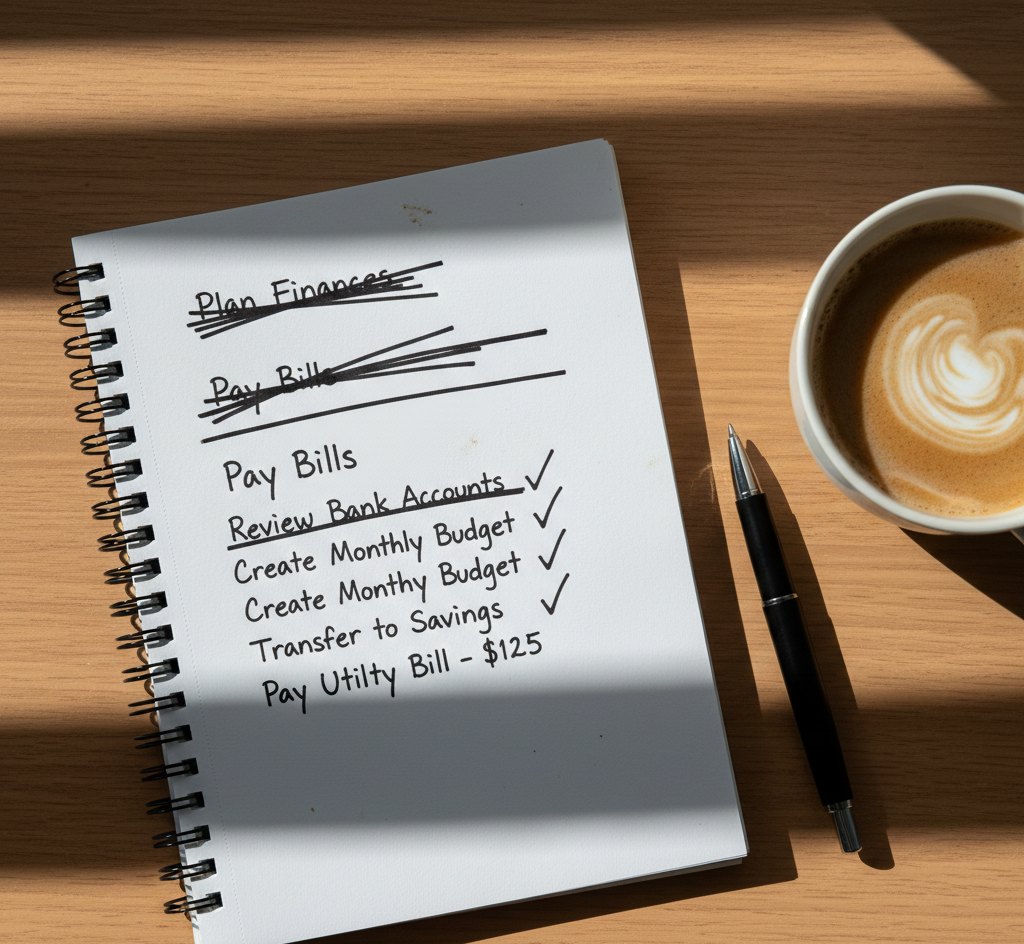
Begin by making your tasks specific. Instead of writing “study for exam,” write “read chapter 3 and answer 5 practice questions.” Instead of “work on presentation,” write “open slides and design title slide.” When you stop procrastinating, you are not suddenly full of energy; you are simply clear about the very next physical action. Specific tasks reduce the hesitation that makes you open social media instead of your work.
Another powerful change is to shrink your starting point. If a task feels heavy, tell yourself that your only job is to work on it for five minutes. Set a timer, start, and give yourself permission to stop after those five minutes if you truly want to. Most of the time, once you begin, the resistance drops, and you keep going. This “five‑minute rule” is one of the simplest ways to trick your brain into helping you stop procrastinating.
Your environment matters more than you think. If your phone is always next to you, notifications are popping up, and your desk is covered in distractions, your willpower will lose. To stop procrastinating, change the environment instead of fighting it. Put your phone in another room, close extra tabs, and prepare your workspace with only what you need for the next task. You do not have to make it perfect; even small changes can have a big effect.
Time blocking can also help you stop procrastinating. Instead of telling yourself you will “do it later,” you assign a clear time slot. For example, you might decide that from 9:00 to 9:30 you will write, from 14:00 to 14:30 you will reply to emails, and so on. When the time arrives, you are less likely to negotiate with yourself because the decision has already been made in the past.
Using Technology to Help You Stop Procrastinating
Technology can be both your worst enemy and your best ally. The same phone that distracts you can also help you stop procrastinating if you use it with intention.
You can start with simple focus tools. Many phones now have built‑in focus modes that silence notifications from non‑essential apps during work periods. Setting a “work” mode for a few hours each day creates a protected space where you can stop procrastinating and actually move projects forward. Website blockers on your laptop can temporarily block the most tempting sites while you work on a specific task.
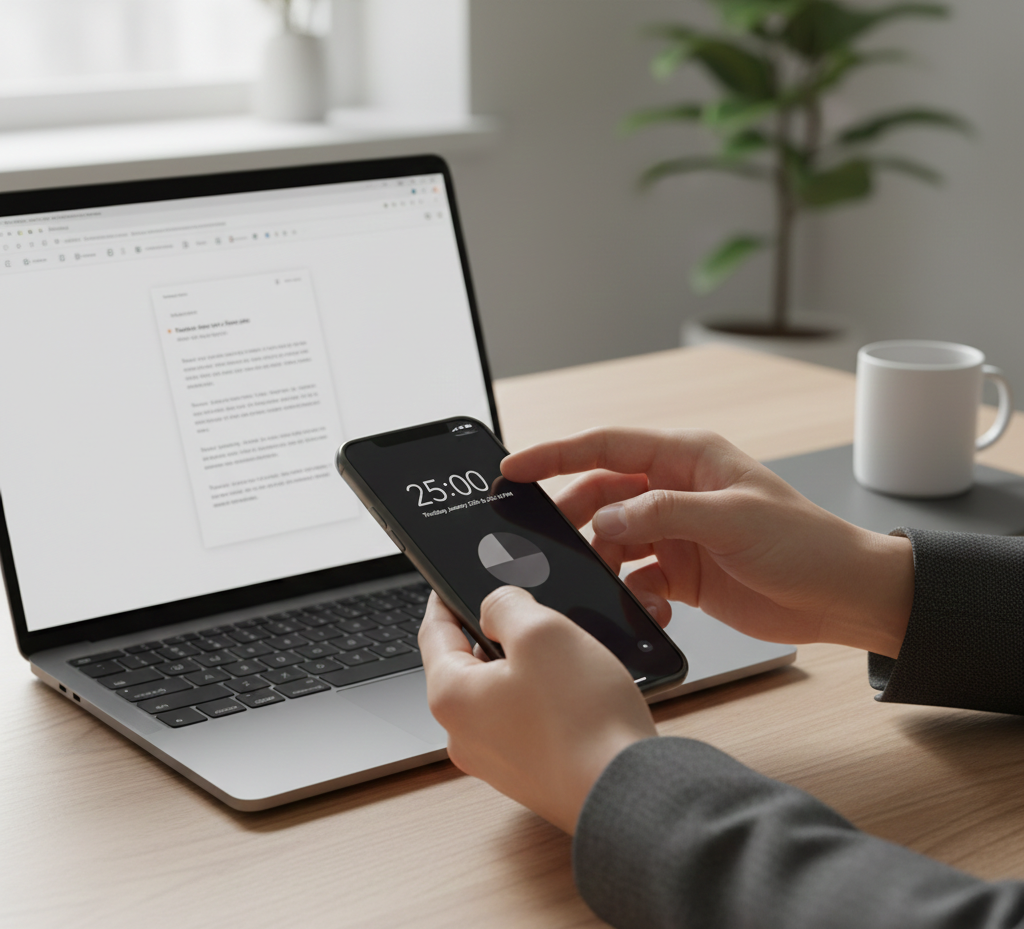
Timers are an underrated tool. The classic Pomodoro technique, where you work for 25 minutes and rest for 5, was not designed specifically to stop procrastinating, but it is perfect for that purpose. It transforms work into short, manageable sprints followed by guilt‑free breaks. If 25 minutes feels too long at the beginning, you can start with 10 or 15 and gradually increase.
AI tools can also support you if you use them wisely. For example, you might use an AI assistant to break a large task into smaller steps, generate a rough outline for a presentation, or rephrase a confusing email draft. This removes some friction and helps you stop procrastinating on tasks that feel unclear or overwhelming. If you are a content creator, you might find it useful to explore tools that speed up planning, research, and drafting, such as those described in Free AI Tools: 7 Best Apps for Creators 2025 once your basic anti‑procrastination habits are in place.
The key is to let technology lower the barrier to starting, not to replace the work altogether. When you stop procrastinating with the help of tech, you are still the one making decisions and moving tasks forward.
How to Stop Procrastinating When You Feel Overwhelmed
Some days, procrastination comes from pure overwhelm. The list feels too long, the stakes feel too high, and your brain simply shuts down. On those days, the idea of trying to stop procrastinating can feel like “one more thing” you are failing at.
When this happens, your first step is not to force yourself to work harder. Your first step is to calm your nervous system. Take a few slow, deep breaths, drink some water, and stand up from your chair for a minute. It might sound simple, but your brain cannot think clearly about how to stop procrastinating when it is in panic mode.
Next, capture everything that is swirling in your head onto paper or a notes app. Do not organise yet; just list tasks, worries, deadlines, and ideas. This “brain dump” gives your mind space. Once everything is written down, you can start to sort and prioritise. Often, you will notice that some tasks are not urgent at all and others can be delegated or postponed.
From this list, choose one and only one task to work on next. Mark it clearly and write down the smallest step needed to start it. Then use the five‑minute rule to begin. Your goal is not to finish everything today. Your goal is to prove to yourself that you can start, even when you feel overwhelmed. Each time you do that, you strengthen the identity of someone who can stop procrastinating instead of being controlled by it.
It is also okay to lower your expectations on tough days. Maybe you cannot do three hours of deep work, but you can manage thirty minutes. Maybe you cannot write a full report, but you can outline the main sections. Progress, not perfection, is what will help you stop procrastinating over the long term.
Common Myths About How to Stop Procrastinating
When you try to stop procrastinating, you will run into a lot of myths that make you feel worse instead of helping. Clearing these up can make the process much kinder and more realistic.
One myth is that people who stop procrastinating are always motivated. In reality, they feel resistance just like you. The difference is that they have learned not to wait for motivation. They rely on routines, systems, and small commitments rather than hoping that one morning they will magically “feel like it.”
Another myth is that procrastination is purely a time management issue. While calendars and plans help, deeper factors like fear of failure, low self‑esteem, and anxiety play a huge role. If you ignore these emotional roots, your attempt to stop procrastinating will probably be short‑lived. It is perfectly valid to work on self‑kindness, therapy, or coaching alongside more practical tools.
Many people also believe that they must completely eliminate procrastination to be “successful.” This all‑or‑nothing thinking is another trap. In reality, if you reduce your procrastination by even 30 or 40 percent, your life can change dramatically. Instead of aiming for a fantasy where you never delay anything, aim for steady progress where you procrastinate less often and for shorter periods.
There is also a myth that procrastination is a fixed personality trait. You might tell yourself “I am just a procrastinator” as if it were your identity. This belief makes it much harder to stop procrastinating, because every time you delay, you see it as confirmation that change is impossible. In truth, procrastination is a habit. Habits can be replaced over time with new ones through repetition and awareness.
Mistakes People Make When Trying to Stop Procrastinating
Sometimes, the way you try to stop procrastinating can actually make things worse. Being aware of common mistakes will help you avoid wasting energy.
A frequent mistake is starting too big. You decide that from tomorrow you will wake up at 5 a.m., work for four hours straight, exercise daily, and never touch social media during the day. This intense plan lasts two or three days, then collapses, and you feel even more discouraged. Lasting change usually comes from small, sustainable adjustments, not extreme short‑term pushes.
Another mistake is using shame as a motivator. You call yourself lazy, useless, or a failure and hope that self‑criticism will make you stop procrastinating. Research and personal experience both show that shame usually has the opposite effect. It makes you feel hopeless and more likely to escape into distractions. Firm but kind honesty works better than self‑abuse.
Some people jump between tools constantly. They install new apps, change planners, and switch productivity systems every week. Tools can be helpful, but if you never give any method enough time to work, you will always feel like nothing helps. It is better to pick a simple approach and stick with it for a few weeks before changing.
Ignoring your energy levels is another issue. If you always schedule your hardest tasks for times when you are mentally exhausted, you will naturally procrastinate more. To genuinely stop procrastinating, you should protect your best hours of the day for your most important work and schedule easier tasks for low‑energy periods.
Finally, some people try to do this completely alone and silently. They do not talk about their struggles or ask for support because they feel ashamed. In reality, procrastination is extremely common. Sharing your goals with a trusted friend, joining a study or work group, or even posting your daily goals publicly can give you a gentle sense of accountability that helps you stop procrastinating step by step.
Final Thoughts: You Can Learn to Stop Procrastinating
Procrastination can make you feel stuck, guilty, and behind in every area of your life. But it is not a permanent sentence. You can learn to stop procrastinating by understanding your patterns, breaking tasks into smaller pieces, using simple systems, and treating yourself with more patience and respect.
You have seen what procrastination really is, why your brain pushes tasks away, and how to use small habits and tools to get started more easily. You have also seen common myths and mistakes that keep people trapped. None of this requires you to become a perfect productivity machine. It only requires you to take small, consistent actions, even on days when you do not feel ready.
Every time you start a task a little earlier than you would have, every time you choose five focused minutes over another hour of scrolling, you are proving to yourself that you can change. Over weeks and months, those tiny choices add up. You may look back one day and realise that you did, in fact, stop procrastinating enough to build a life you are proud of.
FAQ: How to Stop Procrastinating and Get Things Done
Why do I procrastinate even on things I enjoy?
Even enjoyable tasks can feel overwhelming when they are vague, too big, or linked to pressure. Breaking them into smaller steps, setting clear times, and lowering your expectations for the first draft can help you stop procrastinating even on work you care about.
How long does it take to stop procrastinating as a habit?
There is no exact number, but many people notice changes within a few weeks of consistent practice. The goal is not to eliminate procrastination completely but to reduce how often and how long it happens. Over time, new habits begin to feel more natural.
Can I use rewards to help me stop procrastinating?
Yes, rewards can be powerful if they are healthy and proportional. For example, you might allow yourself a favourite show or snack after finishing a focused work block. The idea is to pair effort with something positive so your brain starts to associate action with good feelings.
Is procrastination always linked to mental health issues?
Not always, but chronic and severe procrastination can be connected to anxiety, ADHD, depression, or other conditions. If your struggle to stop procrastinating is affecting your work, studies, or relationships heavily, it may be helpful to talk to a mental health professional or doctor.
Do I need productivity apps to stop procrastinating?
Apps can help, but they are not essential. Many people successfully stop procrastinating by using simple tools like a notebook, a calendar, and a timer. What matters more is clarity of tasks, realistic planning, and consistency, not the specific app you use.


[…] How to Stop Procrastinating and Get Things Done […]