
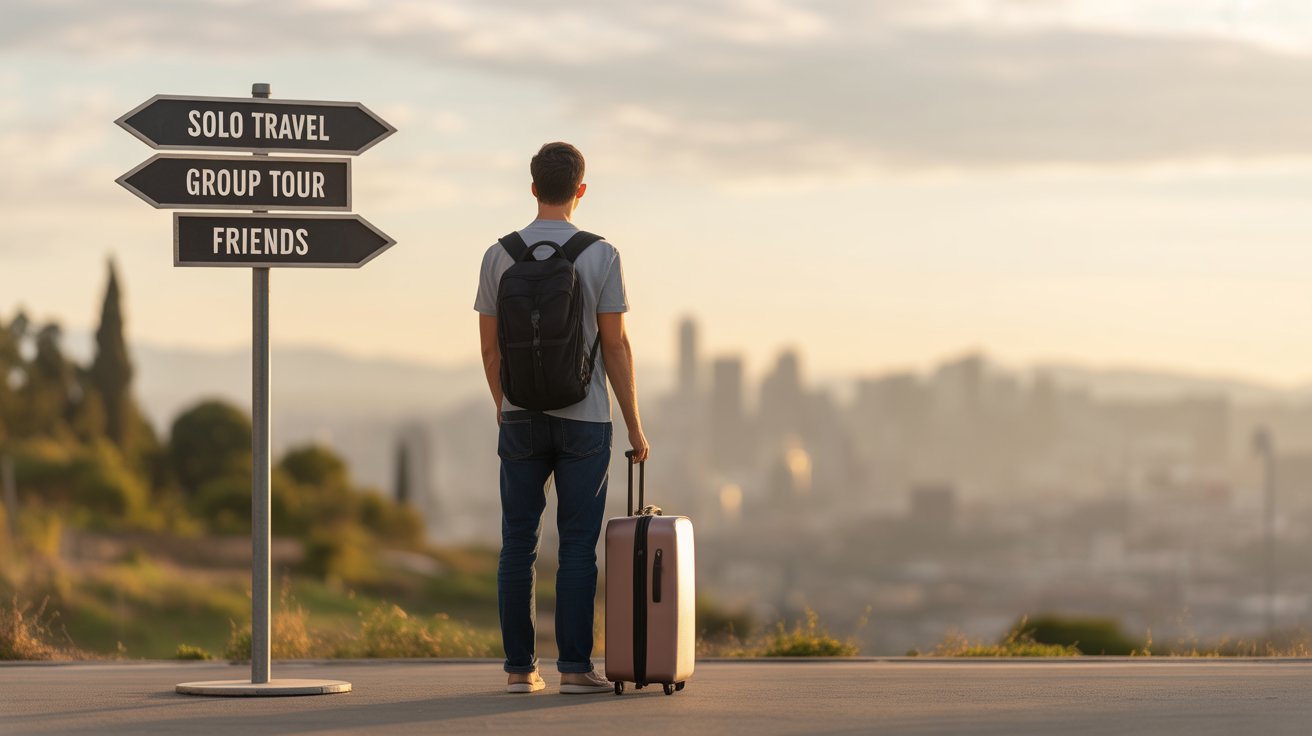
If you are planning a holiday and feel stuck choosing between solo travel, group tours, or trips with friends, you are not alone. Each option looks amazing on social media, but in real life they feel very different. The wrong choice can leave you exhausted, lonely, or frustrated, while the right one can turn the same destination into one of the best trips of your life.
In this guide, you will understand what solo travel really feels like compared to organised tours and friend trips, why your personality and goals matter more than trends, and how to decide which style fits your next journey. You will see the honest pros and cons of solo travel, group tours, and travelling with friends, with practical examples so you can imagine yourself in each situation.
You do not have to pick one style forever. You can enjoy solo travel at one stage of life and prefer group tours or friend trips at another. The point is to learn how to choose consciously, instead of copying what everyone else seems to be doing.
What Solo Travel, Group Tours, and Trips with Friends Really Mean
Before you can decide, you need a clear picture of what each option actually looks like, not just how it appears online.
Solo travel simply means you are the only person officially on your trip. You book your own transport, accommodation, and activities, and you decide where to go each day. You might meet people along the way, join day tours, or hang out with other travellers, but at the end of the day you are responsible for yourself. Solo travel does not mean you are always alone; it means you are always free to change plans without needing agreement from anyone else.

Group tours usually involve a company or organiser taking care of the main logistics. You travel with a small or large group of strangers (or sometimes friends who also joined), follow a fixed or semi‑flexible itinerary, and have a guide leading you. Accommodation, transport, and many activities are pre‑arranged. You still have some free time, but most of the structure is given to you.
Trips with friends are somewhere in between solo travel and group tours. You still plan things yourself, but now you have to coordinate with other people’s budgets, vacation days, interests, and energy levels. When it works, it feels like sharing a big adventure with people you love. When it does not, small annoyances can turn into conflicts that follow you home.
Once you see solo travel, group tours, and friend trips as three different ways to experience the same place, it becomes easier to ask which one matches who you are right now and what you want from this particular trip.
Why Choosing Between Solo Travel vs Group Tours Matters
You might think that travel is travel and any vacation is better than none, so it does not really matter whether you pick solo travel, group tours, or trips with friends. In reality, your choice deeply shapes your experience.
If you are an introvert who needs quiet time to recharge and you choose a loud party tour with fixed schedules, you might come home more drained than when you left. If you are very social and easily bored alone, jumping into long solo travel with no plan might feel more like punishment than freedom.
Your budget is affected too. Some people assume solo travel is always cheaper, but that is not always true. Private rooms or single supplements can cost more than sharing with friends, and sometimes group tours get better deals on transport and entrances. On the other hand, solo travel can be cheaper if you are flexible with dates, destinations, and comfort levels.
Safety and stress levels also change. In some destinations, especially if you are new to travel or worried about language barriers, jumping straight into solo travel might feel intimidating. A small group tour or a well‑planned trip with friends can reduce that stress. In other cases, solo travel might actually feel safer, because you can trust your own instincts without being pulled into risky situations by someone else.
When you think clearly about why you are travelling—whether to rest, explore, challenge yourself, celebrate, or heal—it becomes obvious why the choice between solo travel, group tours, and friend trips is not a small detail. It is the frame for the entire experience.
Solo Travel: Freedom, Growth, and Honest Alone Time
Solo travel has exploded in popularity in the last few years, and for good reasons. It offers a kind of freedom that is hard to find anywhere else. When you travel alone, you wake up when you want, visit what you want, and change plans instantly if your mood shifts. You do not need to negotiate restaurant choices or argue about how much walking is “too much.”
This freedom can be deeply empowering. Many people who try solo travel come back feeling more confident in themselves. You handle small problems on your own, like finding your way in a new city or solving a booking issue. Each time you fix something without help, your trust in yourself grows. Solo travel becomes a kind of moving classroom for independence.
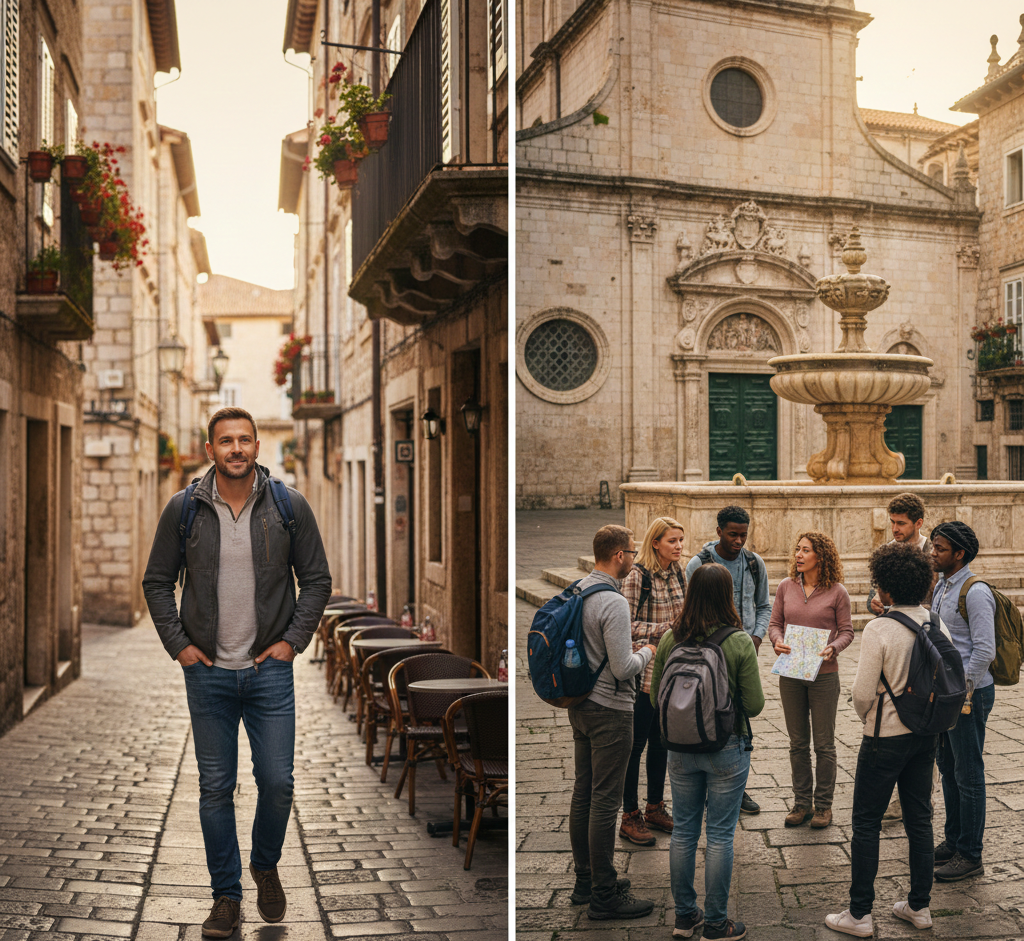
At the same time, solo travel is not always glamorous. There will be moments of loneliness, especially in the evenings or in romantic cities where everyone seems to be in couples or groups. On long bus rides or slow days, you may wish you had someone familiar to talk to. This is where being honest with yourself matters. If you are not used to spending time alone, solo travel can feel like an intense crash course.
Practical skills help a lot. Learning how to read basic maps, say a few words in the local language, and research neighbourhood safety before booking accommodation can make solo travel smoother. Websites like Lonely Planet at https://www.lonelyplanet.com/ and community forums such as TripAdvisor at https://www.tripadvisor.com/offer helpful first‑hand reports from other solo travellers.
If you are curious about solo travel but nervous, you do not have to commit to months away. You can start with a single‑city trip for a few days, maybe in a familiar country or somewhere with good public transport. Think of it as testing how solo travel feels in your body and mind, instead of deciding your entire travel identity at once.
Group Tours: Structure, Convenience, and Ready‑Made Company
Group tours are sometimes unfairly dismissed as “only for older people” or “not real travel,” but that is not true. For many people, especially beginners or those with limited time, group tours are a smart way to see a lot with less stress.
On a well‑designed group tour, you do not have to worry about planning every detail. Transport between cities, accommodation, and major attractions are handled by the organisers. This can be a huge relief if you are travelling to a region where you do not speak the language, where logistics are complicated, or where getting around independently feels intimidating.
The social side is another benefit. Unlike solo travel, you automatically have people to talk to, share meals with, and take photos of you. You might meet people from different countries and backgrounds, and some of those connections turn into long‑term friendships. If you are new to travel or simply do not want to be alone, group tours can feel comforting.
Of course, there are trade‑offs. With group tours, you follow an itinerary. You might get only a short time in places you love and more time than you want in places that do not interest you. Early morning departures, fixed meal times, and “tourist trap” stops can be frustrating if you prefer spontaneous wandering.
Not all tours are equal. Some focus on authentic experiences and small groups; others feel rushed and impersonal. Reading detailed reviews and understanding exactly what is included before booking is essential. When you compare solo travel and group tours, think about how much independence you want to trade for convenience on this particular trip.
Trips with Friends: Shared Memories and Hidden Challenges
Travelling with friends sits between solo travel and group tours. It can be incredibly fun to share sunset views, inside jokes, and new foods with people who already know you. A silly moment during a trip with friends can become a story you repeat for years. You can also save money by sharing rooms, taxis, and big meals.
However, trips with friends also reveal differences you may not see at home. One person might love slow mornings and museums, while another wants fast‑paced adventure and nightlife. Someone may have a much lower or higher budget. These differences do not make anyone wrong, but they can create tension if you do not talk about them before and during the trip.
To make trips with friends feel closer to the best parts of solo travel and group tours, clear communication is everything. Before you book anything, discuss expectations. Talk about budget, sleep habits, food preferences, and non‑negotiables. Decide whether you are okay splitting up for some parts of the day so each person gets what they want.
It also helps to agree on money rules. Will you split everything equally, track individual spending, or alternate who pays? Money misunderstandings can quickly poison a trip with friends, even more than a delayed train or bad hotel. Honest conversations before you leave protect both your holiday and your friendships.
If you find that trips with friends always leave you feeling drained, it might be a sign that your travel styles are not compatible, not that you are bad friends. In that case, you can still choose solo travel or group tours in the future without guilt.
How to Choose the Right Style for Your Next Trip
Now that you understand solo travel, group tours, and trips with friends more clearly, how do you actually decide which one is right for your next journey?

Start with your main purpose. Are you travelling to rest, explore, challenge yourself, or connect with people? If your soul is craving quiet and reflection, solo travel might make sense. If you want to see as much as possible in a limited time with minimal planning, a group tour could be perfect. If your goal is bonding and shared memories, a trip with friends fits naturally.
Next, be honest about your current emotional and energy levels. If life has been stressful and you are already close to burnout, jumping straight into complex solo travel planning may exhaust you further. A simple group tour or an easy, well‑planned trip with one close friend might serve you better this time. On the other hand, if you feel stuck and need a push out of your comfort zone, solo travel can be a powerful choice.
Consider your experience level and destination. For a first‑time traveller going to a region with very different language or customs, starting with a short group tour before trying solo travel can reduce anxiety. For a familiar, tourist‑friendly city with good infrastructure, trying solo travel as a beginner is usually less risky.
Budget is another factor. Look at the total expected cost, not just headline prices. Group tours may seem expensive upfront but include many things; solo travel can be cheaper or more expensive depending on your choices. Trips with friends can cut some costs but also introduce temptations to spend more to “go along” with the group.
Finally, remember that you can mix styles. You might do solo travel for a week, then join a group tour for a few days, or start a trip with friends and then stay alone a bit longer. You do not have to choose one label and keep it for the entire journey.
Common Mistakes When Choosing Between Solo Travel, Group Tours, and Friend Trips
Even with the best intentions, many people make similar mistakes when choosing between solo travel, group tours, and trips with friends.
One mistake is following trends instead of your truth. You might see countless videos romanticising solo travel and feel like you “should” do it, even if deep down you know you are not ready to be alone that much. Or you might think group tours are “uncool” because someone online said so, even though you secretly love structure and guides. Ignoring your real preferences is a fast way to disappointment.
Another mistake is not preparing for the downsides of your choice. If you choose solo travel, pretending you will never feel lonely or scared is unrealistic. It is better to admit that those moments will come and prepare coping strategies, like calling a friend, joining day tours, or bringing a good book. If you choose a group tour, expecting total freedom over your schedule will only frustrate you. Accepting the trade‑offs upfront helps you enjoy the benefits more.
With trips with friends, a huge mistake is avoiding awkward conversations. You might know that your budgets or habits are very different, but you skip the talk because you do not want to “make it weird.” The problem is that conflicts then appear in the middle of the trip, when you are tired and far from home. Being brave enough to talk about money and preferences before you travel is an act of care, not conflict.
Finally, some people assume their first experience defines everything. If your first solo travel attempt felt lonely, you might decide you “hate” travelling alone forever. If one group tour was rushed or badly organised, you might think all tours are terrible. In reality, each experience is shaped by the destination, timing, company, and your own state of mind. As you gain more trips, your sense of what suits you will change too.
Final Thoughts: You Can Switch Between Solo Travel, Group Tours, and Friend Trips
The most important thing to remember is that you do not have to marry one travel style. You can love solo travel in your early twenties, enjoy group tours during a busy time of life, and treasure trips with friends or family later on. What matters is that you choose intentionally instead of by default.
For your next journey, ask yourself what your heart and life need right now. Do you crave freedom and quiet growth? Solo travel might be calling you. Do you want to relax while someone else handles logistics? A thoughtful group tour can be a blessing. Do you long to share new places with people you love? A trip with friends, planned with clear communication, can be exactly right.
As you keep travelling, you will collect your own evidence about what works for you. Each time you choose between solo travel, group tours, and trips with friends more consciously, you build a life full of experiences that genuinely fit you, not just your feed. And if you ever decide to combine a particular style with a specific region, guides like How to Plan a Budget Europe Trip in Your 20s can help you match your travel style with smart money decisions too.
FAQ: Solo Travel, Group Tours, and Trips with Friends
Is solo travel safe?
Solo travel can be safe if you research your destination, choose accommodation in good areas, stay aware of your surroundings, and follow basic precautions like sharing your itinerary with someone you trust. Safety also depends on the country, city, and your own habits, so always adapt your behaviour to local advice.
Are group tours worth the money?
Group tours can be worth it if you value convenience, guidance, and built‑in company. They are especially helpful when you have limited time, are visiting complex regions, or simply do not enjoy planning. To get value, choose tours with good reviews, clear itineraries, and group sizes that match your comfort.
How do I know if I am ready for solo travel?
You are likely ready for solo travel if you are curious about spending time alone, willing to research basic logistics, and open to handling small problems independently. You do not need to be fearless, but you should be prepared for some discomfort and willing to take sensible precautions.
What if my friends and I have different budgets for a trip?
It is better to talk about budgets openly before you book anything. You can agree on a general spending level, choose destinations and activities that work for everyone, or plan some parts of the day separately so each person can spend according to their comfort. Honest communication protects both the trip and the friendship.
Can I mix solo travel with group tours?
Yes, many people combine both. You might travel solo to a city, then join a short group tour for a specific region or activity, and then continue alone again. This can give you both independence and structured experiences, and it is a good way to ease into solo travel if you are nervous.