

Resume Tips for Freshers is all about helping you write a clear, simple and powerful first resume that actually gets attention from recruiters. If you feel nervous because you have little or no work experience, you are not alone. Many students and new graduates feel the same way. The good news is that Resume Tips for Freshers can show you how to turn your education, projects and skills into a strong story that makes employers want to call you for an interview.
Your resume is often the first contact you have with a company. Recruiters may spend only a few seconds scanning it before deciding whether to read more or move on. When you apply Resume Tips for Freshers correctly, you can make those few seconds work in your favour and open doors to interviews, internships and your first job.If you are also confused about how internships work and how to get one, you can read my full Internship 101 guide for a step‑by‑step explanation.

What Are Resume Tips for Freshers?
When we talk about Resume Tips for Freshers, we mean practical advice that helps students and recent graduates write resumes that match their current stage in life. A resume is a short document, usually one or two pages, that summarises who you are, what you have studied, what you can do and what you have already done. It is different from a long biography or a list of everything you have ever done. Instead, it is a focused snapshot chosen to match a specific job or opportunity.
For freshers, Resume Tips for Freshers recognise that you may not yet have full‑time professional experience. That is perfectly fine. You can still build a strong resume by highlighting your education, academic projects, internships, part‑time jobs, volunteering, competitions and the skills you have started to develop. The goal is not to pretend you are an expert. The goal is to show that you are serious, willing to learn and already capable of handling beginner‑level responsibilities.
In some regions, people use the word “CV” and in others they say “resume”. For most freshers, these words mean almost the same thing: a short, targeted profile you share with employers when you apply for jobs or internships. The rest of this guide will use the word “resume”, but the Resume Tips for Freshers apply to both.
Why Resume Tips for Freshers Matter So Much
Resume Tips for Freshers matter because your resume is the main tool you have at the beginning of your career. When you apply for internships, entry‑level roles or graduate programmes, employers often receive many applications for each position. They may use software called Applicant Tracking Systems, or ATS, to scan resumes for keywords and basic information before a human recruiter even sees them.
In this competitive environment, Resume Tips for Freshers help you avoid simple mistakes that can cause your resume to be rejected automatically. They also help you present your strengths clearly so that a tired recruiter can quickly see why you might be a good fit. When your resume is clear, organised and tailored to the job, it sends a message that you are thoughtful and serious.
A strong resume can also give you confidence. When you know you have followed proven Resume Tips for Freshers, you can apply to opportunities with less fear and more belief in yourself. Instead of thinking “I have nothing to show”, you begin to see how your projects, assignments and activities already demonstrate real skills.
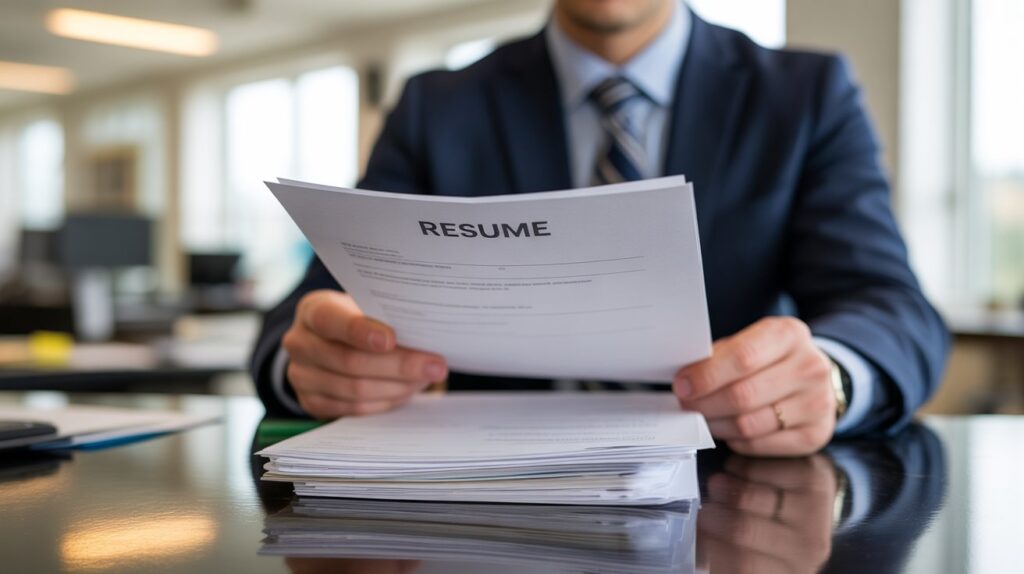
The Basic Structure Behind Resume Tips for Freshers
One of the key Resume Tips for Freshers is to understand the basic structure of a good resume. This structure is simple, but it is important to follow it in a clean, professional way.
At the top of your resume, you should have your name and contact information. This includes your phone number, email address and city or region. You can also add a link to your LinkedIn profile if it is complete and professional. This makes it easy for recruiters to find more details about you. Here you can link to a post about how to create a strong LinkedIn profile for beginners, if you have one on your site.
Below your contact details, many freshers add a short headline or objective. Resume Tips for Freshers suggest that this should be one or two lines that explain what kind of role you are looking for and what you can offer. For example, you might say that you are a recent computer science graduate interested in software development, with experience in a few programming languages and academic projects.
Your education section usually comes next. As a fresher, your degree or course is one of your main strengths, so you should list your institution, your degree name, your field, your expected or actual graduation date and, if it is good, your grade or percentage. If you have completed relevant courses or modules, you can describe them in short sentences within this section.
After education, Resume Tips for Freshers recommend that you include experience, projects and internships. Even if you have not worked full‑time, you may have completed part‑time jobs, freelance work, campus roles or volunteer activities. You may also have done academic projects, technical projects, design work or research. Describe what you did and what results you achieved.
Later, you can add a skills section where you list the tools, languages, software and soft skills you are comfortable with. You can also include activities, achievements, certifications or interests if they add value or show useful qualities.
Step By Step: Applying Resume Tips for Freshers
Now that you know the structure, it is time to apply Resume Tips for Freshers step by step. Think of this as a simple process you can follow every time you update your resume.
The first step is to understand the job you are applying for. Read the job description carefully and note down the skills, tools and responsibilities that appear often. For example, a job might mention communication skills, basic Excel knowledge and customer interaction. Another role might focus on programming languages, problem‑solving and teamwork. When you clearly see what the employer wants, you can apply Resume Tips for Freshers to highlight the parts of your background that match.
The second step is to choose a clean, simple layout. Avoid overly fancy designs, heavy graphics or unusual fonts, because these can confuse ATS software and distract from the content. A simple layout with clear headings and enough white space is usually best. If you want inspiration, you can look at resume examples on official career websites of universities or on platforms like Indeed’s career guide and LinkedIn’s resume resources. These external sites can give you an idea of modern layouts that still follow professional standards.
The third step is to write each section clearly. When you describe your projects, internships or activities, focus on what you did and what changed because of your actions. Instead of just writing the name of a project, explain in one or two sentences what problem you solved, what tools you used and what outcome you achieved. This is one of the most effective Resume Tips for Freshers because it turns simple tasks into clear achievements.
The fourth step is to check that your resume is easy to read. Use consistent formatting for dates, headings and text size. Make sure your email address looks professional and avoid including personal details like full address, religion, marital status or photos unless your country or industry expects them. Read your resume out loud or ask a friend to read it. If they can understand your story quickly, you are following Resume Tips for Freshers successfully.

Turning Student Work into Strong Resume Content
A challenge many freshers face is thinking that their college work does not count as “real” experience. Resume Tips for Freshers strongly disagree with that belief. The key is to describe your student work in a way that shows the skills you used and the value you created.
For example, imagine you worked on a group project where you had to research a topic, prepare a report and present it to your class. Instead of simply writing “Group project in final year”, you can say that you researched a specific problem, collaborated with a team of classmates, organised information in a clear report and delivered a presentation to an audience. This kind of description shows research, teamwork, communication and organisation skills.
If you built a small app or website as part of a course, Resume Tips for Freshers suggest that you describe which technologies you used, what the app does and whether anyone used it. If you designed posters or social media posts for a college event, you can mention the tools you used, such as Canva or Photoshop, and explain that you helped attract more attention to the event.
Even non‑academic activities can become valuable content. If you volunteered at a local organisation, you can explain how you helped organise events, manage data, support visitors or communicate with different people. If you were part of a club committee, you can talk about planning meetings, coordinating members or handling budgets. All of these activities provide strong evidence of real skills, and Resume Tips for Freshers show you how to present them.
Customising Your Resume for Each Job
Another important part of Resume Tips for Freshers is customising your resume for each application. It might feel easier to send the same resume everywhere, but tailoring your resume increases your chances of being noticed.
Customising does not mean rewriting everything from zero. It means adjusting your headline, your objective and the order or emphasis of your content to match the job. If a particular role is focused on customer service, you might place your part‑time retail job or your volunteer experience with people closer to the top of your experience section. If the job is technical, you might highlight your coding projects and tools first.
When you follow Resume Tips for Freshers, you also adjust your language slightly to match the terms used in the job description. If the company talks about “clients” more than “customers”, or about “projects” more than “assignments”, you can adopt similar words where they are accurate. This can help your resume pass ATS checks and feel more relevant to the recruiter.
Here you can link to a post about how to read and understand job descriptions if you have such a guide on your blog, because that would support readers who want to improve their customisation skills even more.
Common Mistakes to Avoid: Essential Resume Tips for Freshers
Resume Tips for Freshers are not only about what to do, but also about what to avoid. Some mistakes are very common and can harm your chances even if the rest of your resume is strong.
One frequent mistake is using one long paragraph with no clear sections or headings. This makes your resume difficult to scan, and busy recruiters might simply skip it. Following Resume Tips for Freshers, you should always use clear headings like “Education”, “Projects” and “Skills” so that readers can quickly find what they want.
Another common problem is including too much personal information or irrelevant details. Freshers sometimes fill their resume with unrelated hobbies, excessive personal data or very old school achievements. Resume Tips for Freshers recommend focusing on content that shows skills and experiences related to the kind of jobs you want now. You do not need to list every certificate or activity from many years ago unless it still adds real value.
Spelling and grammar errors are also serious issues. They make you look careless, even if you are actually very capable. Always proofread your resume several times. If possible, ask a friend, teacher or mentor to read it as well. There are also free online tools that can help you check your writing, but human review is still very helpful.
Finally, some freshers try to exaggerate or lie on their resumes. This is risky. Recruiters and managers often notice when something does not sound truthful, and even if you pass the resume stage, you may struggle to answer interview questions about skills you do not really have. Resume Tips for Freshers always encourage honesty. It is better to be clear about what you are still learning than to pretend you are an expert.

Making Your Resume Look Professional
In addition to content, Resume Tips for Freshers also focus on appearance. A resume does not have to be beautiful like a design poster, but it should look neat and professional.
Use a simple, readable font and keep your font sizes consistent. Make sure your spacing between lines and sections is even. Avoid using too many colours; black text on a white background is usually best, with perhaps one additional colour for headings if you want. Remember that ATS software and recruiters may print or view your resume on different devices, so clear formatting is important.
Your file name also matters. Instead of saving your resume as something generic like “cvfinal.docx”, use a clear name such as “YourName_Resume.pdf”. Resume Tips for Freshers also advise you to save your resume as a PDF before sending it, unless an employer specifically asks for a different format. PDFs usually keep your formatting stable.
You might want to include links to your online profiles or portfolios if they are relevant and professional. For example, linking to a GitHub profile for coding, a Behance portfolio for design or a LinkedIn profile for general professional information can support your application. Just make sure these profiles are up to date and clean.
How Resume Tips for Freshers Connect to Interviews
Your resume does not exist alone. It is closely connected to your interviews and other parts of your job search. When you follow Resume Tips for Freshers, you create a resume that tells a clear story about who you are and what you can do. Interviewers will often use that story as the base for their questions.
This means that you should be ready to talk in more detail about everything you mention on your resume. If you list a project, be prepared to explain what problem you solved, how you worked with others and what you learned. If you say you have a certain skill, think of real examples where you used it. Treat your resume as a map that guides the conversation.
Here you can link to a post about interview tips for freshers, if you have one. That would help your readers see how Resume Tips for Freshers fit into the bigger picture of getting and succeeding in a job.

Final Thoughts: Resume Tips for Freshers That Really Work
In the end, Resume Tips for Freshers are about turning your current experiences into a clear, honest and strong story about your potential. You may not have years of professional work behind you yet, but you do have education, projects, activities and skills that matter. By understanding what employers look for, choosing a simple and professional structure, describing your experiences as achievements and customising your resume for each role, you can stand out in a crowded field.
Remember that your resume is a living document. As you complete new projects, internships or courses, you should return to these Resume Tips for Freshers and update your resume to reflect your growth. With each update, your confidence and your chances improve.
FAQs About Resume Tips for Freshers
How long should a fresher’s resume be?
For most freshers, one page is enough, especially if you are just starting out. Resume Tips for Freshers focus on quality, not length. If you later gain more experience, you may expand to two pages, but only if all the information is relevant.
Do I need a different resume for every job?
You do not need to rewrite everything, but it is wise to adjust your resume slightly for each role. Changing your headline, objective and the order of your content to match the specific job description is one of the most effective Resume Tips for Freshers.
What if I have no internships or work experience?
If you have no formal work experience, you can still follow Resume Tips for Freshers by focusing on academic projects, group assignments, volunteering, part‑time campus roles and personal projects. The key is to describe what you did and what skills you used, rather than worrying about job titles.
Should I include my photo on the resume?
In many countries and industries, photos are not required and sometimes not even recommended. Instead, Resume Tips for Freshers suggest focusing on clear text and strong examples. However, in some regions or creative fields, photos are more accepted. Check the norms in your target industry and location.
Which skills should I list as a fresher?
You should list both technical and soft skills that are relevant to the roles you want. For example, software tools, programming languages, design tools, writing skills, languages you speak and personal skills like communication or teamwork. Make sure you can give real examples of where you have used these skills, because employers may ask you about them in interviews.