
If you use the internet, you already see digital marketing every day—Instagram ads, YouTube pre‑rolls, Google search results, brand emails, influencer promotions, and more.
But what exactly is digital marketing, and how does it work?
Digital marketing is simply the way businesses use the internet and digital tools to reach people, build trust, and drive sales or actions (like sign‑ups or downloads).

This guide is for complete beginners. By the end, you’ll understand:
- What digital marketing actually means
- The main digital marketing channels
- How they work together in a simple system
- A basic starting plan you can follow
1. What is digital marketing?
Digital marketing is any marketing done using digital channels, such as:
- Search engines (Google, Bing)
- Social media (Instagram, Facebook, X, TikTok, LinkedIn, etc.)
- Websites and blogs
- Online ads and apps
Instead of only using traditional methods like billboards, TV, and newspapers, digital marketing focuses on where people spend most of their time now: online.
The goal is still the same as traditional marketing:
- Reach the right audience
- Share the right message
- At the right time
- To get a result (visit, sign‑up, purchase, etc.)
The difference is how we do it and how measurable it is.
2. Why digital marketing matters today
Digital marketing has become essential because:
- People are online constantly
Many people spend hours each day on social media, search engines, and apps. If a business is not visible there, it’s losing attention. - It’s measurable
You can track:- How many people saw your ad or post
- How many clicked
- How many bought or signed up
- It can be targeted
You can choose:- Location
- Age range
- Interests
- Behaviors (e.g., people who visited your site before)
- It’s flexible for all budgets
From small local shops to big global brands, everyone can use some form of digital marketing.
3. Main channels of digital marketing
Think of digital marketing as a toolbox. Each channel is a different tool. You don’t have to use all at once—but you should understand them.
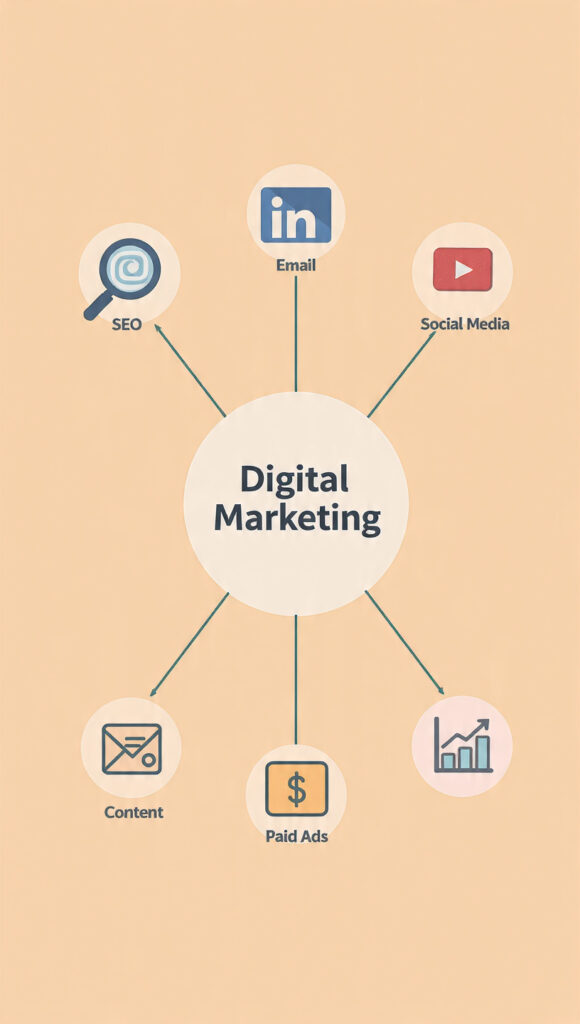
3.1 Search Engine Optimization (SEO)
SEO is the process of making your website appear higher in search results on Google (or other search engines) for certain keywords.
Example:
- Someone searches: “best running shoes 2025”
- If your blog or product page is optimized, it may appear on page 1.
SEO focuses on:
- Quality content
- Relevant keywords
- Good website structure and speed
- Backlinks (links from other sites)
SEO usually takes time but can bring free, long‑term traffic.
3.2 Search Engine Marketing (SEM) / Paid search ads
SEM (often called “Google Ads”) is when you pay to show your site at the top of search results.
- You bid on keywords like “digital marketing course” or “plumber near me”
- Your ad appears above or next to the organic (non-paid) results
- You usually pay when someone clicks (PPC: pay‑per‑click)
SEM can bring fast results but costs money.
3.3 Social media marketing
This includes:
- Organic content (regular posts, stories, reels)
- Paid ads on platforms like:
- Facebook / Instagram Ads
- TikTok Ads
- LinkedIn Ads
- X (Twitter) Ads
Goals can be:
- Brand awareness
- Engagement (likes, comments, shares)
- Traffic to your website
- Direct sales (e.g., via Instagram Shop)
3.4 Content marketing
Content marketing is about creating valuable content to attract and educate your audience.
This can include:
- Blog posts
- YouTube videos
- Podcasts
- Guides, e‑books, infographics
- Webinars
Instead of only saying “Buy now”, you help people first (with information), then lead them toward your product/service.
Example:
- A fitness brand publishes blog posts about home workouts
- At the end, they recommend their workout equipment or app
3.5 Email marketing
Email marketing is still one of the most powerful digital marketing tools.
- You build an email list (with permission)
- You send useful content, updates, and offers
- You nurture relationships and encourage repeat purchases
Email is great because:
- You own your list (unlike followers on social media)
- You can personalize messages
- It often converts very well if done correctly
3.6 Display ads, remarketing, and others
Other important elements:
- Display ads: banner ads on websites or apps
- Remarketing (retargeting): ads shown to people who already visited your site or engaged with your content
- Influencer marketing: paying or partnering with creators to promote your brand
- Affiliate marketing: others promote your product and earn a commission per sale
You don’t need to master everything at once, but knowing these basics helps you see the full picture.
4. How digital marketing works together (the simple funnel)
A useful way to understand digital marketing is to think in terms of a funnel:
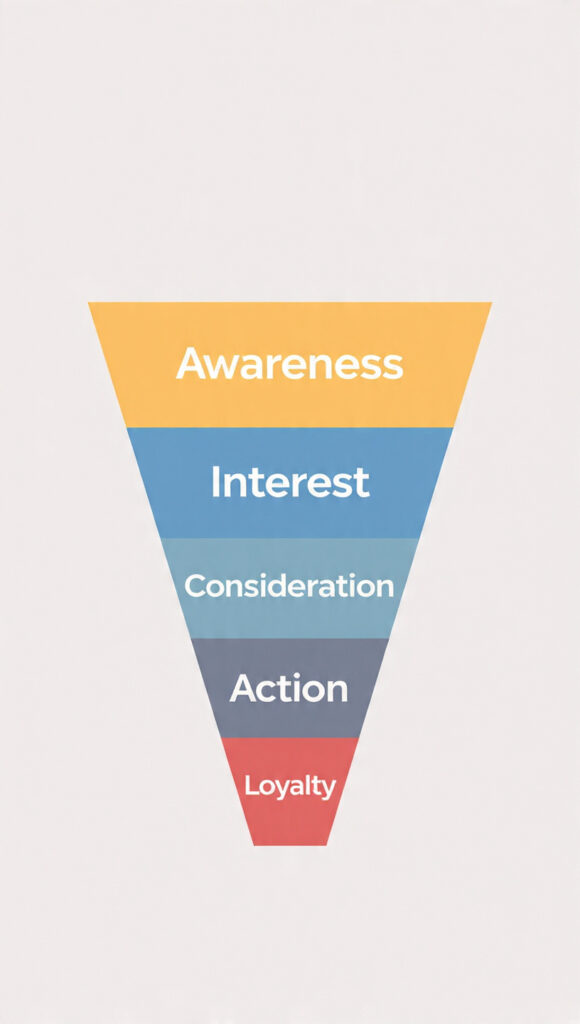
- Awareness – People discover you
- Via social media posts, ads, SEO, influencers
- Interest – They want to know more
- They read your blog, watch your video, scroll your page
- Consideration – They compare options
- They check reviews, FAQs, pricing pages, competitor sites
- Action – They take a step
- Sign up, download, buy, book a call, etc.
- Loyalty – They return and recommend you
- Email marketing, good service, remarketing, loyalty programs
Good digital marketing means:
- You bring people into the funnel
- You nurture them with useful content
- You make the action step clear and easy
5. A simple digital marketing plan for beginners
If you’re just starting, don’t try to do everything. Start small and practical.

Step 1: Define your goal
Examples:
- Get 100 website visitors per month
- Get 50 email subscribers
- Get 10 product sales per month
- Get 5 clients to book a free consultation
Be specific and realistic.
Step 2: Know your target audience
Ask:
- Who am I trying to reach? (age, location, interests)
- What problems do they have?
- Where do they spend time online? (Instagram? YouTube? Google?)
Write a simple audience profile to guide your decisions.
Step 3: Choose 1–2 main channels
For beginners, good starting combinations are:
- SEO + blog + 1 social platform
- Instagram (or TikTok) + email list
- YouTube + email list
- Google Ads + simple landing page
Don’t try every platform at once. It’s better to do one or two channels well than five poorly.
Step 4: Create basic content
Start with:
- A clean, simple website or landing page
- 3–5 useful blog posts or pages that answer common questions
- A clear “call to action” (CTA), such as:
- “Contact us”
- “Get a free quote”
- “Download our guide”
- “Subscribe for updates”
On social media:
- Post consistently (e.g., 3–4 times per week)
- Focus on value, not just selling
Step 5: Track results and improve
Use tools like:
- Google Analytics (for website traffic and behavior)
- Social media insights (for reach and engagement)
- Email marketing stats (open rates, click rates)
Look at:
- What type of content performs best
- Which posts/ads drive the most clicks or actions
- Where visitors drop off in the process
Then adjust:
- Do more of what works
- Improve or stop what doesn’t
6. Common digital marketing mistakes to avoid

- Trying to be everywhere at once
Better: focus on a few channels that fit your audience. - Posting without a clear goal
Always ask: “What do I want people to do after seeing this?” - Ignoring analytics
Data tells you what’s working. Even basic stats are useful. - Buying fake followers or likes
This hurts trust and doesn’t bring real customers. - Being impatient
Organic digital marketing (SEO, content, followers) usually takes time. Consistency is key.
7. A simple 30‑day action plan
Here’s a basic starting plan you can adapt:
- Week 1
- Define your goal and target audience
- Set up or clean your website/landing page
- Create one clear CTA (e.g., “Book a call”)
- Week 2
- Write 2–3 helpful blog posts or key pages
- Set up one main social media account
- Post your first batch of content
- Week 3
- Start building an email list (simple sign‑up form)
- Offer a small freebie (checklist, guide, template) to encourage sign‑ups
- Share your content in relevant groups/communities (where allowed)
- Week 4
- Review basic analytics (website and social)
- Identify which content got the most engagement or clicks
- Plan next month’s content based on what worked
Final thoughts
Digital marketing can look complex from the outside, but it becomes much easier when you:
- Understand the main channels
- See how they fit together in a simple funnel
- Start small, with clear goals
- Learn from data and improve over time
You don’t have to know everything to begin. Start with one simple step today—like defining your audience or writing your first helpful post—and build from there.