
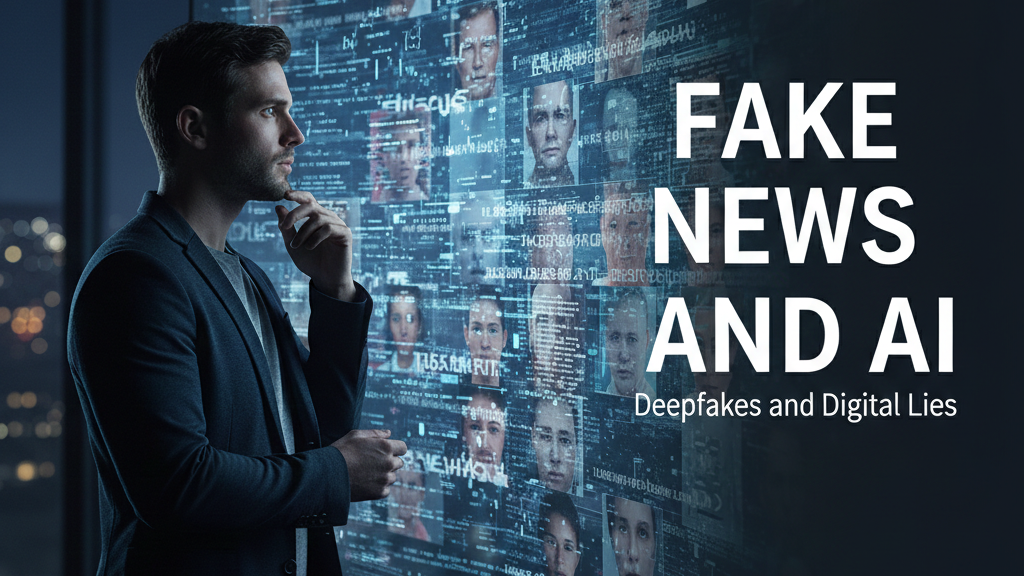
The dark side of AI is no longer a sci‑fi plot; you meet it every time you scroll your feed, watch the news, or even open your email. Whenever you see a fake video that looks real, a too‑perfect scam message, or endless confusing “facts” online, you are already dealing with the dark side of AI in your everyday life.
In this guide, you will see what the dark side of AI really looks like in practice, not just in headlines. We will talk about deepfakes, misinformation, bias, privacy, and job fears in simple language. Then we will move to the most important part: what you can actually do as a normal person to stay safer, calmer, and better informed.
You do not need to be a programmer or an AI expert to understand this. You just need a clear explanation and a few practical habits you can start using today.
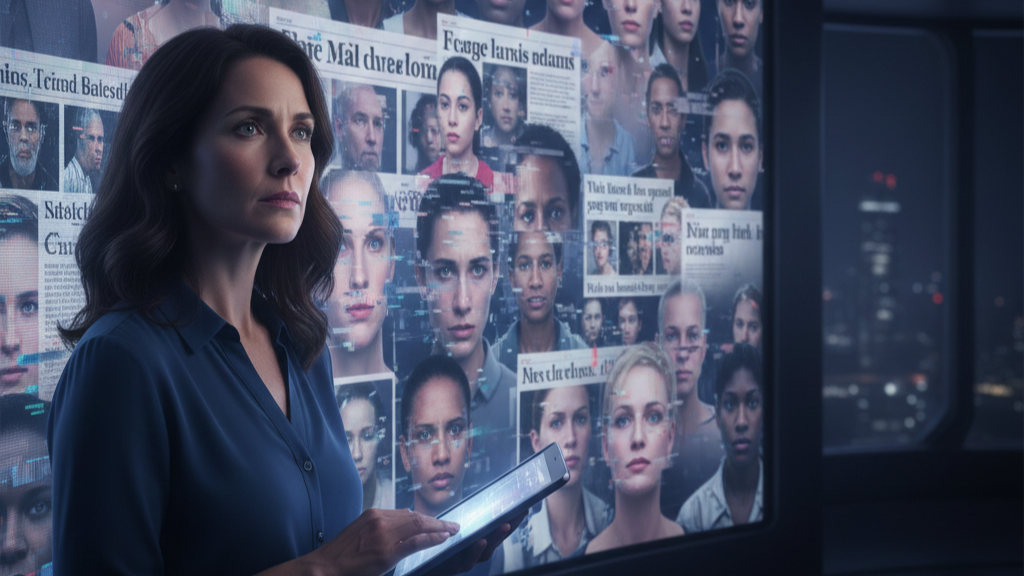
What We Really Mean by the Dark Side of AI
When people mention the dark side of AI, they sometimes imagine killer robots or a single superintelligent system taking over the world. Those ideas make good movies, but they are not the main problem right now. The real dark side of AI today is more ordinary, more invisible, and much closer to the apps you already use.
At a basic level, the dark side of AI is about how powerful algorithms can be misused or left uncontrolled. The same technology that helps doctors spot disease earlier can also create fake medical advice videos that look trustworthy. The same tools that help you fix your grammar can also churn out thousands of spam messages in seconds. The technology itself is neutral; the dark side of AI appears in how people decide to use it, and how little oversight there sometimes is.
Another part of the dark side of AI is scale. Before, a human scammer or propagandist could only reach a limited number of people. Now, one person with AI tools can generate and spread false stories, fake images, and targeted messages at a speed and volume we have never seen before. This does not mean everything online is fake, but it does mean your old habits of “glancing and believing” are no longer safe.
The dark side of AI also shows up in systems that are not obviously “AI” to you. Recommendation engines on video platforms, feeds on social networks, and personalised ads all use algorithms to decide what you see. If these systems are optimised only for clicks, watch time, or profit, they can push extreme or misleading content, even if no one sat down and said, “Let’s spread lies today.” That slow, subtle influence is just as dangerous as loud, obvious fakes.
When you understand the dark side of AI in these everyday terms, you can start noticing where it might be affecting you without your consent.
Why the Dark Side of AI Matters in Everyday Life
It is easy to think the dark side of AI is something only governments, big tech companies, or researchers should worry about. In reality, it touches decisions you make every single day, even if you do not notice it.
The most obvious area is information. When AI helps create fake news articles, fake screenshots, or fake quotes, it becomes much harder to know what is true. This does not just affect elections or global events. It can influence your views on health, money, relationships, and more. The dark side of AI can quietly push you toward opinions and choices that are not based on solid facts.
Another area is trust. If you cannot tell whether a video of a politician, celebrity, or even a friend is real, your basic trust in what you see online starts to break. You might become overly cynical and believe nothing, or you might fall for the wrong things because you are tired of checking. Both reactions give more power to people who are using the dark side of AI for manipulation.
Then there are personal risks. AI‑generated voice clones and emails can make scams feel much more convincing. A criminal might use the dark side of AI to copy the voice of a family member and ask you for urgent money, or send messages that perfectly mimic your bank’s style. If you still rely only on “it sounded real” or “it looked official,” you become an easy target.
Finally, the dark side of AI affects your mood and mental health. Recommendation systems that push extreme content for engagement can keep you angry, afraid, or addicted to your screen. Personalised feeds can trap you in a bubble where you see only one side of issues. Over time, this can change how you see the world and yourself, without you ever consciously choosing it.
You cannot afford to ignore the dark side of AI, because it is already shaping the information, emotions, and choices you experience daily.

Deepfakes, Misinformation, and the Dark Side of AI Online
One of the clearest faces of the dark side of AI is the rise of deepfakes and hyper‑realistic fake media. Deepfakes are images, audio, or videos created or heavily modified by AI to show events that never happened. A person appears to say or do something they never did, but to your eyes and ears it can look completely real.
Deepfakes started as a curiosity, but they have quickly become a powerful tool in the dark side of AI toolbox. They can be used for harassment, blackmail, political manipulation, or simple chaos. For example, someone could post a fake video of a company leader announcing bankruptcy, causing panic in markets, or a fake clip of a public figure confessing to something they never did, spreading outrage or distrust.
Misinformation powered by AI does not always look dramatic. Sometimes it is a stream of low‑quality but believable articles, tweets, or comments pushing a particular narrative. AI makes it cheap to generate endless versions of the same false idea, slightly rephrased and repeated across many accounts. Eventually, repeated lies can start to feel like truth to people who see them often enough.
Researchers and organisations are working hard to detect and fight these parts of the dark side of AI. Think tanks such as Brookings have written about deepfakes and disinformation at https://www.brookings.edu/articles/deepfakes-and-the-new-disinformation-war/, and many tech companies are developing detection tools. But detection will never be perfect, and new methods appear all the time.
For you as an individual, this means you need new habits. You cannot assume that seeing a video is the same as proof. You may need to check whether the same story appears on trusted news sites, whether the video comes from an official channel, and whether reputable fact‑checkers have commented on it. The more realistic fakes become, the more careful you must be about what you share and believe online.
The dark side of AI in misinformation thrives on speed and emotion. Slowing down and checking before you react is one of the simplest ways to reduce its power over you.
Other Parts of the Dark Side of AI: Bias, Jobs, and Privacy
Deepfakes are only one piece of the dark side of AI puzzle. There are quieter but equally serious risks in how AI systems are built and used.
Bias is a big one. AI systems learn from data, and that data often reflects the unfairness of the real world. If past hiring decisions favoured certain groups, an AI trained on that data may quietly do the same. If facial recognition systems are trained mostly on images of specific skin tones, they may perform worse on others. This side of the dark side of AI does not look like obvious hatred; it looks like “the system” simply not working equally well for everyone.
Job fears are another concern. Automation powered by AI can handle some tasks faster and cheaper than humans. In the short term, this can mean certain roles change or disappear. In the long term, new roles will appear too, but that does not remove the real stress people feel now. The dark side of AI in the workplace appears when companies use it only to cut costs, without investing in retraining, support, or new opportunities for their teams.
Privacy sits quietly in the background of all this. AI systems often need large amounts of data to perform well. If that data includes your face, voice, messages, or behaviour, and it is not handled responsibly, the dark side of AI can show up as surveillance and misuse. You might not know where your data is stored, who has access to it, or how long it will be kept. Even if you personally do nothing “wrong,” constant invisible tracking can feel like living under a microscope.
Organisations such as UNESCO discuss ethical AI and human rights at https://www.unesco.org/en/artificial-intelligence, and many governments are starting to create rules. But laws move slowly compared to technology. That means there will always be a gap where the dark side of AI can grow faster than regulation.
Understanding these less visible risks helps you ask better questions when you use AI tools or when your employer introduces new systems. You can look beyond the shiny features and think about bias, jobs, and privacy as part of the full picture.
How You Can Respond to the Dark Side of AI
Hearing about all this can feel scary, but you are not powerless. You cannot personally fix every problem, but you can respond to the dark side of AI in smart, practical ways that protect you and those around you.
The first response is awareness. Start noticing when AI might be involved. Ask yourself whether a video could have been edited, whether a headline is designed to trigger emotion, or whether a message sounds too perfectly tailored to your fears or hopes. The goal is not to become paranoid, but to be gently skeptical in the right moments.
Next, upgrade how you verify information. Instead of trusting a single screenshot or video, look for the same story on reliable news sites, official organisations, or long‑standing publications. If something huge has truly happened, it will rarely exist only in one low‑quality clip on social media. Give yourself permission to say, “I am not sure if this is real yet, so I will wait before sharing.”
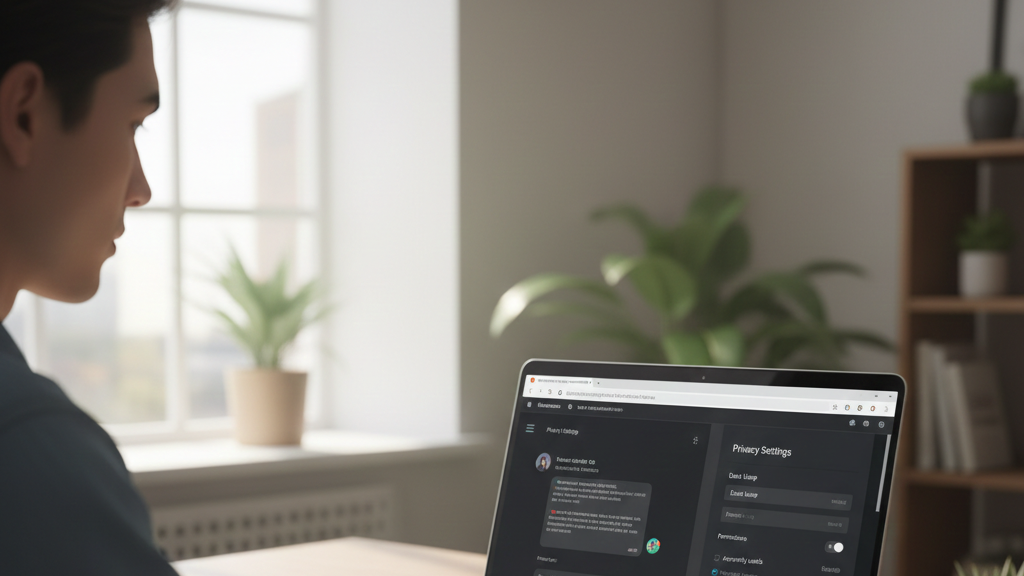
You can also be careful with your own data. Read basic privacy settings on the apps you use. Avoid sharing more personal information than necessary, especially in public profiles. When a new AI tool asks you to upload sensitive documents, family images, or private recordings, pause and consider whether that is really needed.
If you use AI tools for work or creativity, choose them with intention. Prefer services that are transparent about how they handle data and that give you some control. Use AI to support your thinking, not replace it entirely. For example, you might use AI to brainstorm ideas, then apply your own judgment to select and refine them. If you are a content creator, connecting your understanding of the dark side of AI with practical, responsible tool use can make guides like Best Free AI Tools for Content Creation, Notes, and Research in 2025 even more powerful, because you will be thinking about both possibilities and limits at the same time.
Finally, talk about this with people you know. Many friends and family members may have heard about the dark side of AI but do not really understand it. Sharing what you learn, in calm language, can help them avoid scams, panic, or blind trust. Every conversation where someone becomes a little more careful is a small step in the right direction.
Common Mistakes People Make When Thinking About the Dark Side of AI
When people first learn about the dark side of AI, they often swing to extremes, and both extremes are risky.
One mistake is panic. You might decide that everything online is fake, that AI will definitely take all jobs, or that the world is doomed. This mindset can make you freeze, avoid learning, or reject helpful tools that could actually make your life easier. While the dark side of AI is real, so are the positive uses. Refusing to see any nuance makes it harder for you to navigate the future.
The opposite mistake is denial. Some people shrug and say, “Technology always changes, nothing to worry about,” then continue as if deepfakes, scams, and bias do not exist. This attitude leaves you and your community more vulnerable to the very problems you are ignoring. Recognising the dark side of AI does not mean you must stop using technology; it means you use it with eyes open.
Another common error is thinking that only “other people” fall for misinformation or scams. You might believe you are too smart to be tricked, so you skip basic checks. The truth is that the dark side of AI is designed to target human emotions and shortcuts that all of us share. Smart people are not immune; in fact, overconfidence can make them easier to fool.
Some people also focus only on the most dramatic parts of the dark side of AI, like extreme deepfakes, and forget the slower, quieter issues such as biased algorithms or constant data collection. Both the loud and the silent risks matter. If you only watch for one type, the other can still shape your life.
By avoiding these mistakes, you put yourself in a better position to understand and respond to the dark side of AI in a balanced way.
Final Thoughts: Facing the Dark Side of AI Without Panic
The dark side of AI is real, but fear alone will not help you. What will help is understanding, skepticism at the right moments, and small protective habits built into your daily life. You do not need to throw away your phone or stop using every new tool. You just need to treat AI the way you would treat any powerful technology: with respect, caution, and curiosity.
You have seen how deepfakes, misinformation, bias, job worries, and privacy issues fit together as different parts of the dark side of AI. You have also seen concrete ways to respond, from checking sources and protecting your data to talking with others and choosing tools mindfully. None of these steps are dramatic, but together they add up to a stronger defence.
As AI continues to grow, you will hear both hype and horror stories. When you remember that your choices still matter, you can look at the dark side of AI directly, learn what you need to learn, and then get back to building a life where technology serves you, not the other way around.
FAQ: Dark Side of AI, Deepfakes, and Misinformation
Are all AI tools part of the dark side of AI?
No. Many AI tools are used for helpful purposes, like assisting doctors, reducing repetitive work, or supporting creativity. The dark side of AI appears when these tools are misused, poorly designed, or left without proper oversight. Your goal is to use AI thoughtfully, not avoid it completely.
How can I tell if a video is a deepfake?
There is no single perfect trick, but you can look for small glitches in lighting, lip‑sync, or facial expressions, and check whether trusted news outlets or official channels are also sharing the clip. If a shocking video exists only on one random account, be cautious and wait for confirmation before believing or sharing it.
Will AI definitely take my job?
AI will probably change most jobs by automating some tasks, but that does not always mean full replacement. In many roles, AI will act as a tool that handles routine parts so humans can focus on judgment, creativity, and relationships. Staying curious, learning new skills, and understanding how your field is changing will help you adapt.
What can I do if someone uses AI to create fake content about me?
If you are the victim of an AI‑generated fake, document everything with screenshots and links, and report it to the platform where it appears. In some countries, laws against harassment, defamation, or non‑consensual fake imagery may apply, so talking to a lawyer or legal aid organisation can help you understand your options.
Is it safe to let AI tools store my personal data?
It depends on the tool and what data you share. For sensitive information, like identity documents, private messages, or family images, be very cautious. Check the tool’s privacy policy and reputation. When in doubt, limit what you upload and avoid sharing anything that would seriously harm you if it were leaked or misused.