
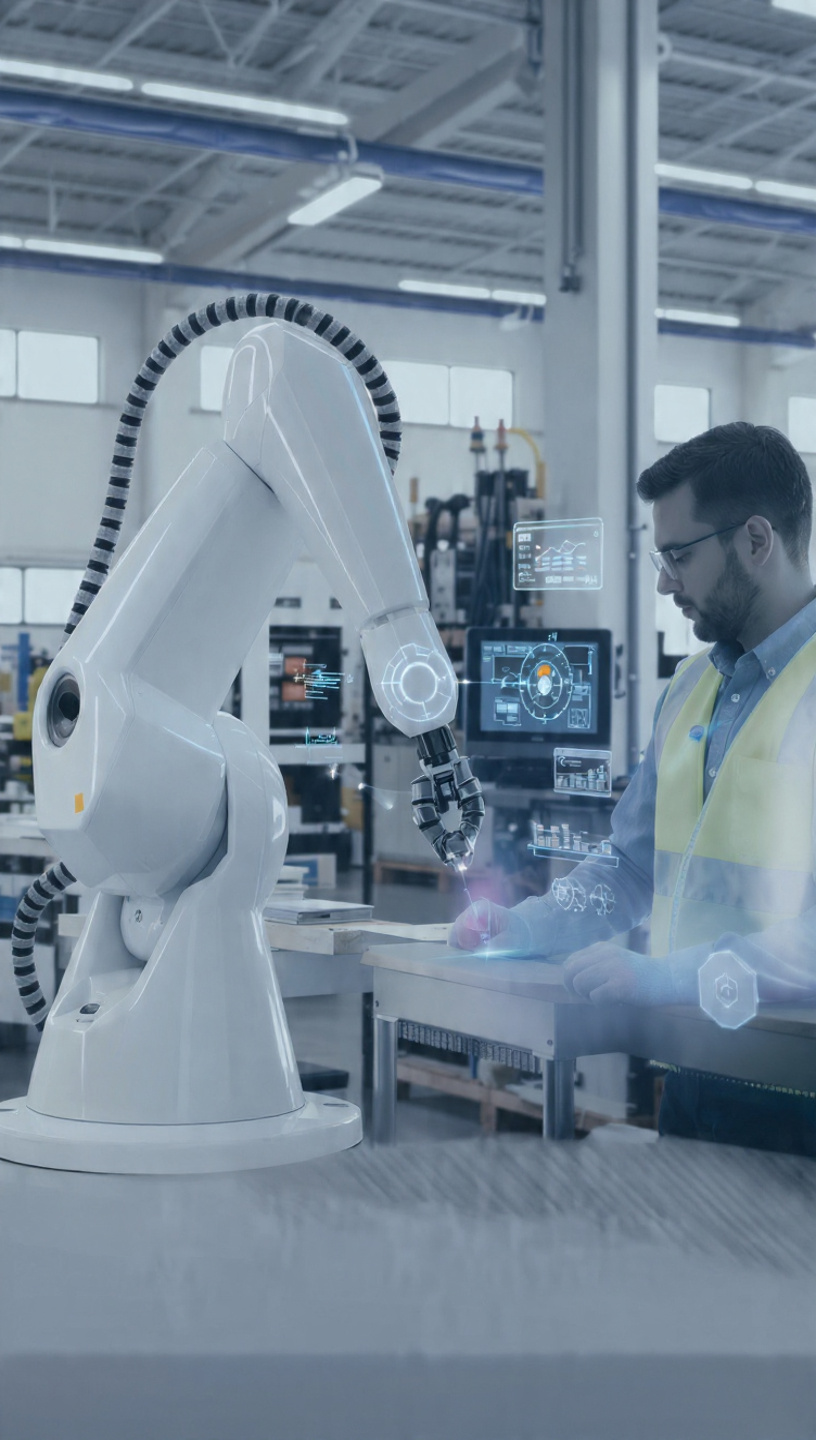
For a long time, intelligent robots felt like science fiction—something we saw in movies or research labs, but not in daily life.
Today, that’s changing fast. Robots now move products in warehouses, deliver food, assist in surgeries, clean floors, and even help in customer service. The difference isn’t just the mechanical parts—it’s the AI inside.

In this article, we’ll look at:
- What “intelligent robots” actually are
- How AI and robotics work together
- Where robots are already used in the real world
- The benefits and challenges of this new wave of automation
- How we can prepare for a future with more smart machines around us
1. What do we mean by “intelligent robots”?
Not every robot is “intelligent” in the AI sense.
Traditional industrial robots, for example:
- Repeat the same motion again and again
- Follow fixed instructions
- Work in controlled environments (like inside a safety cage)
They are powerful, but not very flexible.
Intelligent robots combine:
- Mechanical systems (motors, arms, wheels, sensors)
- AI software (computer vision, decision‑making, learning algorithms)
This allows them to:
- Perceive their surroundings (see, sense, detect objects)
- Make decisions based on data (not just follow a simple script)
- Adapt to changes (new positions of objects, moving people, obstacles)
In short: an intelligent robot is a physical machine that can sense, think, and act in more complex ways than a basic, pre‑programmed machine.
2. From labs to the real world: the evolution of smart robots
For decades, much of robotics stayed inside factories and research labs.
2.1 Early industrial robots
Early robots:
- Were large, heavy arms doing tasks like welding or painting cars
- Needed very controlled environments to operate safely
- Were programmed manually for each movement
They increased productivity, but they were:
- Expensive
- Difficult to reprogram
- Dangerous to work near
2.2 Key breakthroughs that changed everything
Several advances helped robots move from labs to real‑world spaces:
- Cheaper and better sensors
Cameras, depth sensors, LiDAR, and proximity sensors became more affordable and accurate. - More powerful computing
Small chips and cloud computing allowed robots to process data faster. - AI and machine learning
Algorithms can now recognize objects, interpret scenes, and learn from experience. - Safer designs
Collaborative robots (“cobots”) are built to work safely alongside humans.
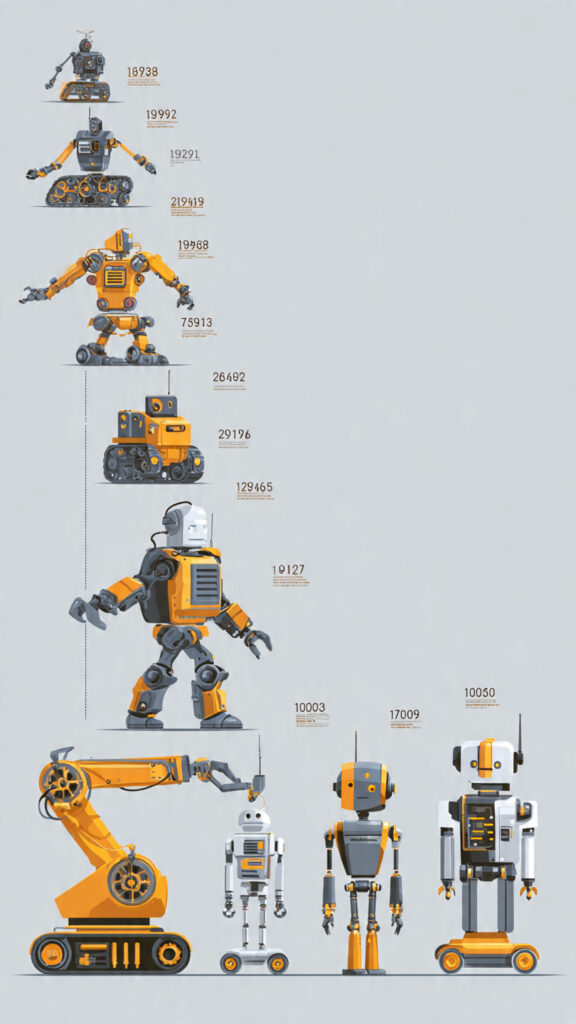
Together, these advances made it possible to create robots that are:
- More flexible
- Safer around people
- Useful in many new environments outside traditional factories
3. Where intelligent robots are used today
AI‑powered robots are already working in more places than many people realize.
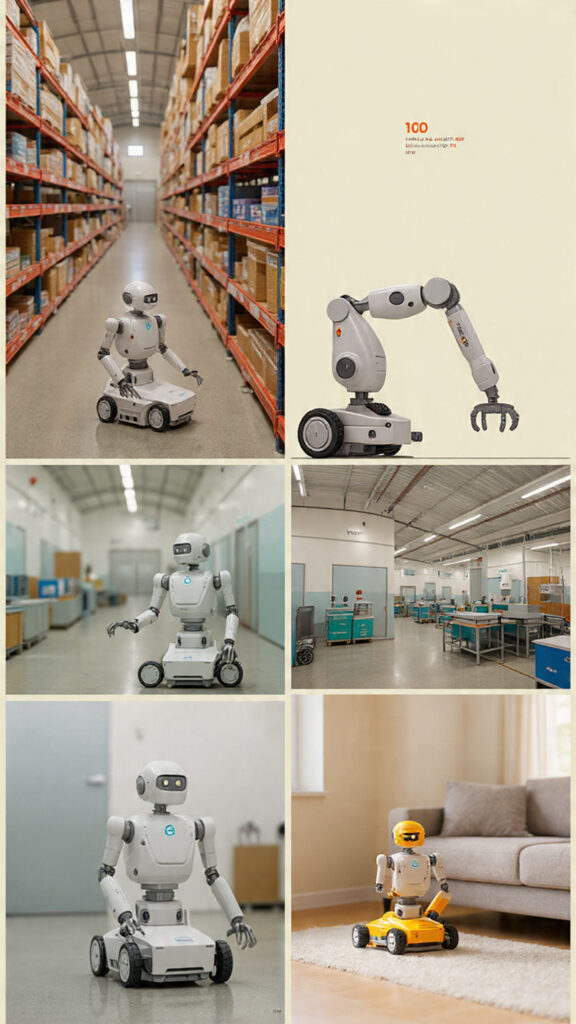
3.1 Warehouses and logistics
In warehouses and distribution centers, robots help:
- Move shelves and pallets
- Pick and sort items
- Transport packages to the right area
AI helps them:
- Navigate around obstacles
- Plan efficient routes
- Work together with human workers and other robots
This makes online shopping and fast delivery much more efficient.
3.2 Manufacturing and collaborative robots (cobots)
In modern factories, cobots work side by side with humans:
- Assisting in assembly tasks
- Handling repetitive or heavy lifting
- Doing precise, repetitive actions while humans handle more complex work
AI allows these robots to:
- Detect human presence and slow down or stop if needed
- Adjust to small changes in parts or positions
This combination of human skill and robotic strength can increase both safety and productivity.
3.3 Healthcare and hospitals
In healthcare, intelligent robots are used for:
- Delivering medicines and supplies inside hospitals
- Assisting in certain types of surgery (with doctors in control)
- Helping patients with rehabilitation exercises (exoskeletons, therapy robots)
AI helps robots:
- Navigate busy hospital corridors
- Recognize rooms and locations
- Adjust to different patients’ needs
They don’t replace doctors or nurses—but they can support them by taking over routine or physically demanding tasks.
3.4 Homes and personal life
Many people already use simple home robots, such as:
- Robot vacuum cleaners
- Robot mops or lawn mowers
- Smart speakers with voice assistants
More advanced personal robots are being developed to:
- Help older adults with reminders and simple tasks
- Provide telepresence (remote video robots that let family or doctors “visit” virtually)
- Offer social interaction and companionship
These robots rely on AI to:
- Understand voice commands
- Recognize basic objects or locations
- Move safely in home environments
4. How AI makes robots smarter
Robots become “intelligent” when AI gives them the ability to perceive, decide, and sometimes learn.
4.1 Seeing and sensing the world
Using computer vision and sensors, robots can:
- Detect objects (boxes, people, tools, doors)
- Estimate distance and depth
- Recognize patterns (labels, markings, traffic signs)
They combine data from:
- Cameras
- Depth sensors
- Ultrasonic sensors
- LiDAR or radar (in some cases)

AI models process this data to answer questions like:
- “Is something in my way?”
- “Is this the right object to pick up?”
- “Where am I in this room or building?”
4.2 Planning and moving
Once a robot understands its surroundings, it needs to plan actions, such as:
- How to move from one point to another without collisions
- How to pick up and place objects
- How to coordinate with other robots or humans
AI helps with:
- Path planning (finding safe, efficient routes)
- Motion control (smooth, precise movements)
- Behavior selection (choosing the right action for the situation)
4.3 Learning from data and experience
Some robots use machine learning to improve over time by:
- Learning from large datasets (e.g., many images of objects)
- Using reinforcement learning (trying actions and getting feedback)
- Adapting to new tasks without starting from zero
This doesn’t mean robots are “conscious” or “alive”, but they can:
- Become more accurate
- Handle more variety
- Deal better with unexpected changes
5. Benefits of intelligent robots
The move from lab experiments to real‑world robots brings several potential benefits.
5.1 Efficiency and productivity
Robots can:
- Work for long hours without getting tired
- Perform repetitive tasks consistently
- Help businesses deliver products and services faster
This can lower costs and increase output, especially in industries like logistics and manufacturing.
5.2 Safety and risk reduction
Robots can take on tasks that are:
- Dangerous (e.g., handling toxic materials)
- Physically demanding (heavy lifting, awkward positions)
- Performed in extreme environments (deep sea, disaster zones, outer space)
This can protect human workers from harm and accidents.
5.3 New services and possibilities
Intelligent robots also make new things possible, such as:
- More frequent cleaning and disinfection in hospitals or public spaces
- Faster, more consistent delivery services
- Advanced assistance for people with disabilities or mobility issues
As technology improves, more new applications are likely to appear.
6. Challenges and risks of everyday robots
Along with the benefits, there are important challenges to consider.
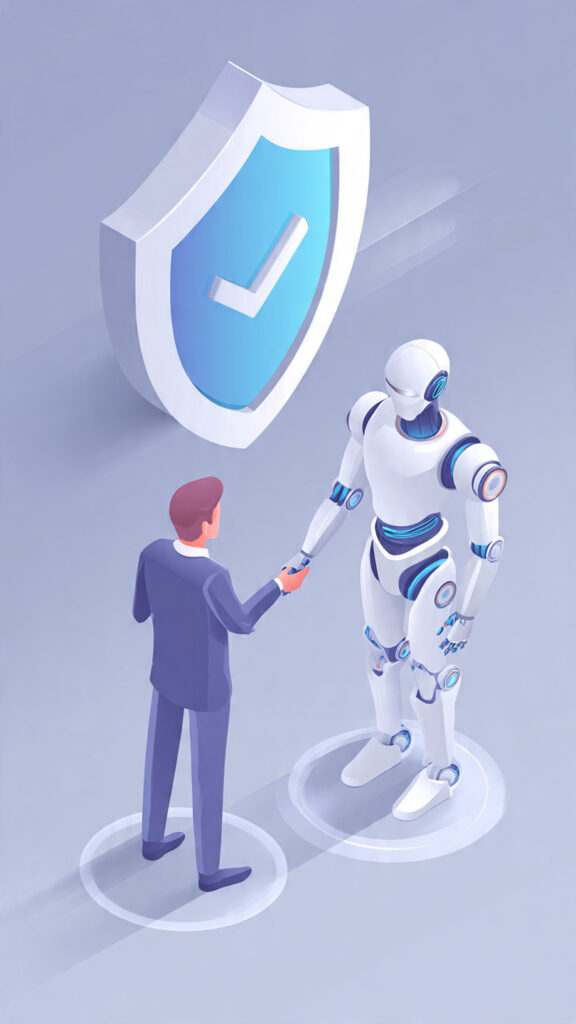
6.1 Reliability and safety
Robots must be:
- Thoroughly tested in many conditions
- Designed with safety features (emergency stops, sensors)
- Able to handle errors or unexpected situations
A mistake by a physical robot can cause real‑world damage or injury, so safety standards and regulations are critical.
6.2 Impact on jobs and skills
Robots can change the nature of work:
- Some tasks may be automated or reduced
- New roles may appear (robot maintenance, supervision, programming, data analysis)
The key question is not just “Will robots take jobs?” but:
- Which tasks will be automated?
- What new skills will workers need?
- How can education and training adapt?
6.3 Data, privacy, and ethics
Intelligent robots often use cameras and sensors that collect data about:
- People
- Places
- Activities
This raises questions like:
- Who owns the data collected by robots?
- How is it stored and protected?
- How do we prevent misuse of surveillance or facial recognition?
Clear rules, transparency, and strong security are important to maintain trust.
7. Getting ready for a world with intelligent robots
Intelligent robots are likely to become more common in:
- Workplaces
- Public spaces
- Homes
To prepare, individuals and organizations can:
- Learn the basics of AI and robotics (even at a non‑technical level)
- Focus on skills that complement robots, such as:
- Creativity
- Critical thinking
- Communication
- Problem‑solving
- Empathy and leadership
- Encourage training in:
- Robotics engineering
- Software development
- Data analysis
- Human‑robot interaction
Governments and companies can also:
- Update laws and regulations
- Support re‑skilling programs
- Discuss ethics and social impact openly
Final thoughts
AI and robotics together are pushing robots out of the lab and into everyday life. From warehouses to hospitals and homes, intelligent machines are starting to play a bigger role in how we work and live.
They bring clear benefits—greater efficiency, safety, and new services—but also challenges around jobs, safety, and ethics.
The future with intelligent robots is not fixed. It will depend on the choices we make now: how we design, regulate, and use these technologies—and how we prepare people to work alongside them.